REVIEW · NAPLES
Naples And Campi Flegrei Bike Tour
Book on Viator →Operated by Ride A Bike Naples · Bookable on Viator
A volcanic day trip, powered by your own legs.
This Naples-area bike tour takes you out into the Phlegraean Fields for geothermal sights, coastal views, and Roman leftovers—without the stress of renting a car or stitching together multiple stops. What makes it especially fun is the variety: lake riding, sea-lake villages, and ending with the smoky, sulfur-fumed energy of Solfatara.
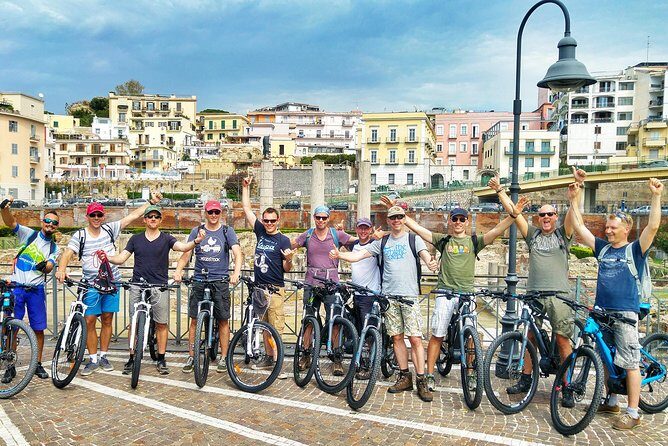
I especially like two parts: the mix of Roman-era sites and modern nature drama, and the fact it’s run as a small group (max 10), which keeps things relaxed and lets your guide actually interact with you. You’ll also get bottled water, snacks, and a helmet, so you start the day feeling prepared.
One consideration: it’s for people with moderate physical fitness, and it is not recommended if you have an injury. Also, it runs in all weather, so you’ll want to dress smart for heat, wind, or rain.
In This Review
- Key things I’d circle before you book
- Why Campi Flegrei by bike makes sense from Naples
- Meeting at Galleria Principe di Napoli: timing and flow
- Parco Virgiliano to Pozzuoli: two gulfs and Roman Puteoli
- Lago d’Averno: off-road riding, crater-lake calm
- Baia’s thermal ruins and Bacoli’s small-town by the sea
- Monte di Procida: the climb that earns the bay views
- Solfatara: steam, smoke, and that unmistakable sulfur smell
- The guide experience: stories that make places stick
- Price and value: what $138.29 buys you
- Who should do this bike tour (and who should skip it)
- Should you book Naples and Campi Flegrei by bike?
- FAQ
- How long is the Naples and Campi Flegrei Bike Tour?
- What time does the tour start?
- How much does it cost per person?
- What’s included in the tour price?
- Where does the tour meet and end?
- What are the age requirements?
- Is the tour suitable for all fitness levels?
- Does the tour run in bad weather?
- What is the cancellation policy?
- How many people are on the tour?
Key things I’d circle before you book
- Small group size (max 10) for a calmer pace and more personal attention
- Geothermal finale at Solfatara with visible steam and sulfur smells
- Bike access to scenic off-road moments around Lago d’Averno
- Roman stops without museum fatigue since several sites are best enjoyed from the outside
- Bottled water, snacks, bike, and helmet included so you can travel lighter
Why Campi Flegrei by bike makes sense from Naples
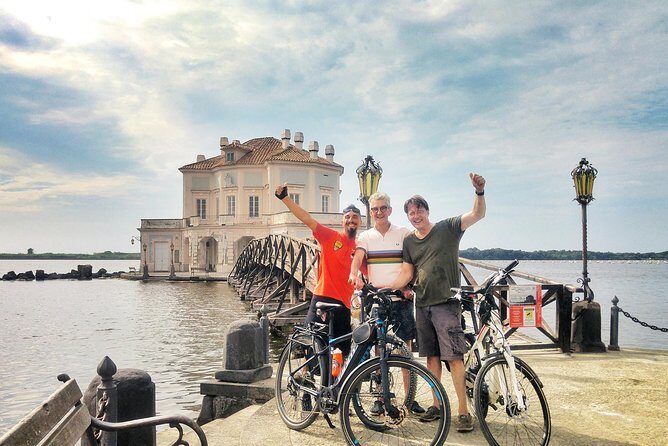
Naples is loud, fast, and full. If you only stay in the city center, you’ll miss the way the same region can feel ancient, sleepy, and oddly alive—thanks to volcanic heat moving under the ground.
This is one of those rides where the scenery keeps changing. You start with viewpoint panoramas over the bay, then roll into historic Pozzuoli (Puteoli), follow the calm curve of a crater lake, and later climb toward bigger viewpoints. By the end, you’re at Solfatara, where the ground literally shows its mood—steam, hissing activity, and that sulfur scent that’s hard to forget.
The bike format matters. Walking would take too long between viewpoints, and buses won’t give you the same feeling of momentum through hills and coastal edges. On two wheels, you can cover ground while still enjoying frequent pauses to look, listen, and learn from your guide.
You can also read our reviews of more cycling tours in Naples

Meeting at Galleria Principe di Napoli: timing and flow
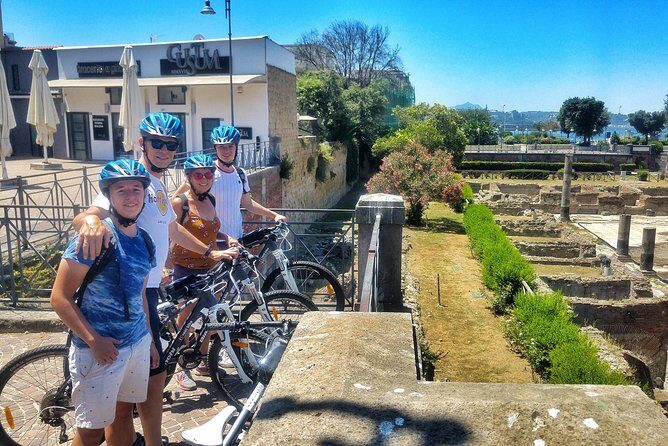
The ride starts at 10:00 am at Galleria Principe di Napoli, 27, 80135 Napoli NA, Italy. You’ll end back at the same meeting point. That “loop back to start” plan is simple and helpful, especially after a full day in an unfamiliar area.
Expect a full 7 to 8 hours experience. The stops are spaced so you can breathe, take in the views, and keep the energy up—water and snacks are part of the package. You’ll also have a bike and helmet provided, which means less luggage wrestling and fewer last-minute rental problems.
Because the tour operates in all weather, plan for real-life conditions. If the forecast looks iffy, you still go; your best move is bringing layers you can handle and shoes that don’t hate wet surfaces.
Parco Virgiliano to Pozzuoli: two gulfs and Roman Puteoli
The first stop is Parco Virgiliano, where you take in views over two gulfs: Naples and Pozzuoli. It’s a classic “get your bearings fast” kind of start. You’ll feel like you’re already learning the geography before you move farther into the Phlegraean Fields.
After that comes Pozzuoli, linked with the ancient name Puteoli and its Romans heritage. You’ll spend about 30 minutes there, which is long enough to slow down and absorb the story without turning it into a lecture marathon.
What I like about these two early moments is how they set expectations. You’re not just chasing scenic spots—you’re building a sense of place. You’ll see how the bay connects, how the coastline frames the region, and why these volcanic areas were important long before modern travel.
A practical drawback: since the day starts in the morning and continues through multiple elevations, you’ll want to arrive ready to pedal. If you’re hoping for a gentle stroll-only day, this bike format will still demand effort.
Lago d’Averno: off-road riding, crater-lake calm
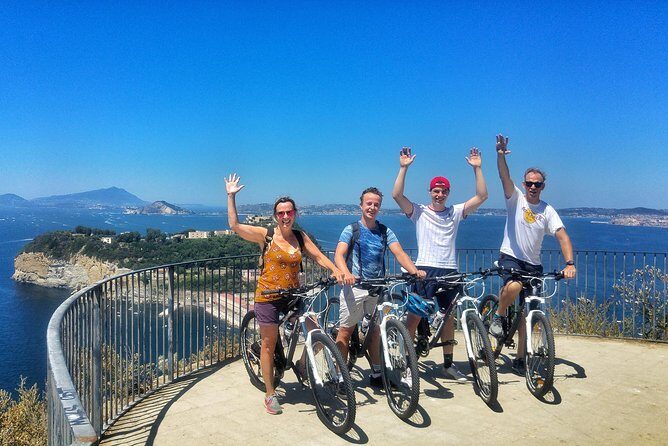
Then you reach Lago d’Averno, and the tone shifts. This is about water, silence, and the feeling that the landscape has a different rulebook.
You’ll bike around the lake, and this part includes off-road riding. You also get a moment to lie on the grass near the area. That combination is rare on day tours: you get movement, but then you can actually settle your body and enjoy the setting.
Lago d’Averno is especially interesting in a volcanic region because it feels like nature has shaped its own quiet pocket. Even if you don’t know the science, you’ll understand the vibe the way your guide explains it—geothermal activity and volcanic terrain aren’t abstract here.
The main consideration is comfort. Off-road biking can be bumpy, and grass-lounging might be great, but it’s also a reminder that you should dress for the day’s conditions. Bring shoes and clothing you’re okay getting dusty or damp.
Baia’s thermal ruins and Bacoli’s small-town by the sea
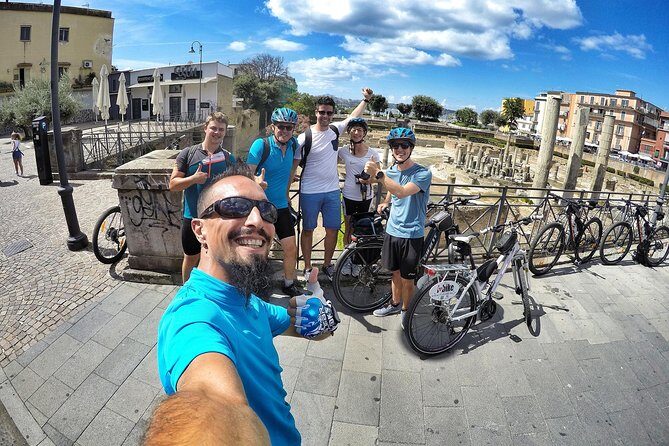
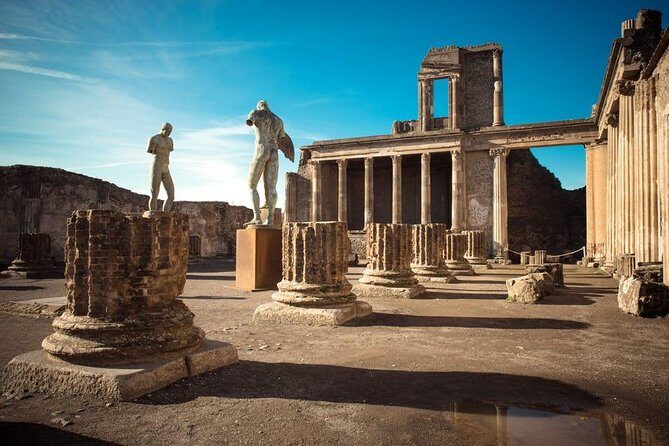
Next you visit the Parco Archeologico delle Terme di Baia. You view the Roman thermal site from the outside for about 10 minutes. This is a smart stop length for a bike tour. You get the wow factor without turning the schedule into an hours-long museum diversion.
From there, you head to Bacoli, a small village by the sea with another lake character near the coast. Expect a shorter stop (around 10 minutes), more of a quick taste than a deep exploration—but it fits the tour’s overall rhythm. You’re collecting coastal flavor the way you’d gather stops on a road trip: just enough to remember it later.
What makes this section work is the contrast. You go from crater-lake quiet to Roman thermal remnants, then to a coastal village feeling. It helps you understand the Phlegraean Fields as more than one type of sight.
The possible drawback is that these shorter stops can feel fast if you love spending long hours in one place. If you tend to linger, treat this day as a sampler—and then plan a longer independent return to the places that really grab you.



Monte di Procida: the climb that earns the bay views
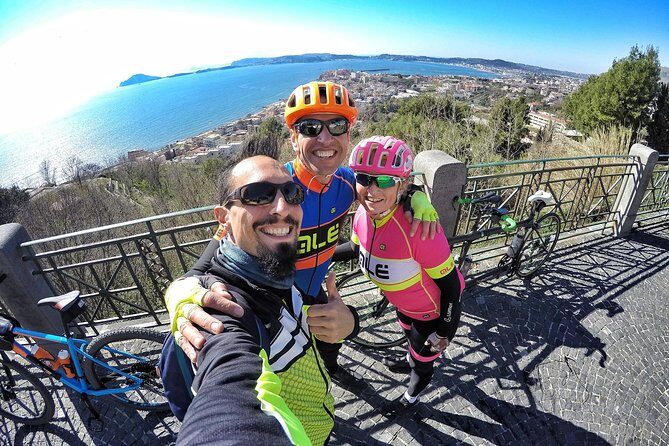
After Bacoli, you go up to Monte di Procida. This stop is about 30 minutes, and it’s where you’ll appreciate the effort you’ve already put in.
You’ll get higher for views that the route frames as some of the best moments of the day. This is the kind of viewpoint where you can actually “read” the coastline and see why Naples and the surrounding area have always pulled people in.
This is also the stop that best matches the tour’s physical requirement. The route includes climbs, and Monte di Procida is part of why. If you’re the type who wants a fully flat route, this isn’t that.
But if you like payoff—views you can’t get from street level—this is the moment you’ll likely remember.
Solfatara: steam, smoke, and that unmistakable sulfur smell
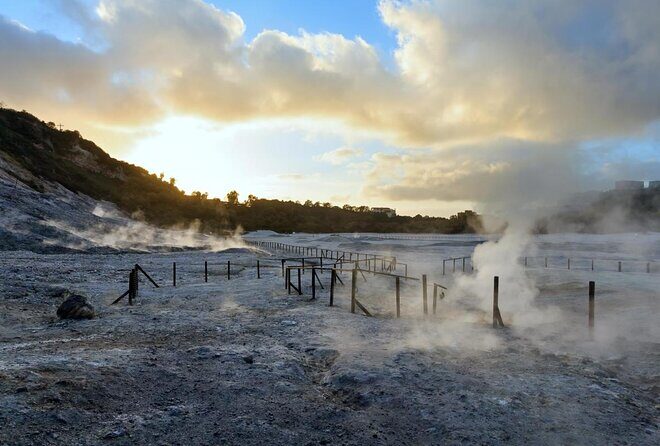
Finally, you reach Solfatara, the geothermal highlight. Your time here is about 20 minutes, and you’ll get to go up onto the volcano area to see smoke and feel the activity. The tour description also points out the sulfur smell, and that sensory detail is exactly what makes geothermal stops so different from standard sightseeing.
This isn’t just about looking at a crater. It’s about recognizing how active the ground is. Steam and sulfur transform the scene from scenery into experience.
A quick practical note: sulfur scents can hang around. If you’re sensitive to strong smells, bring a light strategy for after the stop (like a bottle of water for rinsing your mouth with water, and keeping a layer handy if you’re exposed to wind). Also, because it runs in all weather, don’t assume you’ll always have perfect visibility—steam can make the view dramatic even when conditions are less ideal.
The guide experience: stories that make places stick
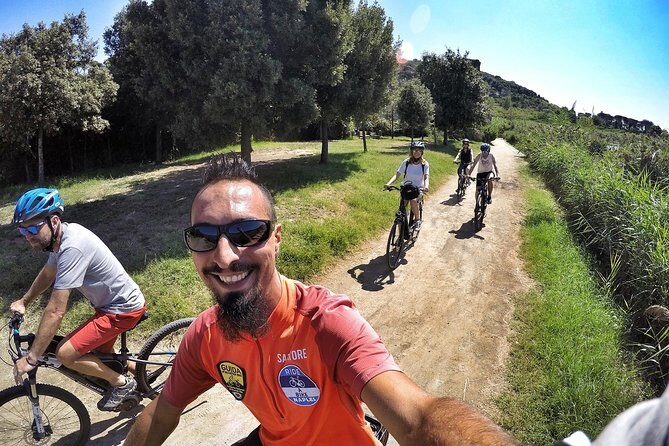
One of the tour’s strongest selling points is the guide quality. The names that come up repeatedly—Sander, Salvatore, Michelle, Martine, and Leny—all connect to the same theme: energy plus real local storytelling.
Sander is singled out for being fascinating from start to finish, with lots of Naples anecdotes. There’s also a nice bonus type of moment: on the way back, your guide may point you toward a good meal, including a suggestion for pizza at Giuliano and mention of a Putanesca order. That’s not “tour overhead,” it’s a practical local handoff.
Martine also comes up for helping you get an overview of the city early in your trip—exactly what you want when you’re trying to plan the rest of your days. Michelle is noted for extensive, fun stories tied to sights across Naples, which helps you understand what you’re seeing instead of treating the day as a checklist.
And Leny is mentioned for sharing even personal angles, like a book she wrote during lockdown. That kind of detail turns the ride into something more human.
What this means for you: you’ll likely come away with a stronger sense of why the region matters, not just what you passed by. And because the group cap is small, those stories have room to breathe instead of getting lost in the shuffle.
Price and value: what $138.29 buys you
The price is $138.29 per person, for roughly 7 to 8 hours. That’s not the cheapest way to ride around the Naples region, but it’s also not trying to be a bargain.
Here’s where the value comes from. You’re paying for:
- a professional guide
- bicycle use and a helmet
- bottled water and snacks
- a route that strings together volcanic scenery, crater-lake riding, and multiple historic stops
What’s not included is the lunch and transportation to/from attractions. That matters because it can affect your total day cost. If you already have a plan for a post-tour meal and you don’t need taxis for the full route, the price feels more reasonable.
For most people, the biggest value isn’t the gear—it’s the guidance. In a volcanic zone with multiple sight types, having someone explain what you’re seeing is what turns a ride into a day you can actually use later.
Who should do this bike tour (and who should skip it)
This tour is a good fit if you:
- like active sightseeing and can handle a few climbs
- want views over Naples and Pozzuoli, plus geothermal moments
- enjoy learning while you move rather than standing still for hours
- prefer a max 10 group size for a calmer pace
It may not be the right fit if you:
- have any injury or physical limitation that could worsen with biking or uneven terrain
- want a completely flat, low-effort day
- struggle with strong smells (Solfatara is sulfur-forward)
Also note the minimum age is 16 years. If you’re traveling with teens, it’s a day that can work well—assuming they’re comfortable with moderate biking effort.
Should you book Naples and Campi Flegrei by bike?
If you want one day that covers Naples-area scenery far beyond the city center, I think this is a smart booking. The combination of geothermal drama, Roman thermal-site context, and real bay viewpoints is exactly the kind of regional contrast you can’t replicate easily on your own in one afternoon.
Book it if you’re comfortable with moderate biking, you’re okay with off-road moments near the lake, and you want a guided route that moves at a relaxed small-group pace. It’s also a great first or second day in Naples, because it helps you understand the region fast.
I’d skip it if biking worsens your body, or if you’re looking for a gentle, purely lounging itinerary. In that case, you’ll likely wish for something more slow-moving.
FAQ
How long is the Naples and Campi Flegrei Bike Tour?
It lasts about 7 to 8 hours.
What time does the tour start?
The start time is 10:00 am.
How much does it cost per person?
The price is $138.29 per person.
What’s included in the tour price?
You get a professional guide, use of a bicycle and helmet, bottled water, and snacks.
Where does the tour meet and end?
It meets at Galleria Principe di Napoli, 27, 80135 Napoli NA, Italy, and ends back at the same meeting point.
What are the age requirements?
The minimum age is 16 years.
Is the tour suitable for all fitness levels?
It’s described as suitable for people with moderate physical fitness. It’s not recommended for travelers with any injury.
Does the tour run in bad weather?
Yes, it operates in all weather conditions. You should dress appropriately.
What is the cancellation policy?
You can cancel for a full refund up to 24 hours before the experience’s start time. If you cancel less than 24 hours before, the amount paid is not refunded.
How many people are on the tour?
The tour has a maximum of 10 travelers.