REVIEW · AMALFI
Learn how to make Amalfi limoncello
Book on Viator →Operated by Antichi Sapori d'Amalfi · Bookable on Viator
Limoncello class in Amalfi feels like family. You meet at Antichi Sapori d’Amalfi in the historic center—home to the area’s limoncello factory—and you get a real, guided look at how it’s made with a hands-on limoncello session. It’s not just tasting; you practice the steps, learn what makes artisanal quality, and sample different styles so you leave with your own preferences in mind.
Two things I really like: the small group size (max 6) keeps the experience personal, and the tastings teach you how to judge limoncello properly, including what kind of alcohol matters and how to serve it. One thing to consider: this is a short class (about 1 hour 20 minutes), so it moves quickly—and it’s more of a compact family workshop than a huge industrial tour.
In This Review
- Key highlights you should know
- Amalfi’s limoncello class happens right in the historic center
- Meeting Antichi Sapori d’Amalfi: the “family workshop” feel
- The guided visit: how limoncello is made, the old-school way
- Hands-on limoncello prep: doing the steps, not just watching
- How to recognize high-quality artisanal limoncello
- Tastings and sweets: lemon cake, limoncello chocolate, and more
- What the small-group size does for your experience
- English instruction and the home-recipe payoff
- Value check: is $30.12 worth it?
- Who should book this limoncello class
- Should you book Antichi Sapori d’Amalfi for your Amalfi day?
- FAQ
- FAQ
- How long does the limoncello making experience last?
- Where do I meet for the class in Amalfi?
- Is the class offered in English?
- How many people are in the group?
- What’s included in the price?
- Are toilets included?
Key highlights you should know
- Small-group limoncello making (max 6) so you can actually participate.
- Antichi Sapori d’Amalfi in Amalfi’s historic center, with a guided factory-style visit.
- A three-generation method you learn step by step.
- Tastings that teach quality, including alcohol choice and serving/tasting technique.
- Included snacks and multiple liqueurs, like lemon cake and limoncello chocolate.
- You leave with recipe info and a certificate/diploma vibe, not just a happy stomach.
Amalfi’s limoncello class happens right in the historic center
If you like your souvenirs edible and your lessons practical, this is a very satisfying way to spend part of a day in Amalfi. The meeting point is Antichi Sapori d’Amalfi, at V. Supportico Gaetano Afeltra, 4 (84011 Amalfi SA). It’s right in the historic center, which matters because it keeps the whole experience walkable and easy to fit between seaside views and dinner plans.
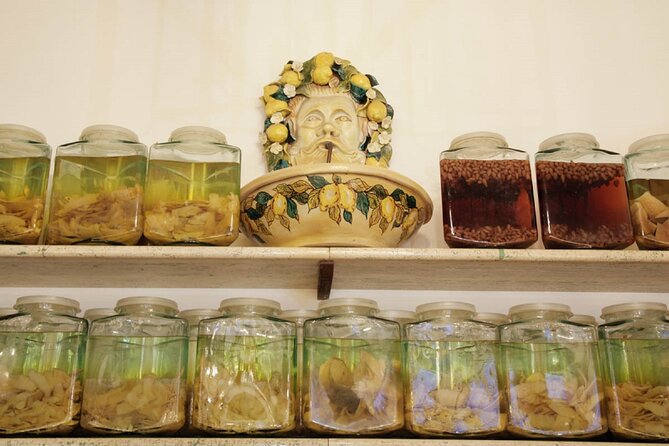
Also, the “factory” setting can sound intimidating. Here, it’s not a cold, distant production line. It feels more like a working family setup—think a front room that looks like a kitchen or lab—and that’s a good thing. You’re there to learn, taste, and do the steps together, not to stand behind a glass wall.
Price-wise, $30.12 per person for about 1 hour 20 minutes is honestly fair when you remember what’s included: multiple alcoholic tastings (limoncello and other handmade liqueurs, plus lemon cream) and snacks/desserts. This is one of those experiences where you’re paying for guidance and quality control, not just a drink and a photo.
You can also read our reviews of more tours and experiences in Amalfi.


Meeting Antichi Sapori d’Amalfi: the “family workshop” feel
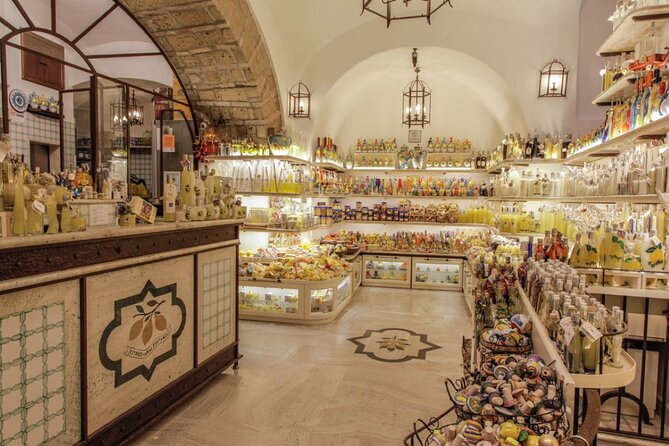
From the moment you arrive, you’re stepping into a place that treats limoncello like an inherited craft, not a tourist gimmick. The class starts with a guided orientation at Antichi Sapori d’Amalfi—the home to a limoncello factory in Amalfi’s historic center—so you immediately understand you’re learning local practice, not generic recipes.
Because the class is limited to 6 people, the tone stays friendly and conversational. That matters in a hands-on food or drink class. You’re more likely to get your questions answered (and not just politely nodded at). You also get time to taste and compare while the instructor is still fresh with explanations.
One practical note: the tour does not include toilets. If you’re the type who needs to plan ahead, do a quick stop before you go in.
The guided visit: how limoncello is made, the old-school way
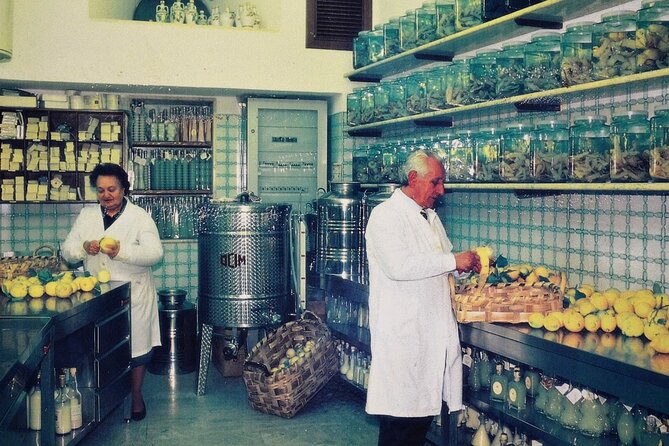
The heart of the experience is the story of production—history and tradition tied to actual steps you can recreate. You’ll get a guided visit inside the family-run setup and learn about limoncello traditions, including a method said to have been passed down through three generations.
What I like about this part is the way it frames technique. You’re not being told, simply, that limoncello is made with lemons and alcohol. You’re guided through the logic behind production: why certain choices lead to a smoother, more aromatic result, and why artisanal methods matter.
And yes, the experience is described as a “guided visit inside an old family-run factory,” but it’s more intimate than that phrase makes it sound. The benefit is that you can move through the process with your instructor and understand what each step changes in the final taste. For many people, that’s the difference between leaving with a bottle and leaving with a skill.
Hands-on limoncello prep: doing the steps, not just watching
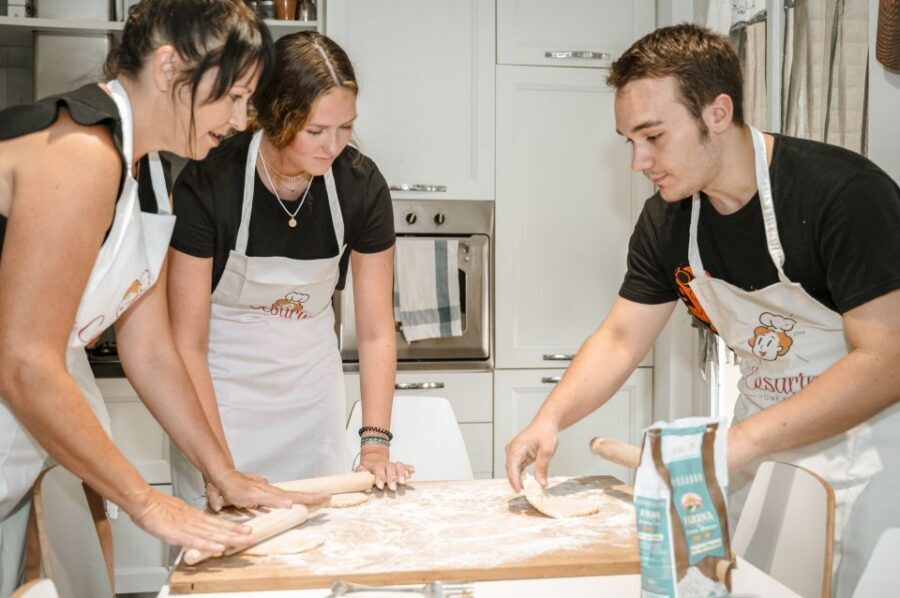
After the orientation, you move into the truly practical section: you’ll actively prepare limoncello with your instructor. This is where the class earns its ticket price.
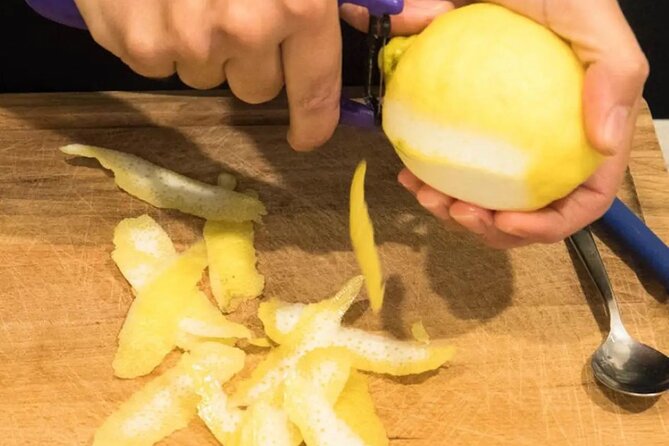
During the hands-on portion, you learn how limoncello is produced in a strictly artisanal way—again, using a method described as passed down through three generations. The goal is that you can recreate the process at home, not just remember it.
This part also helps you understand the emotional truth of limoncello. It’s not magic. It’s timing, ingredients, and attention. When you do the steps yourself, you start noticing what could go wrong—like rushing decisions or skipping tasting cues. You also learn what to watch for so you don’t treat it like a one-size-fits-all recipe.
How to recognize high-quality artisanal limoncello
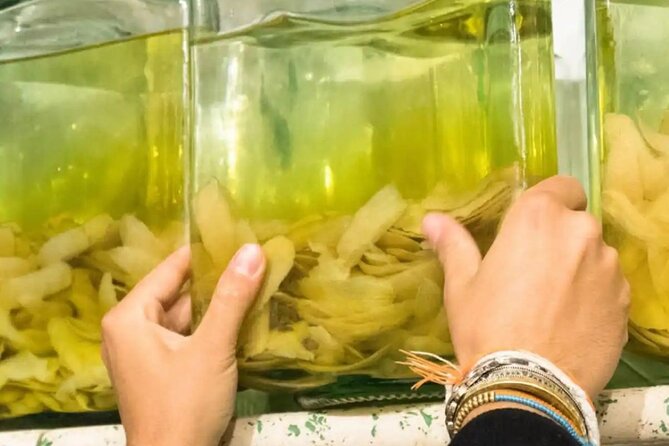
One of the best parts of this experience is that it doesn’t stop at, it tastes good. You get guidance on recognizing high-quality artisanal limoncello.
Specifically, you’ll learn:
- how to understand the type of alcohol used
- how to properly taste and serve limoncello
That’s the stuff that really changes how you buy and enjoy it later. If you’ve ever tasted two bottles that both say limoncello but somehow feel totally different, this is where the mystery gets a practical answer.
Then you put it to work with tastings of different limoncello varieties. The point isn’t just sampling; it’s learning which characteristics you personally prefer and why. You’re essentially training your palate and linking it back to production choices.



Tastings and sweets: lemon cake, limoncello chocolate, and more
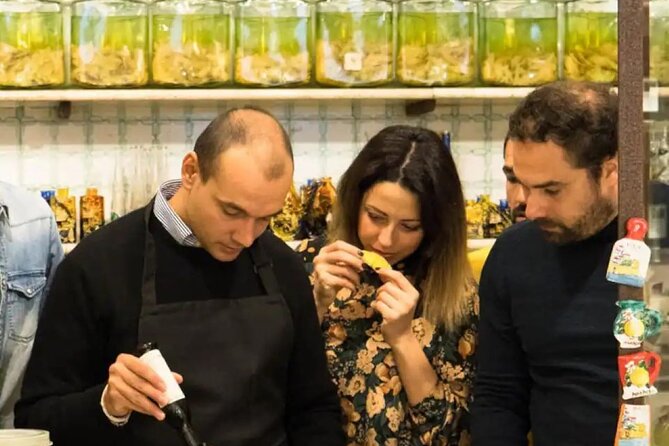
By the time you reach the end of the class, your reward is a lineup of tastings plus desserts. The experience includes tastings paired with lemon cake, biscuits, and local sweets, and the specific dessert menu you’ll see includes:
- lemon cake
- chocolate with limoncello liqueur
- lemon pralines
The food matters because it shows how limoncello fits into real eating, not just as a standalone shot. You’ll taste the drink, then pair it with lemon and sweet elements that match the citrus notes. That helps you understand why some people love limoncello after dessert and why others prefer it with something lighter.
On top of that, the included beverages go beyond plain limoncello. You’ll also have lemon cream and other handmade liqueurs included in the tasting. That variety is a smart move. It keeps the experience from becoming one-note and helps you spot what different citrus styles taste like.
What the small-group size does for your experience
With max 6 travelers, the class stays flexible. You can participate without feeling like you’re competing for attention. The instructor can adapt explanations based on what you’re tasting and what you want to learn.
This is also why the class tends to feel personal. People often walk away saying they felt welcomed. In practice, you’ll likely spend more time discussing flavor differences, serving style, and the practical do’s and don’ts you should remember at home.
It’s also a realistic time commitment. About 1 hour 20 minutes is long enough to learn the core steps and taste comparisons, but short enough that you won’t feel like your whole day evaporated.
English instruction and the home-recipe payoff
The experience is offered in English, which is a big deal in Amalfi where some smaller workshops can run fast and loose with translation. Here, the pace still matters, but you’re set up to follow the process without needing a language cheat sheet.
The final takeaway is the home-recipe benefit. You learn the full artisanal method step by step so you can recreate it at home. And from what you’ll experience, the class doesn’t feel like you’re just leaving with a drink. You’ll likely get recipe information and a certificate/diploma-style end piece, which makes the learning feel official and memorable.
Is it going to replace buying a few bottles to compare later? No. But it gives you real understanding, so when you taste limoncello after your trip, you’ll do it with intention.
Value check: is $30.12 worth it?
For $30.12 per person, you’re paying for several concrete things:
- a guided, step-by-step making experience
- tastings of multiple liqueurs
- dessert pairings (lemon cake, limoncello chocolate, lemon pralines, plus biscuits and local sweets)
- instruction on quality and proper tasting/serving
If you were just going to buy a bottle somewhere, you’d still likely spend around this amount depending on brand and size. What you get here is different: you get a skill, a tasting education, and multiple drinks plus dessert in a single focused session.
One more value point: the class is booked ahead on average (around 40 days), which suggests it fills up. If you’re heading to Amalfi in peak season, I’d treat this as a “book early” activity, not a last-minute maybe.
Who should book this limoncello class
This is a great fit if:
- you want a hands-on food/drink experience and not just a tasting
- you care about doing things the traditional way (especially in a family-run setting)
- you like citrus desserts and want to understand why some limoncello tastes cleaner or smoother
- you want a small-group class where you can ask questions
It may be less ideal if:
- you’re hoping for a long, deep factory tour with lots of walking and observing machinery
- you’re time-limited and can’t spare about 1.5 hours
- you have strict plans that can’t accommodate a short, moving timeline
Should you book Antichi Sapori d’Amalfi for your Amalfi day?
Yes—if you want something that feels local, practical, and genuinely edible. This is one of those Amalfi activities that doesn’t just entertain; it teaches you how to taste and judge limoncello, and it gives you the method to try at home.
Book it early if your dates are set. And go hungry for dessert, because the sweets are part of the experience, not an afterthought.
FAQ
FAQ
How long does the limoncello making experience last?
It lasts about 1 hour 20 minutes (approx.).
Where do I meet for the class in Amalfi?
You meet at Antichi Sapori d’Amalfi, V. Supportico Gaetano Afeltra, 4, 84011 Amalfi SA, Italy. The tour ends back at the meeting point.
Is the class offered in English?
Yes, it is offered in English.
How many people are in the group?
The experience has a maximum of 6 travelers.
What’s included in the price?
You get limoncello and other included alcoholic beverages (including lemon cream and other handmade liqueurs), plus snacks such as lemon cake, chocolate with limoncello liqueur, and lemon pralines.
Are toilets included?
No, toilets are not included.