REVIEW · NAPLES
Herculaneum, Vesuvius and Pompeii Full Day Tour from Naples
Book on Viator →Operated by Around Vesuvio · Bookable on Viator
Vesuvius, Herculaneum, and Pompeii in a single day is a serious “see it all” plan. What makes it work is the order and the time split: you start in the ruins (so your brain is already in Roman mode) and then go uphill at Vesuvius when you still have energy.
I especially like the value for the money: major entrance tickets are included, plus air-conditioned transport and an audio guide setup for the Pompeii stop. You also get clear transit between sites, with a focus on smooth handoffs rather than getting stranded with a map and your own thoughts.
One thing to weigh: this is a long day with self-guided time at Herculaneum and a very tight Pompeii window. If you want a deep, step-by-step guide at every stop, the pacing may feel rushed, especially at Pompeii.
In This Review
- Key Points You’ll Feel on the Day
- A Tight 8.5-Hour Circuit From Naples
- The Vesuvius Climb: Crater Time and That Steep Last Push
- Herculaneum Ruins: Well-Preserved Streets Without an Audio Guide
- Pompeii in 2 Hours: Audio, a Map, and the Fastest Version of the Highlights
- Transport and Transfers: Air-Conditioned Comfort, Busy Timetables
- Price and Value: Why $153.80 Can Make Sense
- What to Pack and How to Pace Yourself
- Who This Tour Is Best For (and Who Should Pass)
- Should You Book This Herculaneum, Vesuvius and Pompeii Day Trip?
- FAQ
- Where does the tour pick up in Naples?
- How long is the full day tour?
- Does the tour include entrance tickets?
- Is there an audio guide during the stops?
- What can I see at Vesuvius?
- What sites are included at Pompeii?
- Is lunch included?
- Is this tour suitable for people with limited mobility?
Key Points You’ll Feel on the Day
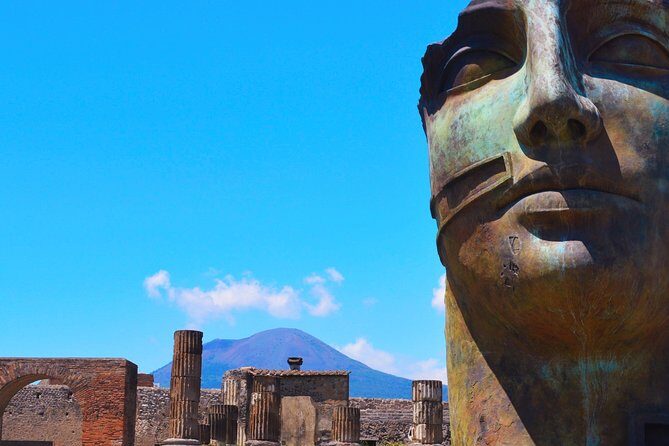
- Three sites, one day: Herculaneum, Vesuvius, and Pompeii all happen in one tight loop from Naples.
- Vesuvius views with real altitude time: you ride up high by bus and then spend time near the crater area.
- Herculaneum is self-guided: no dedicated audio for this stop, but it’s still manageable with attention and a bit of curiosity.
- Pompeii gets the audio map support: audio guide and a detailed map help you choose your own highlights fast.
- Long stretches of walking: comfortable shoes matter, because you’ll move more than you think for three major attractions.
- Group size may feel larger than promised: the stated cap is small, but you should plan for possible crowding.
A Tight 8.5-Hour Circuit From Naples
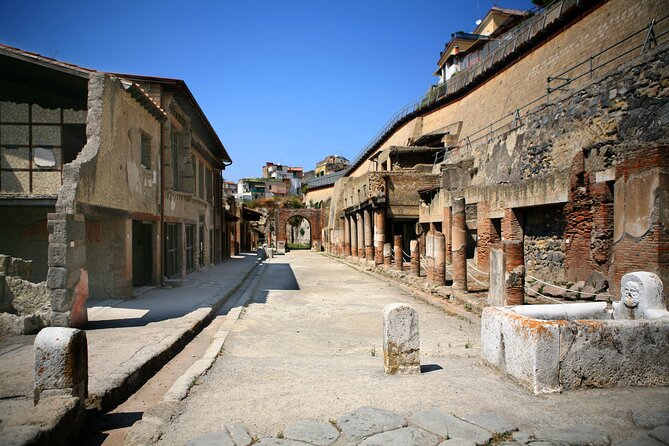
This is an all-in-day tour that runs about 8 hours 30 minutes total, including pickup and return to Naples. You’ll meet near Via Galileo Ferraris, 40 (the tour suggests using 40.8505189N, 14.2747942E in Google Maps). The ending point is the same area.
The big practical win here is convenience. Instead of figuring out local buses or trains with limited time, you get one scheduled plan: load up, drive the route, and get dropped close to what you need at each stop.
The tour is designed for people with a moderate physical fitness level, so think “can walk comfortably for a while,” not “I want zero hills.” Also, it’s offered in English, and the group is capped at 17 travelers on paper—though you should still expect the day to feel like a busy tourist circuit.
You can also read our reviews of more tours and experiences in Naples.


The Vesuvius Climb: Crater Time and That Steep Last Push
Vesuvius is the star of the schedule, and the tour does a smart thing: you gain height by bus. You reach about 1,000 meters by vehicle, then you’re given about 1.5 hours of free time to reach the crater area and visit the top. In total, Vesuvius is scheduled for around 3 hours, including the time needed to get there and back.
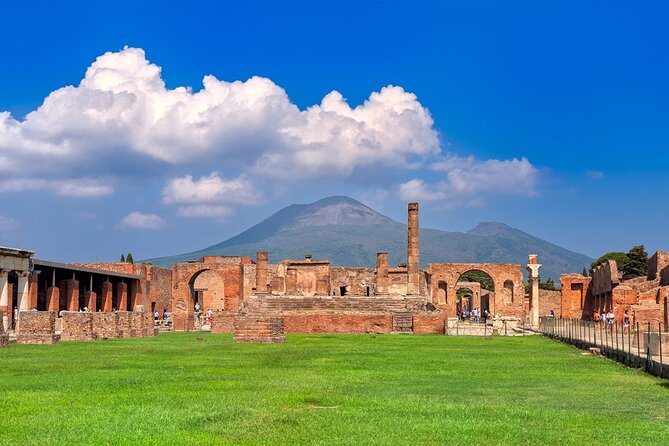
What you’re paying attention to up top isn’t just the view. You’re looking at the crater, fumaroles (those smoky, steam-like vents), and a wide panorama over the Bay of Naples. From the upper viewpoint, you can see Capri, Ischia, Procida, Naples, and even Pompeii from above—one of those moments where the geography finally makes sense.
The main consideration is physical effort. Even with the bus getting you closer, you should expect a steep uphill walk for the final stretch. A sensible tip from the real world: use the bathroom before you start hiking up, because facilities near the top can be limited.
Bring shoes with grip. This isn’t the place for slick sandals and good intentions. Also, go early in your own mindset. Heat and wind can both make you feel more tired than usual.
Herculaneum Ruins: Well-Preserved Streets Without an Audio Guide
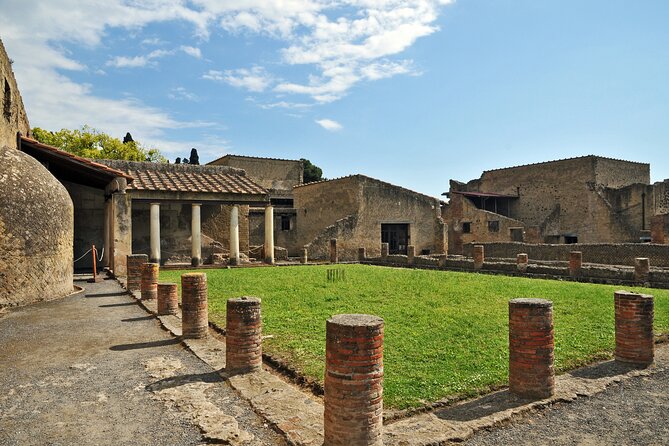
After Vesuvius, the tour shifts into a slower, more atmospheric mode at the Archaeological Park of Herculaneum. You get about 2 hours here, and the ruins are the reason people talk about Herculaneum so much.
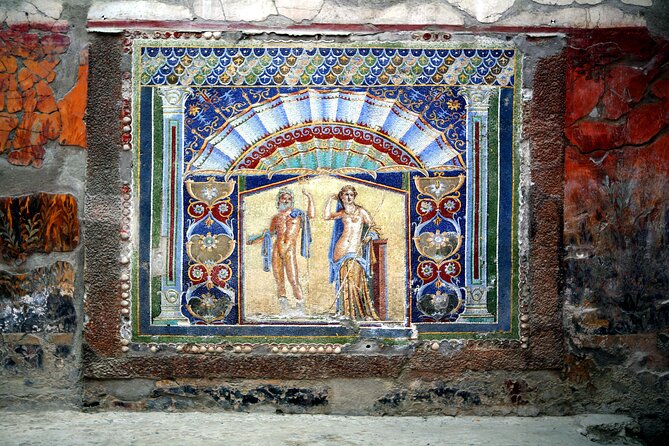
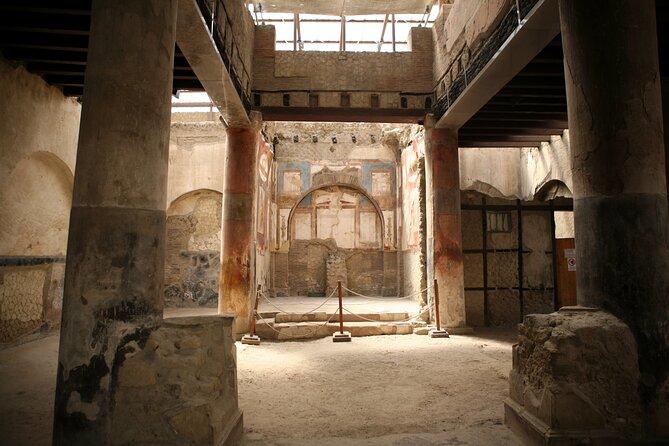
This city was destroyed by Vesuvius in 79 A.D., and the payoff is in the preservation. You’ll walk through houses and villas that show frescoes, plus streets and temples. It’s the kind of site where small details matter—doorways, wall paintings, and the way the town layout feels like a living place rather than a set piece.
Here’s the tradeoff: this stop is without an audioguide. That doesn’t mean it’s hard. It does mean you’ll need to rely on yourself and your own curiosity more than on an app telling you exactly what to look at.
I like this format, especially if you’re the type who enjoys wandering and spotting things on your own. But if you tend to feel lost without spoken guidance, you might want to arrive with a bit of context in your head—like why Herculaneum looks different from Pompeii.
Pompeii in 2 Hours: Audio, a Map, and the Fastest Version of the Highlights
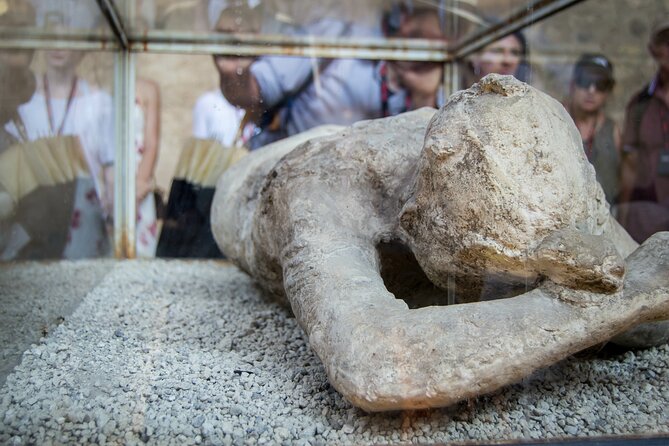
Pompeii is scheduled for about 2 hours, and this stop is where the tour switches to an audio guide with a detailed map. The audio is designed to help you cover key sights without needing a live guide to direct your feet.
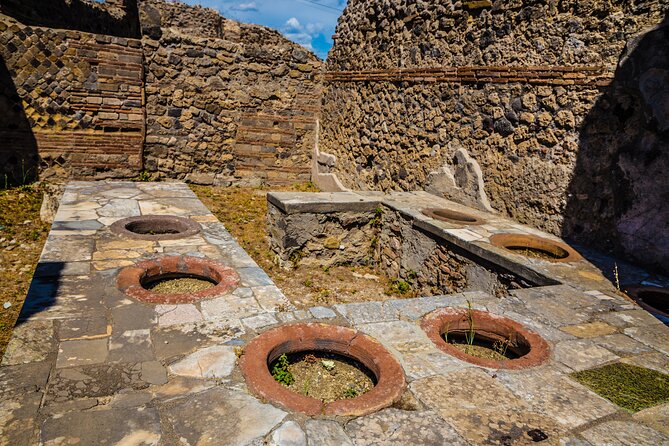
You’ll see major Pompeii “greatest hits,” including the Amphitheater, Thermopolis (a Roman-era food/drink spot), some temples, and famous houses like the Casa del Fauno. The idea is that you can follow the audio stops and still feel oriented when the park layout starts to blur.
The biggest practical challenge is time. Two hours in Pompeii is not “full Pompeii.” It’s “highlights with enough structure to not waste time.” If you miss one must-see section, you feel it immediately when the meeting time comes around.
Also, plan for tech friction. The audio experience depends on devices working smoothly. If you use earbuds, bring them, and make sure your phone or audio device is ready. A backup mindset helps here: assume you might need to rely on the map briefly if the audio stumbles.
If you want one clear decision rule: you’ll enjoy Pompeii most on this tour if you like efficiency and you’re okay with a highlights approach.
Transport and Transfers: Air-Conditioned Comfort, Busy Timetables
The tour includes an air-conditioned vehicle, which matters because you’re dealing with a volcano route and likely warm weather. Between stops, you’re not just getting transportation—you’re getting breathing room, which is key when the day involves hills and long walking stretches.
The route also benefits from organized transitions. That’s the difference between a fun plan and a stressful checklist. In this case, the stops are sequenced to keep you moving forward without huge idle gaps.
Still, don’t ignore crowd reality. The tour markets a group size of up to 17, but you might find buses run larger during peak demand. When that happens, the experience can feel less “boutique” and more “busy coach day.” If you’re the type who likes personal space, arriving mentally flexible will save you frustration.


Price and Value: Why $153.80 Can Make Sense

At $153.80 per person, the big value question is simple: what are you buying with that money?
You’re not just paying for a ride. You’re paying for:
- Herculaneum entrance
- Pompeii entrance
- Vesuvius National Park entry
- air-conditioned transportation
- audio guide support and map for Pompeii
- a structured day that starts and ends in Naples
If you tried to combine all three sites on your own, you’d spend time solving logistics: getting to each area, handling ticket lines, and stitching together transport between them. When time is tight, the convenience fee becomes easier to justify.
That said, the pricing only feels “great” if you accept the tour’s style: self-guided time at Herculaneum, short Pompeii highlights, and a schedule that doesn’t slow down for indecision. If your ideal day is slow and interpretive, you may prefer a smaller-group guided option.
For many first-time Naples visitors, this is the sweet spot: it turns three headline ruins into one doable day.
What to Pack and How to Pace Yourself
This is one of those days where preparation makes the difference between impressive and exhausting.
I’d pack:
- Sturdy, grippy shoes for Vesuvius and walking inside the parks
- Water (and a simple snack plan), since the tour doesn’t include a sit-down meal
- Earbuds or headphones that you trust, because the Pompeii audio guide depends on working audio
- A lightweight layer for wind at higher elevation
You’ll also want to pace like a grown-up adult. Use your time deliberately:
- On Vesuvius, don’t waste your crater time hunting for the perfect photo spot at the expense of exploring the top area.
- At Herculaneum, pick a few frescoed houses or areas to focus on, then let the rest be bonus.
- At Pompeii, follow the audio-map rhythm so you don’t wander into dead ends.
And heat strategy matters. Even with air-conditioning on the bus, you’ll still be outside at key moments. Start hydrated.
Who This Tour Is Best For (and Who Should Pass)
This tour is a strong match if you:
- want to see all three sites without renting a car
- have limited time in Naples and want a plan that actually finishes
- prefer structured logistics with some self-guided freedom
- are comfortable with moderate walking and a steep volcano climb
It may not be your best choice if you:
- want an expert guide explaining Pompeii in depth for the full site
- strongly dislike audio or tech-based experiences
- get worn down by long days with tight schedules and lots of walking
If Pompeii is your main goal and you want to go beyond highlights, you’ll likely enjoy a tour with more direct guiding time. But for many people, this one-day “greatest hits” approach is exactly right.
Should You Book This Herculaneum, Vesuvius and Pompeii Day Trip?
Book it if you want a high-efficiency day that covers Naples’ three biggest ancient draws with tickets and transport handled for you. The value works best when you accept the rhythm: Vesuvius for views, Herculaneum for preservation, Pompeii for major highlights fast.
I’d skip or consider an alternate format if you’re the kind of traveler who needs a guide to really connect the dots at Pompeii, or if the idea of a steep uphill volcano walk sounds miserable rather than exciting.
If you’re flexible, prepared with shoes and a plan for audio, this is the kind of outing that makes Naples feel like more than a pizza-and-coastal stop. It turns the region into a story you can walk through.
FAQ
Where does the tour pick up in Naples?
The meeting point is near Via Galileo Ferraris, 40 in Naples, Italy. The activity also suggests you can use coordinates 40.8505189N, 14.2747942E in Google Maps.
How long is the full day tour?
The duration is about 8 hours 30 minutes.
Does the tour include entrance tickets?
Yes. Entrance tickets are included for Herculaneum Ruins, Pompeii Ruins, and Vesuvius National Park.
Is there an audio guide during the stops?
The Herculaneum visit is described as without audioguide. Pompeii is described as having an audio guide with a detailed map.
What can I see at Vesuvius?
You’ll have time to reach the crater area and enjoy views over the Bay of Naples. The scheduled description also mentions fumaroles and panorama views that can include Capri, Ischia, Procida, Naples, and Pompeii.
What sites are included at Pompeii?
You’ll see important highlights such as the Amphitheater, Thermopolis, temples, and notable Roman houses like the Casa del Fauno.
Is lunch included?
No. The tour does not include lunch.
Is this tour suitable for people with limited mobility?
The tour indicates a moderate physical fitness level is required, which includes walking and a steep climb on Vesuvius. If that doesn’t work for you, you may want a different option.