REVIEW · ARCHAEOLOGICAL SITE OF HERCULANEUM
Herculaneum: Tickets & Tour with a Local Archaeologist
Book on GetYourGuide →Operated by Grand Tour Experience · Bookable on GetYourGuide
That first step into Herculaneum feels like time travel. What makes this tour special is the focus on exceptionally preserved Roman spaces, plus the way a trained archaeologist explains what you’re actually looking at. You get a guided path through villas, frescoes, mosaics, baths, and the street grid of a city buried in 79 AD by Mount Vesuvius.
I especially love two things: the chance to see details that normally get missed (including human remains like the skeletons), and the fact that you walk real Roman streets instead of just peeking at display panels. One drawback to consider is that the whole experience is only 2 hours, so you’ll need to be ready for a brisk, stop-and-go pace through a big site.
In This Review
- Key Highlights You’ll Care About
- Why Herculaneum Feels Different After Vesuvius
- Meeting at Biglietteria Ercolano and Getting Started Smoothly
- Casa dei Cervi: A Villa Stop That Sets the Tone
- Casa di Nettuno ed Anfitrite: Myth, Art, and Room Function
- Sacellum of the Augustales: Where Civic Pride Met Faith
- House of Skeletons: The Moment That Changes How You See Everything
- Walking the Main Site: Villas, Baths, and Water Engineering
- Casa dell’Albergo: Homes, Hosting, and How a City Worked
- Two Hours and the $58 Value Check
- What to Bring (and What to Expect on Your Feet)
- Who This Tour Fits Best
- Should You Book This Archaeologist-Guided Tour?
- FAQ
- Where does the tour start?
- How early should I arrive?
- How long is the tour?
- What’s included in the price?
- Is food or drinks included?
- Is hotel pickup and drop-off included?
- What languages are available for the guide?
- What should I bring?
- Is the tour wheelchair accessible?
Key Highlights You’ll Care About
- Skip-the-line entry so you spend more time in the ruins and less time waiting outside.
- Licensed archaeologist guidance that turns stones and rooms into believable daily life.
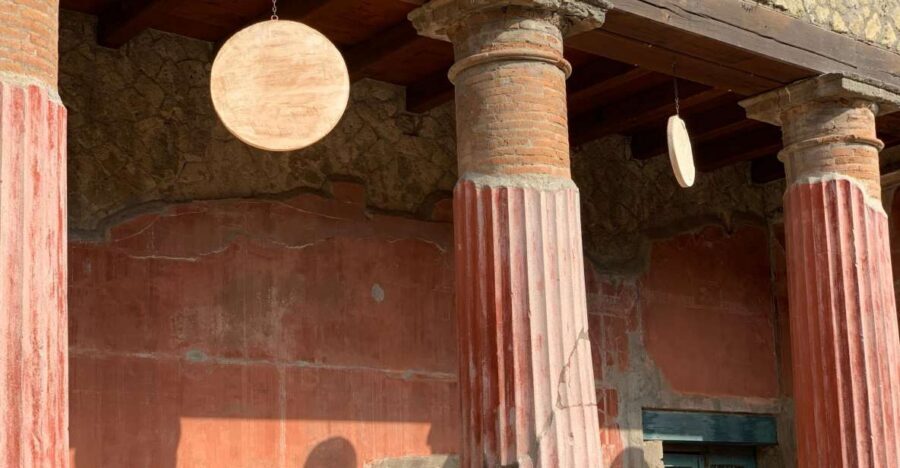
- Preserved villas and decorations, including frescoes and mosaics that are unusually intact.
- Original Roman streets and public spaces, from homes to baths and practical water systems.
- House of Skeletons and port-area remains, where the tragedy is visible in a way that’s hard to forget.
- Headset support when the group gets larger than 11 people, so you can actually hear the guide.
Why Herculaneum Feels Different After Vesuvius
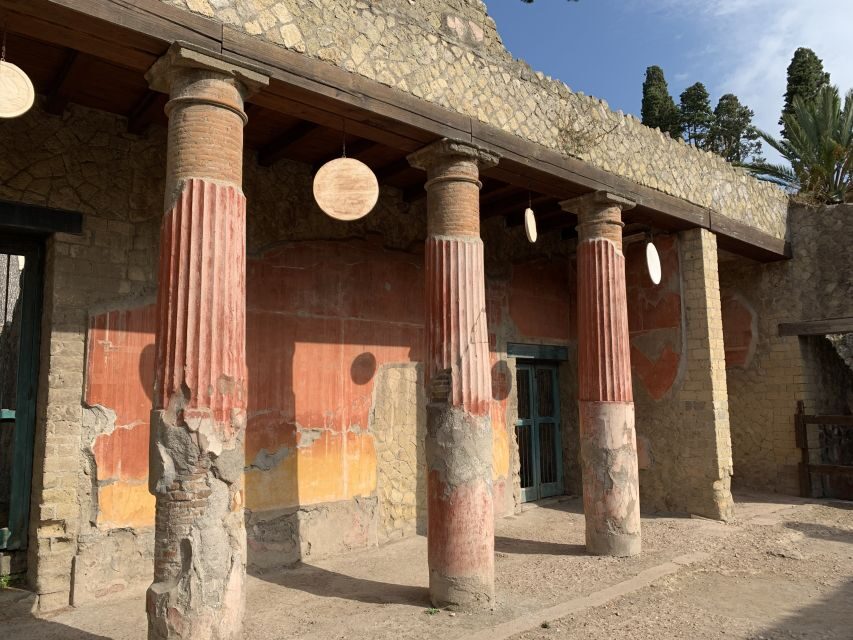
Herculaneum was a seaside Roman town that got buried in 79 AD. The key twist is that it wasn’t just stone that survived well—under volcanic material, some fragile things also remained, like wooden doorways, furniture impressions, and even the final moments of people who died there.
That’s why this site hits differently than Pompeii for many first-timers. Here, you’re not only looking at walls. You’re trying to picture how people moved through doorways, lived in rooms, and used public facilities, because so much of the setting still reads like a working place.
You can also read our reviews of more tours and experiences in Archaeological Site Of Herculaneum
Meeting at Biglietteria Ercolano and Getting Started Smoothly
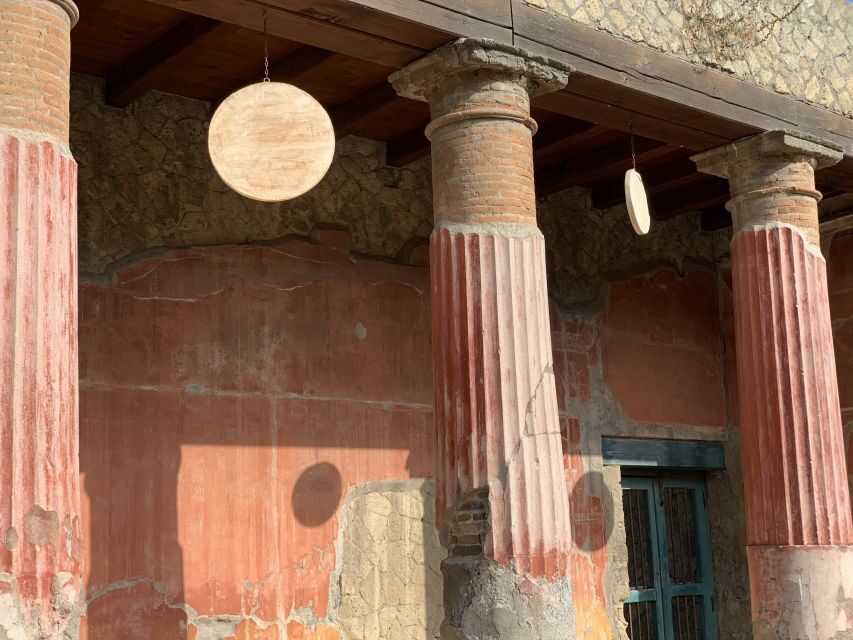
Your tour starts at Biglietteria Ercolano, at the ticket office. Plan to arrive 10 minutes early. This is one of those small details that matters because it gives your group time to check in and settle before walking begins.
The “skip the line” part is valuable here. Herculaneum isn’t just a casual stroll spot—you want those extra minutes inside, where the guide’s explanations will make more sense as you see each room and street corner in sequence.
Casa dei Cervi: A Villa Stop That Sets the Tone
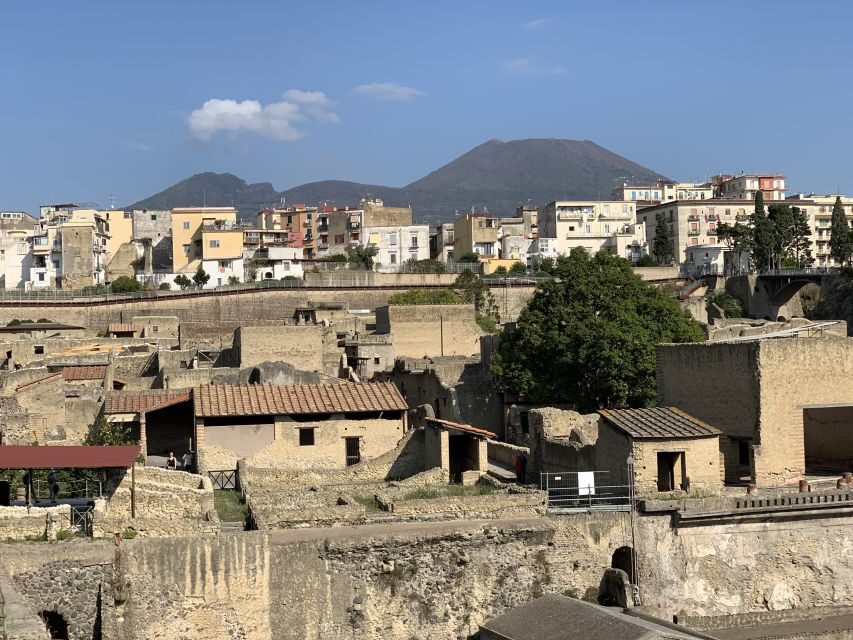
One of the first guided stops is Casa dei Cervi. This matters because Herculaneum’s villas aren’t just impressive—they’re teaching tools. A good archaeologist guide helps you see how the layout shaped daily routines, from where people gathered to how decoration signaled status.
You’ll also get into the habit of looking closely. The best moments at Herculaneum come when you stop treating walls like scenery and start reading them like architecture.
Tip: bring patience for looking at small details. Doors, wall surfaces, and room transitions are where the “how did they live” questions start getting answered.
Casa di Nettuno ed Anfitrite: Myth, Art, and Room Function
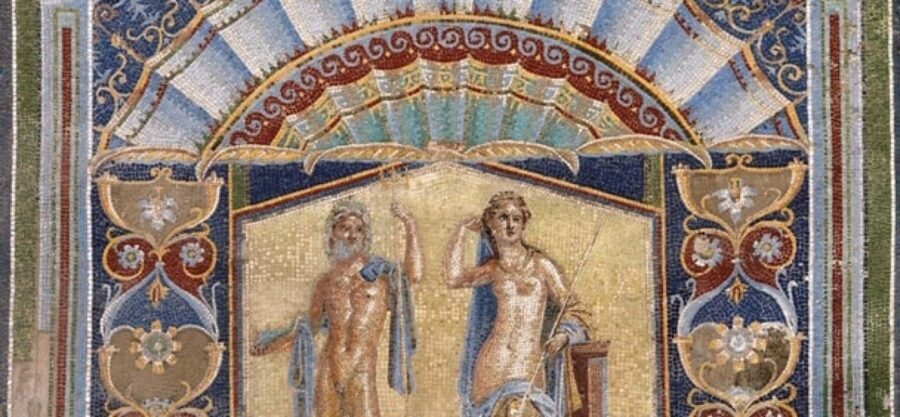
Next is Casa di Nettuno ed Anfitrite, another guided villa visit. The name points to the culture of the place: Roman homes often used myth and symbolism in decoration, and those choices weren’t random. They were part of identity—what you displayed to visitors, and what you chose to live with.
Frescoes and mosaics are the big draw in these houses. With guidance, you’ll learn how to connect artwork placement with the way rooms were used, instead of just admiring it as “pretty old paint.”
Possible drawback: if you’re expecting a slow museum-style pace, villa stops can feel concentrated. That said, the tight timing is part of why you’re able to cover multiple must-see areas in a single visit.
Sacellum of the Augustales: Where Civic Pride Met Faith
Then you’ll visit the Sacellum of The Augustales. This is where religion and community connections show up in stone. In many Roman towns, these spaces weren’t distant or purely private. They were part of civic identity, tied to local elites and group roles.
A guided stop here helps you see beyond “a small building.” You’ll usually get the practical context: what kinds of people cared about this space, what it would have meant socially, and how it fit into daily life in the city.
House of Skeletons: The Moment That Changes How You See Everything
The tour includes the House of Skeletons, and this is one of the hardest, most powerful stops. The name isn’t for drama—it points to the reality of what was preserved. People died here, and those remains provide a grim timeline of the event.
Guidance really matters at this point. Without it, it’s easy to look and move on. With an expert, you’re pushed to slow down and understand what you’re seeing, including why these remains can feel more immediate than the plaster-cast experience many people associate with Pompeii.
If you’re traveling with teens, this is often the stop that makes the whole story click. If you’re traveling with very young kids, you may want to prep them that the tour includes solemn, human moments.
Walking the Main Site: Villas, Baths, and Water Engineering
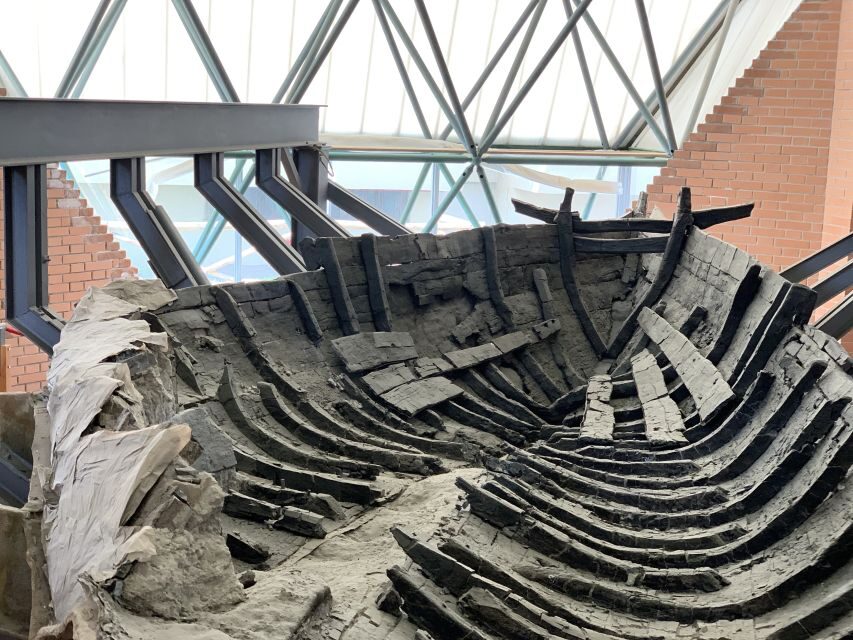
After the house visits, you’ll move through the Archaeological Site of Herculaneum with a mix of photo stopping and guided walking. This is where Herculaneum’s street-level scale becomes obvious. You’re moving through the kind of spaces people used every day—streets, homes, and public buildings.
A standout theme here is the cleverness of ancient water systems and the presence of public baths. Roman baths weren’t only about cleanliness. They were social infrastructure—places where people traded news, strengthened relationships, and spent time.
When you walk this section with a guide, you’ll learn how to connect engineering details to human routines. That’s the difference between reading about Herculaneum later and actually feeling the place during your visit.
Casa dell’Albergo: Homes, Hosting, and How a City Worked
You’ll also stop at Casa dell’Albergo, Herculaneum. The name hints at the building’s role, and a good archaeologist guide helps you interpret it in the context of how Roman towns operated—where people gathered, how services might have run, and how spaces supported movement through the city.
This is a useful stop if you like practical questions. Instead of only asking how wealthy residents lived, you’ll start thinking about the broader systems that made the city run.
Two Hours and the $58 Value Check
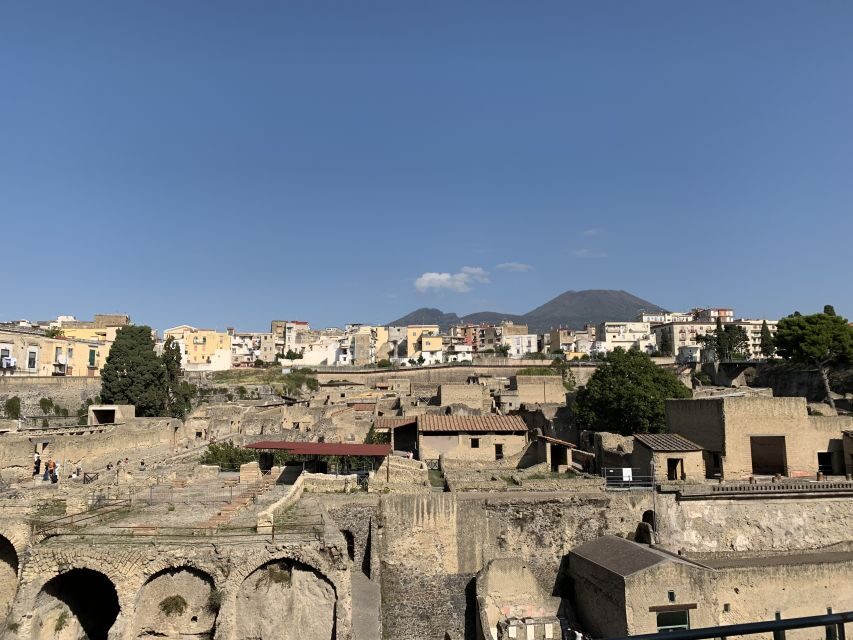
At $58 per person for a 2-hour tour, the value comes from what’s included: skip-the-line tickets, a licensed guide, and headset support when the group exceeds 11 people. That combination matters because you’re paying for interpretation in real time, not just access to a gate.
If you visited Herculaneum on your own, you’d likely spend more energy figuring out what you’re looking at. With this tour, your guide helps you connect villas, street corners, artwork, and public spaces into one story.
Is it worth it? If your goal is to leave with real understanding—especially about the preservation details and the meaning behind specific rooms—this price point tends to make sense. If your goal is purely casual wandering, you might prefer a self-paced visit to linger longer at your favorite walls.
What to Bring (and What to Expect on Your Feet)
You’ll want water and a passport or ID card. Plan for walking on the site, including uneven ground and stairs in many areas typical of archaeological sites. The tour is marked as not suitable for wheelchair users, and electric wheelchairs are not allowed.
Also, bring your eyes, not just your camera. The tour’s best payoff comes when you’re ready to notice small transitions—room thresholds, wall surfaces, and decorative fragments that are easy to overlook without a guide pointing them out.
Who This Tour Fits Best
This tour works especially well if you:
- want Herculaneum as a serious contrast to Pompeii, with a tighter, more intimate feel
- like archaeology that explains daily life, not just names and dates
- want the human side of 79 AD—especially the solemn stops connected to preserved remains
- travel in a group and benefit from headsets when it’s louder or busier
It may not be the best choice if you need a lot of slow time in one room. The stop list is packed into two hours, so you’ll move through multiple major areas without long pauses.
Should You Book This Archaeologist-Guided Tour?
If you care about seeing Herculaneum as a lived-in city, I’d book it. The tour’s structure is built around guided interpretation of preserved spaces—villas, public buildings, artwork, and the darker, unforgettable moments tied to the eruption. At $58 for 2 hours with skip-the-line access and headset support when needed, it’s a strong deal for most people who don’t want to guess their way through an archaeological site.
If you’re the type who wants total freedom to stop and linger for half an hour at every mosaic, consider whether a self-guided plan would suit you better. But if you want clarity fast and a story you can follow from street to room, this is the kind of tour that earns its price.
FAQ
Where does the tour start?
It starts at the ticket office, Biglietteria Ercolano.
How early should I arrive?
Please arrive 10 minutes before the tour starts.
How long is the tour?
The tour duration is 2 hours.
What’s included in the price?
You get a guided tour with a licensed guide, skip-the-line entrance tickets, and headsets if the group exceeds 11 people.
Is food or drinks included?
No. Food and drinks aren’t included.
Is hotel pickup and drop-off included?
No. Hotel pickup and drop-off aren’t included.
What languages are available for the guide?
The tour is offered in Spanish, English, Italian, and French.
What should I bring?
Bring water and a passport or ID card.
Is the tour wheelchair accessible?
It’s not suitable for wheelchair users, and electric wheelchairs are not allowed.