REVIEW · NAPLES
From Naples: Pompeii and Herculaneum Tour
Book on GetYourGuide →Operated by MOTORENT S.R.L. · Bookable on GetYourGuide
Two ancient cities, one long day.
This Naples outing is built around Pompeii and Herculaneum (both UNESCO World Heritage Sites), so you get two of the most famous reminders of the 79 AD eruption of Vesuvius in a single stretch. I like that the pace gives you real independent time once you arrive, instead of marching everyone around like luggage. I also like the Pompeii setup: an audio guide plus a detailed map so you can actually steer your own route.
The one thing to keep in mind is time. Pompeii is huge, and a half-day can feel short if you want to see everything, especially once you factor in crowds and walking.
Here’s how it all works, what to prioritize, and whether this is the right day trip for you.
In This Review
- Key Highlights You’ll Actually Use
- Getting There From Naples: Via Galileo Ferraris Meets “Around Vesuvio”
- The Big Idea: Why Do Pompeii and Herculaneum Together?
- Stop 1: Ercolano (Herculaneum) With 2.5 Hours to Find Your Rhythm
- Stop 2: The Bus Transfer That Protects Your Actual Visiting Time
- Stop 3: Pompeii With the Audio Guide and 4 Hours of Free Time
- How to Use the Audio Guide Without Getting Stuck in One Spot
- The Time Trade-Off: Pompeii Is Big, and Half a Day Can Feel Tight
- What’s Included (and What You’ll Pay For Separately)
- Who This Tour Suits Best
- Should You Book This Pompeii and Herculaneum Tour?
- FAQ
- How long is the tour from Naples?
- Where is the meeting point?
- How much free time do I get at Herculaneum (Ercolano)?
- How much free time do I get in Pompeii?
- Is the Pompeii audio guide included?
- Do I need an ID to rent the audio guide?
- Are entrance tickets included?
- What food is included?
- What language is the driver?
- What’s not included besides food and drinks?
Key Highlights You’ll Actually Use
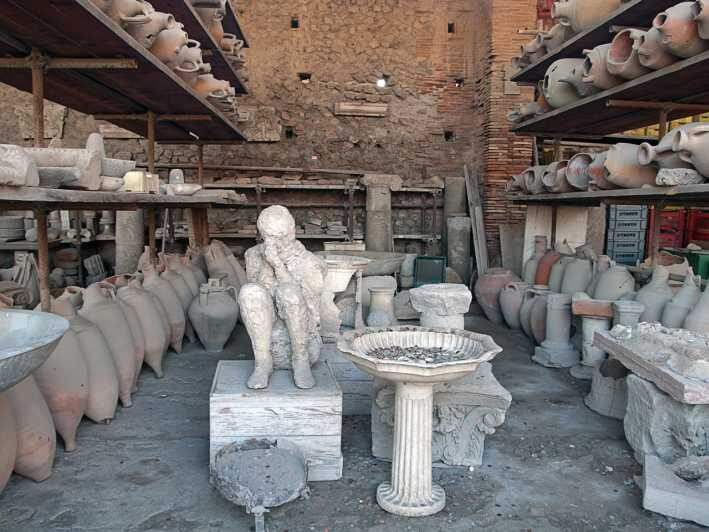
- Two UNESCO sites in one day: Pompeii plus Herculaneum, with bus transfers between entrances.
- Skip-the-line ticketing: you’re not stuck in the usual entrance bottleneck.
- Pompeii audio guide (with valid ID): rental requires a document, and the audio guide is for Pompeii only.
- Autonomous exploring: you get set free-time blocks to walk at your own speed.
- Real Pompeii textures: frescoes, including the lupanar (the brothel).
- Ercolano/Herculaneum tends to feel calmer: it’s often an easier site to enjoy at an unhurried pace.
Getting There From Naples: Via Galileo Ferraris Meets “Around Vesuvio”
Your day starts at Via Galileo Ferraris, 40 in Naples, near the meeting point. If you want less hassle on arrival, plug in the coordinates 40.8505189N, 14.2747942E before you leave. Your bus has the logo Around Vesuvio.
From there, it’s a straightforward bus-and-go format: you transfer directly to the entrances for Herculaneum first, then to Pompeii. The ride segments are about 30 minutes each way between the stops, which matters because it protects your actual visiting time. You’re not spending your energy guessing where to stand, lining up for transport, or trying to work out local transit while tired and sunburn-prone.
The driver is listed as English and Italian, so if you have quick questions, you should be able to get answers without switching languages mid-sentence.
You can also read our reviews of more tours and experiences in Naples.



The Big Idea: Why Do Pompeii and Herculaneum Together?
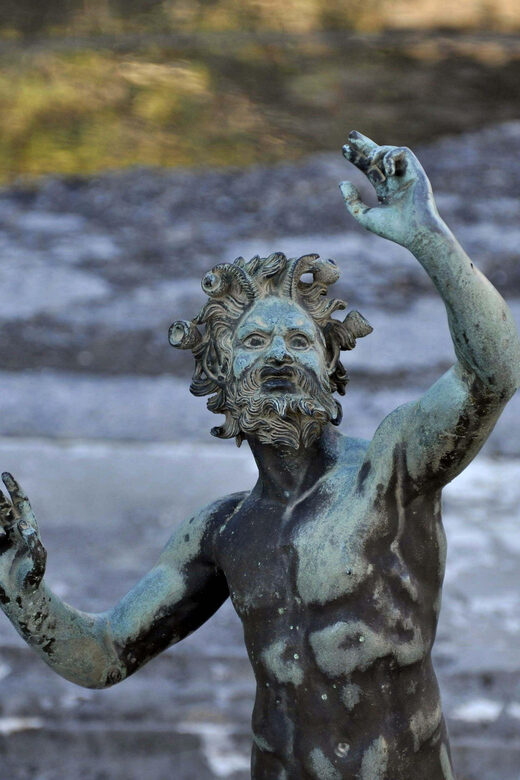
Doing both sites in one day is smart for one main reason: they complement each other. Pompeii is the loud, famous one with the big crowds and the dramatic streetscapes. Herculaneum (often called Ercolano in Italian) is the other side of the story, and many people find it a better fit when you want to slow down and absorb what you’re seeing.
If you only have a day in the Naples area, this is the most efficient way to get the essentials. And because the tour is designed for autonomous exploring once you’re inside, you’re not stuck listening to explanations every five minutes. You can do the history in the background and let the sites do the teaching.
Just be honest with yourself about your priorities: if your goal is to cover every major corner of Pompeii, you may feel rushed. If your goal is to see the standout rooms, frescoes, and key streets (with some breathing room), it works better.
Stop 1: Ercolano (Herculaneum) With 2.5 Hours to Find Your Rhythm
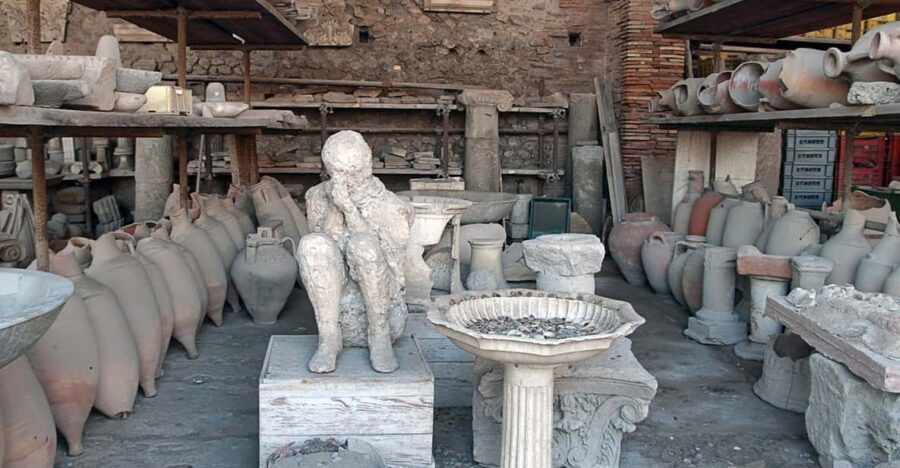
You get 2.5 hours free time in Ercolano. That’s enough time to walk, pause, and actually look instead of racing from doorway to doorway.
One practical point: this tour includes audio guide resources only for Pompeii, not Herculaneum. So in Herculaneum, don’t assume you’ll have the same audio setup. You’ll still be able to enjoy the site independently, but your “story” will come more from what you spot on your own and whatever on-site material you choose to use.
A detail worth planning around: some visitors felt they weren’t handed a map for Herculaneum alongside whatever they expected at Pompeii. I’d treat that as a heads-up. If you see staff, ask what’s available on paper or where to pick up a map before you start walking.
What I’d personally focus on in Herculaneum is simple: choose fewer streets and spend time inside the areas that grab your attention. With only 2.5 hours, you’ll do better with a plan like this:
- Pick a direction at the entrance, then
- Stop where the visuals and preserved spaces pull you in.
Herculaneum can feel less crowded than Pompeii, and that matters because it changes the whole vibe of the visit. Less crush equals more time to notice the small things.
Stop 2: The Bus Transfer That Protects Your Actual Visiting Time
Between Herculaneum and Pompeii, you get another 30-minute bus/coach transfer. This might sound boring, but it’s one of the quiet benefits of the tour design.
If you’ve ever tried to get between Pompeii sites on your own, you know the real time sink is usually not distance. It’s getting organized, finding the right entry point, and making sure you’re in the right place before the lines build. Here, the transfers are handled, and you arrive already aligned with the entrances.
Also included are things that sound bureaucratic but are actually helpful: parking, ZTL, tolls, and fuel are part of the package. Translation: you’re not dealing with the behind-the-scenes headaches that can derail DIY plans.
Stop 3: Pompeii With the Audio Guide and 4 Hours of Free Time
Pompeii is where this day can feel like a highlight reel. You get 4 hours free time in Pompeii, plus an audio guide and a detailed map for the independent visit.
Here’s the key rule: you must bring a valid ID document to rent the Pompeii audio guide. If you show up without the right document, you’ll lose the one built-in tool designed to help you understand what you’re looking at.
Audio guides are available in many languages, including Chinese, English, French, German, Hebrew, Italian, Portuguese, Russian, and Spanish. So even if your group is mixed, you should be able to match the language to your comfort level.
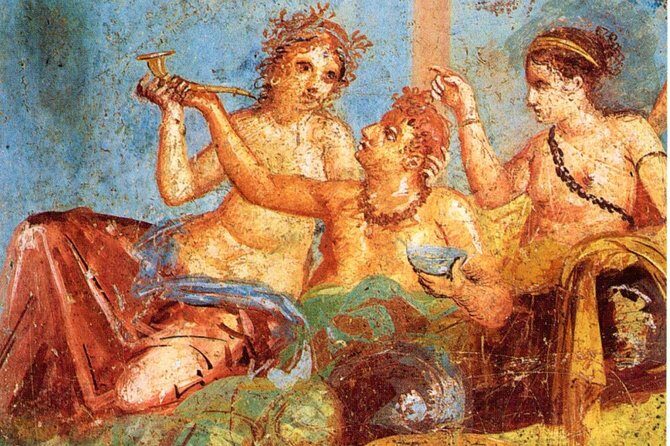
The tour highlights mention ancient frescoes and the lupanar, the city’s brothel. Those are exactly the kinds of details that make Pompeii feel human. It’s not just ruins; it’s everyday life made suddenly visible—paint on walls, rooms you can imagine in use, and a city plan that reveals how people lived.



How to Use the Audio Guide Without Getting Stuck in One Spot
With 4 hours, you should use the audio guide strategically. Don’t try to follow every stop like a checklist. Instead:
- Pick a main route from the map,
- Use the audio guide for the big clusters you want to understand,
- Save your curiosity for whatever stops you when you’re actually there.
The tour includes assistance from staff before entering Pompeii. That’s useful because it can help you get your bearings fast and start walking instead of wandering.
The Time Trade-Off: Pompeii Is Big, and Half a Day Can Feel Tight
This is the part where you should go in with realistic expectations. Pompeii’s scale is the problem. Even with 4 hours on the schedule, you can end up spending time on navigation and waiting for space in busy areas.
Some visitors also reported that the time they were allowed in Pompeii felt shorter than expected, which made the experience stressful because it didn’t leave enough room to slow down. I can’t promise what you’ll personally receive, but I can tell you how to protect yourself: plan to move with purpose.
If you want to leave Pompeii happy, aim for this strategy:
- See fewer zones, but
- Stay longer inside the areas that matter most to you (like fresco-heavy spots and notable rooms such as the lupanar).
If your dream is to do Pompeii like a two-day project, consider adjusting your expectations or adding a second day later. This tour is best as a smart hit of the highlights, not an all-in, complete coverage mission.
What’s Included (and What You’ll Pay For Separately)
You’re paying for more than entrances. The package includes:
- Pick-up in Naples and direct transfers by bus to the Herculaneum and Pompeii entrances
- Assistance and entry support for Pompeii
- Audio guide and detailed map for Pompeii self-guided time
- Skip-the-line entrance tickets for Pompeii and Herculaneum
- Parking, ZTL, tolls, and fuel
- Pompeii entrance ticket value listed at €20.00
What’s not included: foods and beverages. That’s not a dealbreaker, but it means you should plan for snacks and water on your own. Also think about the simple stuff: comfortable shoes, sun protection, and a light layer if the day shifts.
Who This Tour Suits Best
This is a strong fit if you:
- Want to cover Pompeii plus Herculaneum in one day from Naples
- Like independent time at major sites (not guided bus-lecture all day)
- Enjoy archaeology and the atmosphere of everyday Roman life—especially things like frescoes and rooms tied to daily routines (including the lupanar)
It’s also a decent choice if you’re short on days and want a structured day without the planning headaches.
Where it might not be ideal is if you’re the kind of visitor who needs every square meter explained and you hate the feeling of time pressure. Pompeii can be unforgiving with limited time.
Should You Book This Pompeii and Herculaneum Tour?
Yes, if you want a one-day plan that removes logistics friction and gives you real walking time in two UNESCO sites. The skip-the-line entry, direct transfers, and Pompeii audio guide are the main reasons this feels worth it, not just because the ruins are famous.
I’d book with the assumption that Pompeii will be a “highlights and favorites” visit, not a full day-long excavation experience. Bring your ID for the audio guide, and don’t bank on audio or maps in Herculaneum the same way you get in Pompeii. If you go in with that mindset, you’ll come away with a clear picture of what happened in 79 AD and how each city preserves a different slice of the story.
FAQ
How long is the tour from Naples?
It’s listed as 8 hours total. Starting times depend on availability.
Where is the meeting point?
The meeting point is near Via Galileo Ferraris n.40, Naples (coordinates: 40.8505189N, 14.2747942E). The bus logo is Around Vesuvio.
How much free time do I get at Herculaneum (Ercolano)?
You get 2.5 hours free time in Ercolano.
How much free time do I get in Pompeii?
You get 4 hours free time in Pompeii.
Is the Pompeii audio guide included?
Yes. An audio guide is included for Pompeii only, and it comes in multiple languages (including English).
Do I need an ID to rent the audio guide?
Yes. You must bring a valid ID document to rent the Pompeii audio guide.
Are entrance tickets included?
Yes. Entrance tickets for Pompeii and Herculaneum are included, and Pompeii’s ticket value is listed at €20.00. Skip-the-line entry is also included.
What food is included?
Nothing. Foods and beverages are not included.
What language is the driver?
The driver is listed as English and Italian.
What’s not included besides food and drinks?
No other specific exclusions are listed beyond foods and beverages.