REVIEW · NAPLES
Discover the Rione Sanità with Insolitaguida
Book on Viator →Operated by Insolitaguida - Naples city tours · Bookable on Viator
Rione Sanità feels like a secret Naples. I love the street-level storytelling that turns everyday alleys into living context, and I love that you finish with Basilica di Santa Maria della Sanità in reach of the neighborhood’s quieter corners. One possible drawback: this is a walk-and-learn experience, not a checklist of big, famous monuments, so you’ll want to be comfortable spending time outside and on foot.
The format is built for getting past the usual tourist map. You can pick a morning or afternoon start, and Insolitaguida’s guides (people like Lucia or Lina are mentioned by name) explain what you’re seeing as you go, with just enough time to ask questions.
The group stays small—up to 30—and the best tours can feel even smaller, which makes a big difference in Naples where neighborhoods have strong local character. If you’re hoping for a quiet, museums-only outing, you might prefer a different style of tour.
In This Review
- Key highlights worth planning for
- Rione Sanità Naples: why this neighborhood is the Naples you miss
- Timing, group size, and how the walk stays comfortable
- First stop at Porta San Gennaro: coffee tasting and immediate orientation
- Palazzo Dello Spagnolo: Neapolitan Baroque civil architecture you can actually see
- Borgo dei Vergini: sacred streets, aristocratic influence, and “how Naples changed”
- Fontanelle Cemetery: syncretic practice, folk beliefs, and a respectful approach
- Palazzo Sanfelice: another monument that makes the walk feel “real”
- Tarallificio Poppella: food tasting that turns history into something you can taste
- The church finish: Basilica di Santa Maria della Sanità and its Greek-cross design
- Price and value: what $24.74 gets you in real terms
- Who should book this tour, and who might want a different plan
- Should you book Rione Sanità with Insolitaguida?
- FAQ
- How long is the Rione Sanità tour?
- What language is the tour offered in?
- Does this tour include coffee or food tasting?
- Is the tour private?
- Where does the tour start and end?
- Do I need to buy tickets for the stops?
- Is the tour near public transportation?
- When do I get confirmation after booking?
- If I cancel, is it refundable?
Key highlights worth planning for
- Coffee at Porta San Gennaro sets the tone before you walk into the Rione Sanità streets
- Neapolitan Baroque civil architecture gets explained in a way you can actually picture (stairs, façades, style)
- Borgo dei Vergini shows how the neighborhood moved from ancient influence toward modern Naples
- Fontanelle Cemetery is treated with cultural context, not shock value, including talk of folk beliefs
- Tarallificio Poppella tasting keeps the tour grounded in what locals snack on
- A small group max (30) helps you get answers, even if you travel with lots of questions
Rione Sanità Naples: why this neighborhood is the Naples you miss
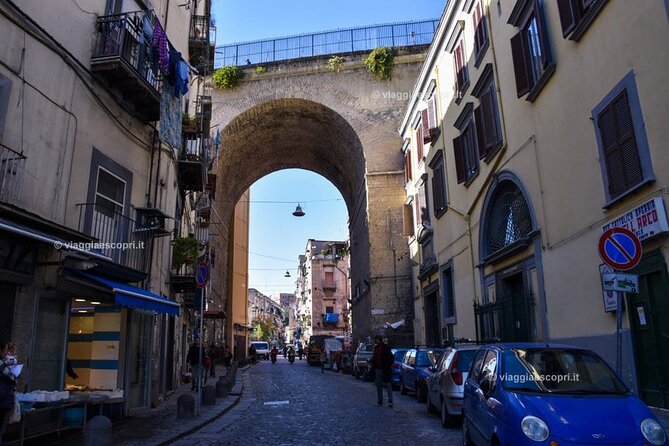
Most first-time visitors get stuck in the same few zones: iconic views, postcard churches, the loud parts of town. Rione Sanità is different. It’s not trying to be a show; it’s a working neighborhood with its own rhythm, where history isn’t sealed behind glass.
This tour is a smart way to experience that rhythm without wandering in circles. You get a guide who can connect names, buildings, and street details into one story you can follow. That matters in Naples, where you can walk past something important and not realize it unless someone points out what you’re looking at.
You’re also not forced into a long day. In about 2 hours, you cover a meaningful slice of the district, with food stops that keep it enjoyable and not exhausting.
You can also read our reviews of more tours and experiences in Naples.

Timing, group size, and how the walk stays comfortable
You can choose between a morning or afternoon departure, which is a big deal in Naples. Pick the slot that fits your energy level. If you’re the type who wants to get out early and beat the crowds, the morning tends to feel calmer; later departures can match well with slower sightseeing days.
The group size is capped at 30 people, but the vibe often depends on how many you’re actually sharing the walk with. In past tours, people have described very small groups (even two people), which is exactly why this style works. You’re not stuck listening from the back row. You can ask direct questions, and the guide can adjust the pace.
Also, there’s a mobile ticket, which cuts down on time spent sorting paperwork at the start. And because the meeting area is near public transportation, you can plug the tour into your day without a major logistics headache.
First stop at Porta San Gennaro: coffee tasting and immediate orientation
You start at Via Porta San Gennaro, and the first moment isn’t a lecture—it’s a coffee tasting. That sounds simple, but it does two useful things.
First, it helps you get your bearings quickly. You’ll hear just enough about where you are and what you’re about to see, before you move into tighter streets. Second, it puts you in the right mindset: Naples isn’t just about viewing; it’s about tasting, talking, and moving like a local.
From Porta San Gennaro, you begin threading through the neighborhood in a way that makes the later stops easier to understand. When the architecture and cemetery conversations start, you’ll already have context.
Palazzo Dello Spagnolo: Neapolitan Baroque civil architecture you can actually see
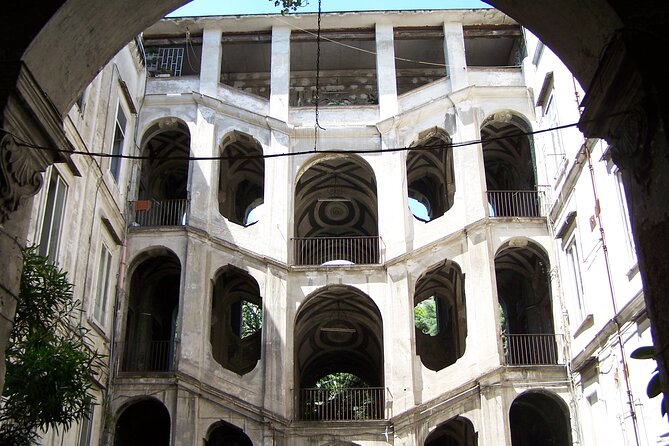
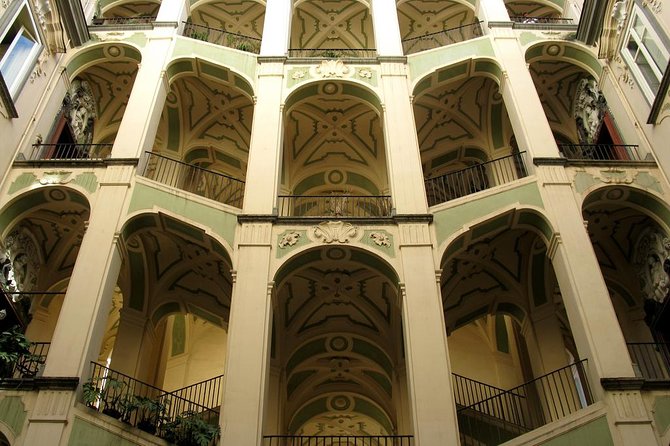
Palazzo Dello Spagnolo is the kind of building that rewards slow looking—especially once someone explains what makes it Neapolitan Baroque.
The big visual hook here is the exemplary grandeur of the main double flight staircase. In practical terms: rather than just being a backdrop, the staircase becomes part of the building’s public face. A guide helps you notice how the space is designed so it feels imposing without needing huge crowds or flashy effects.
After that, you move through an area connected to local life, including a nearby food market visit. This is where the tour stays grounded. You’re not learning in theory; you’re walking through the same kind of everyday spaces where people shop and snack.
Possible drawback to keep in mind: if you’re someone who prefers “read-only” sightseeing (photos, wide views, no stops), a Baroque palace plus market time might feel a little busy. The tradeoff is worth it if you like texture and detail.
Borgo dei Vergini: sacred streets, aristocratic influence, and “how Naples changed”
Borgo dei Vergini is described as an itinerary through the centuries. That’s not marketing talk. The neighborhood has long been associated with sacred space and the cemetery area, and it also reflects the city’s evolution from older Naples into the more modern layers you see today.
What I like about this stop is how it reframes the idea of “where people live.” In many cities, cemeteries and sacred sites feel separated from daily life. Here, the district history is part of the streets you walk every day. You’ll learn why families of status favored this area and how the identity of the neighborhood grew around those associations.
This is also the part of the tour that most people remember as emotional and human. You’re seeing a place that carries meaning, not just architecture.


Fontanelle Cemetery: syncretic practice, folk beliefs, and a respectful approach
One of the most praised moments is the inclusion of Fontanelle Cemetery. People describe it as fascinating and incredible, and the key value is the explanation of syncretic practice—how superstition and folk beliefs show up in local traditions.
This is where a good guide matters most. Cemeteries can easily become a “spooky photo stop.” Here, the framing is cultural and historical: you learn what the practices mean in Neapolitan tradition, and you get a better sense of why people care about the site.
If you’re sensitive to morbid themes, this stop still isn’t presented as sensational. It’s presented as part of how people in Naples interpret loss, faith, and everyday life. You’ll get context so you can observe respectfully rather than feeling lost.
Palazzo Sanfelice: another monument that makes the walk feel “real”
Next you reach Palazzo Sanfelice, described as a monumental palace located in the Rione Sanità. Even with only a short visit, it helps the tour avoid the feeling of being repetitive.
This palace works as a second architecture anchor, showing that the district’s significance isn’t limited to one highlight. You’ll keep recognizing patterns—style choices, façade presence, the way palaces announce themselves—and you’ll understand the neighborhood as an architectural landscape shaped by generations.
A small practical consideration: because you’re walking between buildings and streets, you’ll want comfortable shoes. The tour is short, but Naples streets don’t always stay perfectly flat.
Tarallificio Poppella: food tasting that turns history into something you can taste
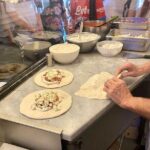
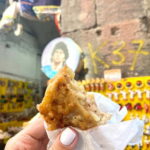
Then comes the part that turns the whole tour into an experience you’ll remember with your senses: the stop at Tarallificio Poppella for a food tasting.
Poppella is described as a historic pastry shop that was born in Naples back in 1920. That kind of time depth matters. You’re not eating something trendy designed for Instagram. You’re tasting a local product with a real timeline, which makes the district feel less like a set and more like a living place.
If you’re picky about food stops on tours, keep this in mind: the tasting is short, focused, and tied to place. It’s not a long meal. It’s a pause that gives your feet a break while keeping the theme moving forward.
The church finish: Basilica di Santa Maria della Sanità and its Greek-cross design
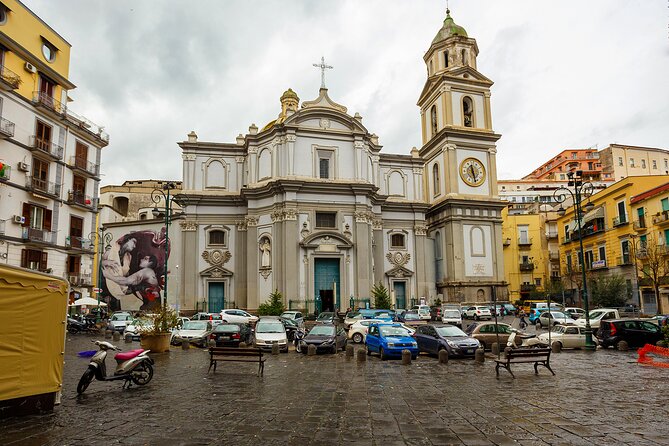
The tour ends at Basilica di Santa Maria della Sanità, at Piazza Sanità 33. This finale is a strong choice because it ties together what you learned about sacred spaces throughout the walk.
The basilica is described with an architectural plan that includes a Greek cross plan with an apsidal presbytery. You’ll also hear about a valuable façade set back from the road, which means the front isn’t just a wall facing the street—it becomes a prominent architectural element in its own right.
Another detail worth knowing: the portal is in piperno, and the church is treated as a reference point for the art and architecture of Renaissance and Baroque in Naples. In other words, you’re closing with a building that can’t be separated from the neighborhood’s identity.
Even if you’re not an architecture specialist, this ending gives you a visual payoff. After time in streets and palaces, the basilica gives the story a clear focal point.
Price and value: what $24.74 gets you in real terms
At about $24.74 per person (2 hours, English), this tour is priced to be accessible while still giving you real on-the-ground context.
Here’s why it feels like good value:
- You get 2 hours of guided storytelling, not just a self-guided walk with a map
- The pace includes coffee and local food tasting stops, so you’re not paying full-price to just look around
- The tour is small-group, which makes the guide’s explanations more useful
- You’re focusing on a part of Naples that’s easy to miss if you only follow the common routes
Could it cost less? Sure, some street walks are free. But a guide who can point out what matters—like Baroque staircase design and why Fontanelle Cemetery practices carry meaning—saves you from guessing.
And if you’re traveling with a friend or two, the intimacy can be even better than you expect. The key is that the guide time is concentrated, so you feel the value quickly rather than waiting until the end.
Who should book this tour, and who might want a different plan
This is a great match if you want:
- Naples beyond the usual postcard circuit
- a walk that includes architecture, local culture, and food
- a guide-led experience in English with time for questions
It may be less ideal if you want:
- only top-tier, world-famous sights with lots of signage
- a strictly seated tour
- a purely “one museum, then the next museum” day
If you’re the curious type who likes learning names, reasons, and how places evolved, you’ll likely enjoy the way this tour connects the dots.
Should you book Rione Sanità with Insolitaguida?
Yes—if you want a Naples experience that feels like the city itself, not just a highlights reel. The tour’s biggest strength is the combination of small-group pace, clear explanations, and practical food breaks that keep it human.
Book it especially if you care about Neapolitan Baroque details and want context for places like Fontanelle Cemetery that are deeply tied to local belief. You’re also choosing an itinerary that ends at a meaningful landmark, so the walk feels complete.
If you hate walking, hate questions, or only want the most famous monuments, you might prefer a more conventional sightseeing route. But for most people, this is one of the better ways to understand Naples at neighborhood level in a short time.
FAQ
How long is the Rione Sanità tour?
It’s listed as about 2 hours.
What language is the tour offered in?
The tour is offered in English.
Does this tour include coffee or food tasting?
Yes. There’s a coffee tasting at Porta San Gennaro, and there’s a food tasting at Tarallificio Poppella.
Is the tour private?
The experience notes that a private tour gives an intimate feel, and the group size is capped at a maximum of 30.
Where does the tour start and end?
It starts at Via Porta San Gennaro and ends at Basilica di Santa Maria della Sanità, Piazza Sanità 33.
Do I need to buy tickets for the stops?
Admission is listed as free for the stops mentioned.
Is the tour near public transportation?
Yes, it’s described as near public transportation.
When do I get confirmation after booking?
You receive confirmation within 48 hours of booking, subject to availability.
If I cancel, is it refundable?
No. The experience is non-refundable and can’t be changed for any reason.