REVIEW · SORRENTO
Skip the line Private tour of Pompeii from Sorrento
Book on Viator →Bookable on Viator
Pompeii, minus the chaos. This private tour from Sorrento keeps things focused, with round-trip train tickets plus a guide-led route that aims for the best ruins in the time you have. I like that you’re not piecing together transport and logistics on your own, and I also like the way the plan builds understanding fast, moving from major public spaces to the rooms with famous mosaics.
One thing to plan for: the Pompeii Archaeological Park admission ticket is listed as not included, so you’ll want to budget for that. Also, even with a well-paced route, you’ll be walking on old stone and uneven ground, so good shoes matter.
In This Review
- Key highlights worth your attention
- Why a private Pompeii route from Sorrento works
- Price and logistics: what you pay for, what you add
- Getting there from Sorrento: pickup and priority ticket help
- Pompeii Archaeological Park: the highlight route that keeps you oriented
- Apollo to the Forum: power, ritual, and everyday public life
- Mosaics and mansions: Poet Tragico, Via dell’Abbondanza, Cinghiale
- Teatro Grande and the Lupanar: art, performance, and the city’s darker side
- Guide style: what you’re paying for when names like Romolo, Michele, Paolo, Josie, and Giusy show up
- Practical tips so the route feels easy, not stressful
- Should you book this skip-the-line private Pompeii tour from Sorrento?
- FAQ
- How long is the Pompeii tour from Sorrento?
- Is this a private tour?
- What language is the tour offered in?
- What’s included in the price?
- Is the Pompeii admission ticket included?
- How long are the individual stops inside Pompeii?
- Where does the tour start and end?
- Are tips included?
- Can service animals participate?
- What is the cancellation policy?
Key highlights worth your attention
- Private group, your own pace: Only your group participates, which is a big deal in a crowded place.
- Train round trip included: You get the Sorrento–Pompeii–Sorrento train covered.
- Priority ticket help: The guide has priority for purchasing tickets, which can reduce friction on arrival.
- A highlight route that stays readable: Forum spaces, major houses, and the famous entertainment sites are stitched into one logical walk.
- Great guide communication: From Romolo’s scene-setting to Josie’s crowd navigation, the tour is built to help you follow what you’re seeing.
- Family-friendly pacing: One guide (Giusy) was praised for keeping two kids engaged for the whole experience.
Why a private Pompeii route from Sorrento works
Sorrento is a great base, but Pompeii can feel like information overload once you’re inside the gates. This tour tackles that problem the practical way: you go in with a plan, a guide to translate what you’re looking at, and a time limit that keeps you from wandering and missing the best stops.
The “private” part isn’t just marketing. When it’s only your group, you can ask direct questions without waiting for a turn, and you can slow down if something grabs your attention. That matters in Pompeii, where you might spot a mosaic, a floor plan, or a detail on a wall that you’d otherwise miss in a large crowd.
I also like the structure because it goes beyond “see big ruins.” The route is set up to show Pompeii like a lived-in city: public life in the Forum, daily routines in houses and street areas, and social entertainment at spots like the Teatro Grande and the Lupanar. You’re not just sightseeing stones. You’re building a mental map.
This is offered in English, and the experience is described as “most travelers can participate.” That’s a good sign if you’re traveling with mixed ages or different comfort levels, as long as you’re okay with walking and uneven surfaces.
You can also read our reviews of more private tours in Sorrento



Price and logistics: what you pay for, what you add

The price is $132.45 per person for a 3 to 4 hour experience. That sounds like a lot until you break down what you’re actually getting: round-trip train tickets, pickup in Sorrento, a guide, and priority help for tickets.
Here’s the value math that matters for most people:
- You’re not paying separately for the train to Pompeii and back.
- You’re paying for time saved—especially the hard part, which is figuring out logistics and where to go first.
- You’re paying for interpretation: someone to connect the dots between the ruins and how the city functioned.
Two costs you should expect to handle separately:
- Pompeii Archaeological Park admission ticket is listed as not included.
- Tips are not included.
The itinerary also marks several stops as having admission ticket included (Temple of Apollo, Foro de Pompeya, Granai del Foro, Terme del Foro, Casa del Poeta Tragico, Via dell’Abbondanza, Casa del Cinghiale, Teatro Grande, Lupanar). What that usually means in practice is that those specific visit components are handled inside your overall entry plan. Still, because the main park admission is not included, it’s smart to confirm what you’ll need to purchase when you book.
One more practical note: you’ll receive a mobile ticket. That helps if you hate paper. It also means the staff can keep things moving on arrival.
Getting there from Sorrento: pickup and priority ticket help
This tour includes pickup in Sorrento and uses the train for round-trip travel. That’s a big convenience. Driving or taxis can be pricey, and parking near Pompeii isn’t your friend. The rail option keeps you from turning your day into a transport headache.
You meet at 80067 Sorrento, Metropolitan City of Naples, Italy. The tour ends back at the meeting point, so you’re not stranded after the ruins.
The biggest “skip the line” style advantage here is that the guide has priority for purchasing tickets. Priority doesn’t automatically mean zero waiting everywhere—Pompeii is Pompeii—but it usually means less time stuck at counters and more time with the ruins.
One of the nicest touches from the experience is how guides handle the flow. Josie was praised for minimizing waiting by navigating where to go inside Pompeii. That’s exactly the kind of benefit that justifies paying for a guided plan instead of touring solo.
Pompeii Archaeological Park: the highlight route that keeps you oriented
Stop 1 covers Pompeii Archaeological Park for about 2 hours. It’s the anchor of the whole tour, and it’s where your guide sets your bearings.
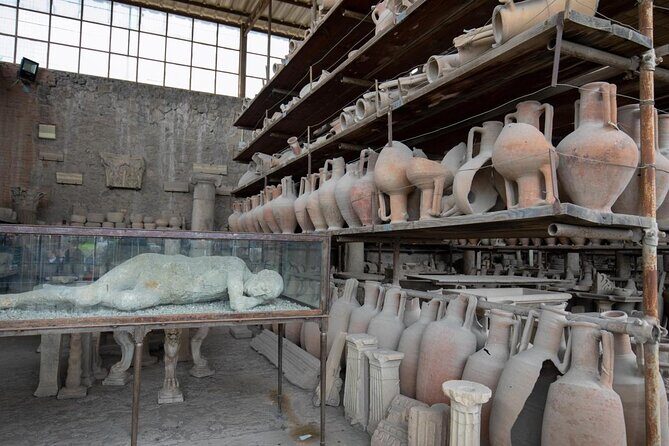
What you can expect is a tour that targets the places most visitors feel drawn to—Roman villas, streets, squares, theaters, and the art details like frescoes and mosaics. The itinerary also explicitly includes the bakeries and trattorias of daily life, plus the Lupanare and the bodies of the victims of Vesuvius.
One reason this works so well is that your guide isn’t just listing names. The best-guided Pompeii tours act like a storyteller, helping you picture the city before the eruption. Romolo, for example, was specifically praised for verbally creating a picture of what Pompeii looked like before Mt. Vesuvius buried it. That kind of explanation turns scattered ruins into something you can understand quickly.
A possible drawback is that Pompeii is huge. Even with a great route, you’re not seeing everything. This tour is aimed at the most impressive highlights in a short time. If you love deep, slow archaeology or you want every corner explored, you might feel slightly rushed. If you want a strong first visit with the key moments, this format is a smart fit.
Apollo to the Forum: power, ritual, and everyday public life
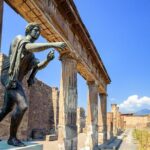
The second stop is the Temple of Apollo (about 10 minutes). It’s a classic Pompeii anchor because it represents the sacred side of Roman city life. With a guide, it’s easier to understand why a temple wasn’t just a building—it was a statement about civic identity.
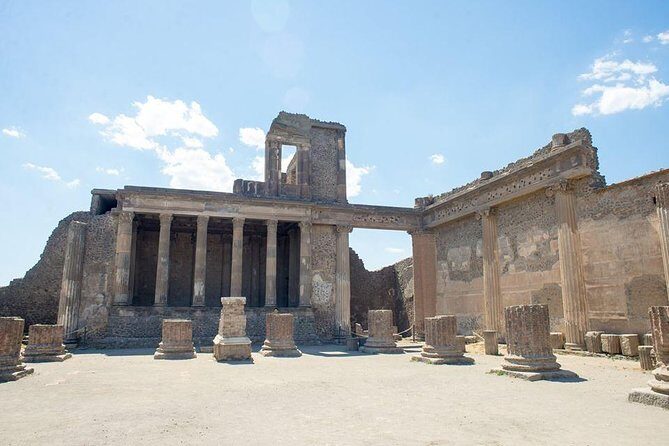
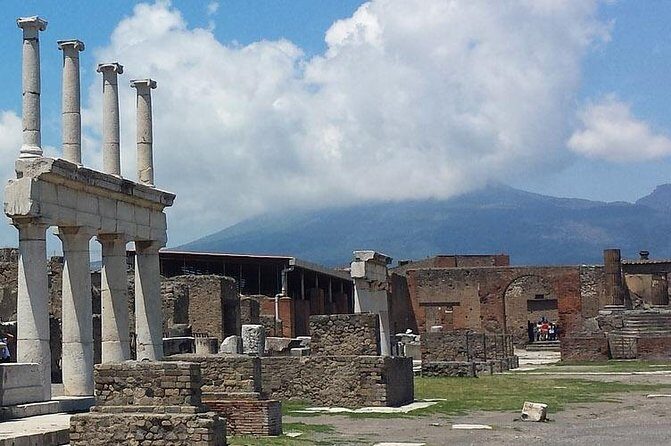
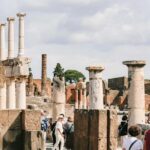
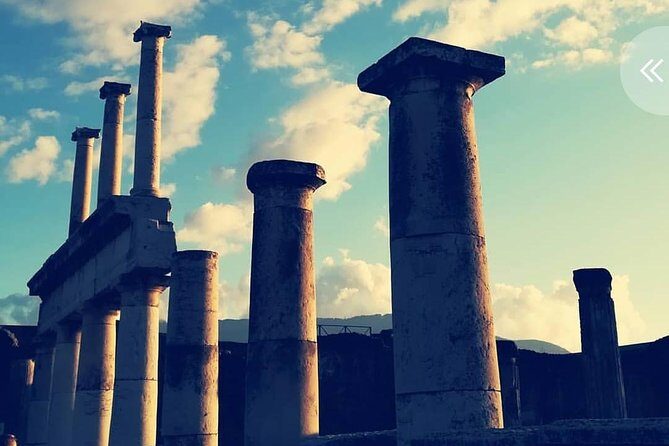
Then you move to the main square, the Foro de Pompeya (about 20 minutes). This is where Pompeii’s public rhythm becomes clear: politics, commerce, gatherings. The guide’s job here is to help you read the space, not just walk through it.
From there, you visit the Granai del Foro (about 20 minutes), a museum area tied to the grain storage and food supply system. You’re seeing how a Roman city fed people and managed resources. Even if you’re not a history nerd, this kind of stop helps Pompeii feel practical and real.
Next is the Terme del Foro (about 20 minutes). Roman spas weren’t just places to wash. They were social hubs—talking, relaxing, meeting. When you combine this with the Forum stop right before it, the city starts to make sense: work and politics in the square, then water and conversation in the baths.
Stops like these are also where your guide’s pace pays off. In a crowded site, a good route plan can mean you spend less time staring at the backs of other groups and more time actually looking.
You can also read our reviews of more tours and experiences in Sorrento


Mosaics and mansions: Poet Tragico, Via dell’Abbondanza, Cinghiale
After the Forum core, the itinerary shifts into residential Pompeii—houses that show off wealth and personality through floor art and spatial design.
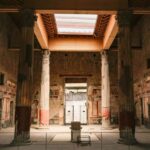
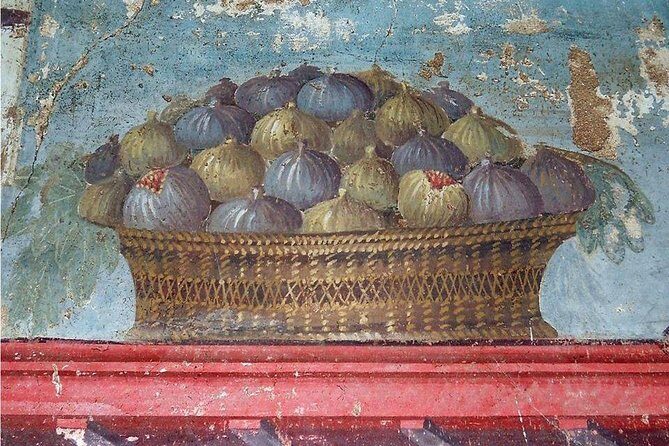
Casa del Poeta Tragico (about 10 minutes) is famous for a striking mosaic. In plain terms, this is where you get the Wow factor without having to hunt around for it. When you’re short on time, the guide’s selection of rooms matters.
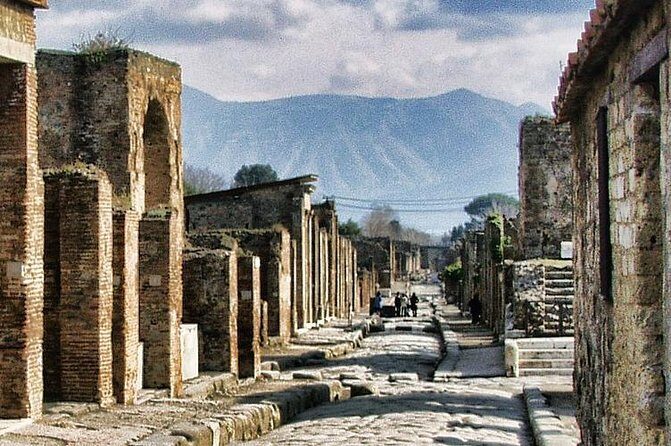
Then comes Via dell’Abbondanza (about 20 minutes). It’s described as the main street, often compared to the Beverly Hills of its time. That label is useful because it tells you what to look for: this is where a city’s fashion, status, and street-level life would show up. You’re walking through a space that connects commerce and culture.
Casa del Cinghiale (about 10 minutes) follows, another stop packed with mosaics. The quick hit format works here: the guide points out what the mosaic is telling you and how it fits into the house’s identity. You’re not spending an entire morning in one mansion, but you are collecting enough detail to remember what made each house different.
One practical upside: a route like this helps you avoid the common mistake of getting fixated on one house for too long. Pompeii’s best experience is variety—public space, private space, art, and architecture—layered in a few hours.
Teatro Grande and the Lupanar: art, performance, and the city’s darker side
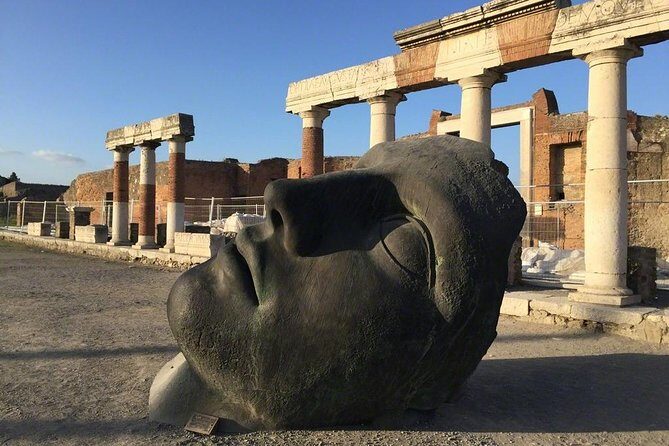
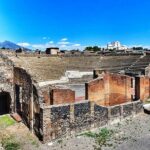
The Teatro Grande (about 20 minutes) gives you Pompeii’s entertainment world. You’re seeing a place for tragedies and comedies, which makes Pompeii feel like a living culture instead of just a museum of ruins. This is also a great stop to ask questions about how people gathered and why entertainment mattered.
Then you end with the Lupanar (about 20 minutes), often called the fun house. This is part of Pompeii’s darker realism, including the famous imagery and the fact that human life in the city included things most people prefer not to talk about today. A guide helps keep the tone respectful and informative, so it doesn’t become sensational.
This is also where Romolo’s attention to details shows up in the overall experience. He was praised for alerting guests to uneven terrain and low ceilings and doorways. Those warnings matter more than you’d think. In Pompeii, one misstep or a surprise low entrance can break the rhythm of your tour.
Guide style: what you’re paying for when names like Romolo, Michele, Paolo, Josie, and Giusy show up
The guides here get praised for one thing over and over: communication that makes the ruins feel connected.
Michele was highlighted for passion and knowledge, and for giving a clear understanding of everything seen in a short period. Paolo was praised for being personable and friendly, plus for making the walk feel doable even if Pompeii sounds overwhelming.
Josie was singled out for easy-to-understand English and for navigating crowds so waiting stayed minimal. That’s huge because Pompeii is busy in a way that can steal your attention. When a guide can steer you around bottlenecks, you feel like you’re moving through the site with purpose.
Giusy stood out for family handling—keeping two children (ages 7 and 11) engaged from start to finish. That tells you something important: this tour isn’t only for adults who already love history. A strong guide can teach in a way that keeps kids interested, which usually means the explanations are clear and the pacing is smart.
Also, after the tour, Josie offered lunch recommendations that the group enjoyed. Lunch choices aren’t included, but having a guide point you toward something nearby is a small win that saves decision fatigue.
Practical tips so the route feels easy, not stressful
This tour is built for a short visit, so you’ll get the most out of it if you travel prepared.
First: wear shoes you trust. Pompeii has uneven ground, and guides may alert you to spots like low doorways and uneven terrain. That’s not a reason to skip the tour. It’s a reason to be comfortable.
Second: come ready to ask questions. If you enjoy history but hate vague tours, private time is when you ask the why behind what you’re seeing—why a room was laid out a certain way, why the Forum was so central, or how the city’s daily routines show up in the ruins.
Third: pace your photos. With a tight itinerary, you won’t stop for endless pictures at every corner. I’d suggest capturing the big shots you’ll want later, then letting the guide finish the explanation before you move on.
Fourth: keep water in mind. The tour is only 3 to 4 hours, but Pompeii is outdoors and you can work up a sweat. Not required by the provider info, but it’s a solid common-sense move for any ruin day.
Should you book this skip-the-line private Pompeii tour from Sorrento?
If this is your first time in Pompeii, and you want the best sights without spending your day stuck figuring things out, I think this is a strong choice. The combination of train round trip, pickup in Sorrento, and a guided highlight route is exactly what makes a short visit feel satisfying.
Book it if:
- you want a private group experience instead of battling crowds with strangers
- you’d rather learn what you’re seeing than just walk through rooms
- you’re okay with a “highlights in a few hours” approach
Skip it (or choose something longer) if:
- you want to explore every major area slowly
- you dislike walking on old, uneven ground and would rather do a fully accessible, low-walking plan (this tour’s info says most travelers can participate, but it’s still Pompeii)
If you’re deciding between DIY and guided, this one leans clearly toward guided. The priority ticket help and the guide-led structure are doing real work for you. And if you care about understanding Pompeii quickly, guides like Michele, Romolo, Paolo, Josie, and Giusy are a big part of the reason this tour earns top marks.
FAQ
How long is the Pompeii tour from Sorrento?
It runs about 3 to 4 hours total, with the Pompeii Archaeological Park visit lasting around 2 hours.
Is this a private tour?
Yes. It’s private, meaning only your group participates.
What language is the tour offered in?
The tour is offered in English.
What’s included in the price?
The tour includes round-trip train tickets, pickup in Sorrento, a tourist guide, and priority ticket purchasing by the guide. You also get a mobile ticket.
Is the Pompeii admission ticket included?
No. The Pompeii Archaeological Park admission ticket is listed as not included.
How long are the individual stops inside Pompeii?
Stop times listed include Temple of Apollo (10 minutes), Foro de Pompeya (20 minutes), Granai del Foro (20 minutes), Terme del Foro (20 minutes), Casa del Poeta Tragico (10 minutes), Via dell’Abbondanza (20 minutes), Casa del Cinghiale (10 minutes), Teatro Grande (20 minutes), and Lupanar (20 minutes).
Where does the tour start and end?
It starts at 80067 Sorrento, Metropolitan City of Naples, Italy, and ends back at the meeting point.
Are tips included?
No. Tip is not included.
Can service animals participate?
Yes. Service animals are allowed.
What is the cancellation policy?
Free cancellation is available up to 24 hours in advance for a full refund. Changes made less than 24 hours before the start time are not accepted.
You Might Also Enjoy


More Private Tours in Sorrento



More Tours in Sorrento





More Tour Reviews in Sorrento
- Sorrento Farm and Food Experience including Olive Oil, Limoncello, Wine tasting
★ 5.0 · 2,524 reviews