REVIEW · NAPLES
Neapolitan Pizzamaker for One Day
Book on Viator →Operated by Neapolitan Pizzamaker for One Day · Bookable on Viator
Naples has a special way with dough. This workshop at the official Neapolitan pizza makers school teaches the craft step-by-step, then lets you work the dough with real Margherita ingredients.
What I like most is how practical it is: you’re not just watching—you’re making and firing the pizza with guided instruction. The other big win is the payoff at the end, when you taste the wedges you made.
One thing to plan for: you may be standing for a long stretch during the baking part, and the cooking area can feel very warm while the oven is firing.
In This Review
- Key highlights you’ll care about
- Why this workshop feels more like a craft class than a pizza meal
- The 3-hour rhythm: coffee, dough, wood oven, and wedges
- Welcome coffee and the history of true Neapolitan pizza
- Demonstration, then making the dough and prepping ingredients
- Spreading and cooking Neapolitan pizza in a wood oven
- Tasting your pizza in wedges
- What you learn that actually helps after you leave Naples
- Price and value: what $112.93 really buys you
- Meeting point in Capodimonte: easy to find, easy to return
- Who this workshop is best for
- What to watch for so the day feels comfortable
- Quick practical pointers before you go
- Should you book Neapolitan Pizzamaker for One Day?
- FAQ
- FAQ
- How long is Neapolitan Pizzamaker for One Day in Naples?
- What times does the workshop run?
- Where does the experience start?
- Where does the tour end?
- Is the class offered in English?
- How big is the group?
- What will I do during the class?
- How soon will I get confirmation after booking?
- What is the cancellation policy?
Key highlights you’ll care about
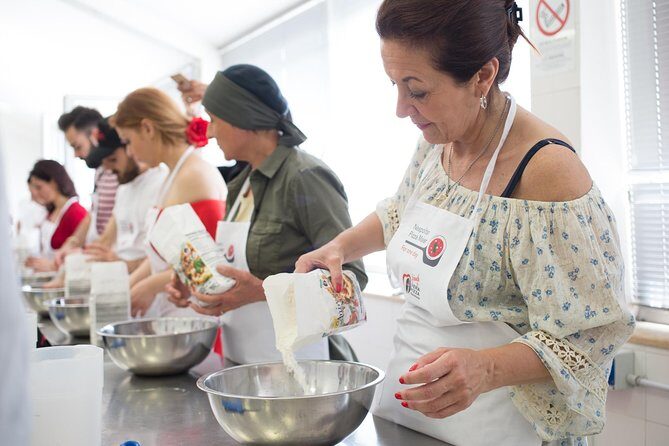
- Official maker school format: you learn the process used for true Neapolitan-style pizza, not a generic cooking demo
- Small group size: a maximum of 10 travelers keeps it hands-on and manageable
- Instructor-led dough science: the teaching approach focuses on how and why, not just what to do
- Wood oven baking: you spread, cook, and learn pizza-making in the heat that matters
- Finish with a real tasting: you eat the pizza you made in wedge portions
- English instruction: offered in English, with a welcome coffee and history of pizza included
Why this workshop feels more like a craft class than a pizza meal
Neapolitan pizza in Naples isn’t treated like fast food. It’s treated like food culture with rules, timing, and technique. That’s exactly what this experience is built around. You’ll start with a welcome coffee and a story about what makes true Neapolitan pizza important in local cuisine—and why it earned UNESCO recognition as intangible heritage.
Then you move from story to practice. The workshop is structured so you go from demonstration to hands-on making: you shape the dough, season it with the ingredients used for a Margherita-style pizza, and cook it in a wood oven. The point isn’t just eating a good slice. It’s learning the workflow of a pizzaiuolo (pizza maker), so when you’re back home you know what to change and what to keep.
You can also read our reviews of more tours and experiences in Naples


The 3-hour rhythm: coffee, dough, wood oven, and wedges

This is offered in two daily windows: 10:00–13:00 and 15:00–18:00, and each session runs about 3 hours. Either time works, so pick based on your day in Naples. If you want to avoid racing your schedule, I’d lean toward the earlier slot since it’s often easier to pair with other morning plans.
Here’s the flow and what it means for you:
Welcome coffee and the history of true Neapolitan pizza
You begin with coffee and a history lesson that explains pizza’s place in Naples. This part matters because Neapolitan pizza isn’t only technique—it’s also ingredients, tradition, and reason. When you understand the why, the later steps (dough handling and topping choices) stop feeling random.
This start also gives the group a shared baseline. With small groups (up to 10), you’ll generally feel less lost when the instructor starts talking dough behavior and oven heat.
Demonstration, then making the dough and prepping ingredients
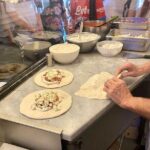
Next comes a demonstration, followed by time for you to make the dough and handle raw materials. You’re guided through the steps, and you work directly rather than just assembling toppings.
A standout theme in the teaching feedback is that the instructor explains both how and why—including the role of each ingredient and the reasoning behind it. That’s huge if you’ve ever felt stuck after making homemade pizza: you may not need a new recipe, you may need a better understanding of timing and dough management.
If you’re a first-timer, this structure helps you avoid the usual problem of being thrown into the fun part without the fundamentals. If you’ve made pizza before (even a lot), you still get something useful: the class approach focuses on the science and history angle, not just habit-driven cooking.
Spreading and cooking Neapolitan pizza in a wood oven
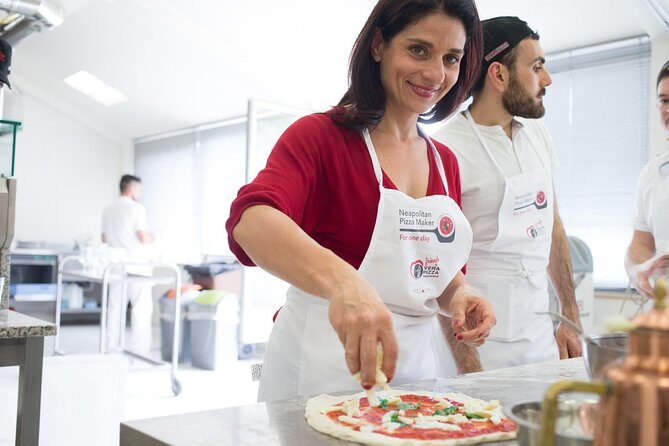
Then the workshop moves into the oven stage—spreading the pizza and cooking it in a wood oven. This is where the experience becomes real pizza making, because the oven and the dough both demand attention.
One practical consideration: the cooking area can feel very hot, and that can affect comfort even if you’re enjoying every minute. Also, one review noted there are no chairs, meaning you may be standing through parts of the session. If you’re sensitive to heat or prefer seating, bring water, wear breathable clothes, and plan for some standing.
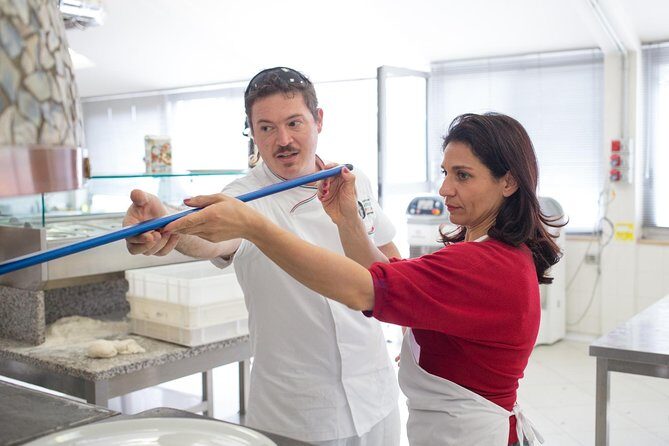
Even with those comfort points, the instructor feedback suggests the oven time is well-managed and the steps are clear. People especially praised the way the instructor walks you through managing dough and firing—so you don’t feel like you’re guessing while the oven is working.




Tasting your pizza in wedges
You finish with a tasting of the Neapolitan pizza you made, served in wedges. This is more than a reward. It’s also a chance to connect the finished result to what you did earlier: dough handling, topping choices, and oven timing.
That closed-loop experience is what turns a cooking class into learning. You get feedback from taste, and you can immediately think, Next time I’ll focus on what created this texture and flavor.
What you learn that actually helps after you leave Naples
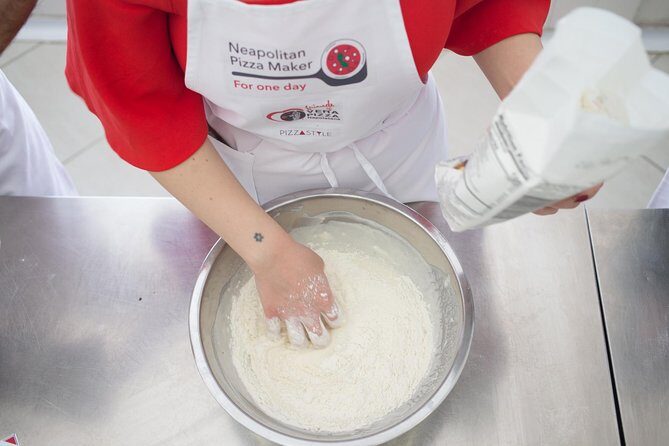
Many classes give you a souvenir meal and a recipe card. This one is different because it teaches the process like you’re training to be a pizzaiuolo, at least for a few hours.
Here are the skills you should expect to walk away with:
- Dough management: the class emphasizes managing dough, not just stretching it until it works
- Clear steps you can repeat: instruction is described as clear and do-able, with time to practice your parts
- Ingredient logic for Margherita-style pizza: you learn the role of real ingredients and why they’re used
- Firing and timing awareness: the oven stage includes guidance that helps you understand what heat changes
One review even mentioned learning the science and history behind pizza and how that improved their real pizza-making at home. That’s the big value: you don’t just come away inspired—you come away with a better mental model for what your hands should do next time.
Price and value: what $112.93 really buys you
At $112.93 per person for about 3 hours, this isn’t the cheapest way to eat pizza in Naples. But it can be good value if you treat it like a skills class, not a casual meal.
You’re paying for several things that raise the worth:
- A structured workshop format with welcome coffee, instruction, and tasting
- Hands-on participation with dough and real ingredient work
- Wood oven cooking, which changes the whole experience versus a kitchen demo
- A small group size (max 10), which usually means more attention for your questions
- English instruction, so the content stays accessible
If you just want a quick Margherita slice, you can absolutely find that cheaper around Naples. But if you want to return home knowing how to make better Neapolitan-style pizza—especially dough handling and the oven step—this price can make sense.
Meeting point in Capodimonte: easy to find, easy to return
The workshop starts at Via Capodimonte, 19a, 80131 Napoli. It ends back at the meeting point, so you’re not left figuring out a new drop-off spot after you’re done.
Also, it’s listed as near public transportation. In Naples, that matters. You’ll save time and stress if you don’t have to play complicated navigation after a class that’s mostly spent in motion and heat.
Who this workshop is best for
This class is a good fit if you fall into one of these categories:
- You want a real food craft, not just a cooking show
- You’re curious about the history behind Neapolitan pizza, not only the recipe
- You’ve made pizza before and want better guidance on dough and the oven stage
- You’re traveling with someone and want a shared activity that’s hands-on
It also seems welcoming across experience levels. One piece of feedback highlighted it as a great match for new or semi-experienced pizza makers, while another mentioned someone who already had years of pizza practice learning science and history that upped their game.
What to watch for so the day feels comfortable
Even when the teaching is excellent, the physical setup matters. Based on feedback, here are the main comfort notes to consider:
- Heat: the cooking portion can be very warm while pizza is being cooked in the wood oven
- Seating: there may be no chairs, so you should expect to stand for parts of the class
- Pacing: it’s hands-on, so be ready to stay engaged through the full rhythm of dough to oven to tasting
A couple of simple planning ideas: wear breathable clothes, consider shoes that are comfortable for standing, and drink water before you start. That way, you can focus on the technique instead of waiting for a break.
Quick practical pointers before you go
A few things that will help you get the most out of the session:
- Arrive on time. You’re learning a sequence, and the oven stage doesn’t slow down
- Go in with curiosity. Ask questions when the instructor covers dough, ingredients, and firing steps
- Treat it like practice. Even if your first pizza isn’t perfect, the goal is skill-building
- Stay present during tasting. Smell and taste are part of the lesson—connect flavor back to your process
The class is also capped at 10 people, so you’ll likely have a better chance to get personal clarity from the instructor rather than feeling like you’re in a crowd.
Should you book Neapolitan Pizzamaker for One Day?
Yes, I’d book it if you want Naples pizza to mean more than a meal. This workshop is built around hands-on dough work, wood oven cooking, and a clear teaching approach that focuses on both technique and the logic behind ingredients. It’s also a strong choice if you’re the type who likes learning the method so you can repeat it later.
I’d think twice if heat and standing for long periods really bother you. The cooking environment can be intense, and the setup may not offer much seating. If you’re okay with that, you’ll likely find this worth the money because you’re not just eating—you’re learning how a pizza maker thinks and works.
FAQ
FAQ
How long is Neapolitan Pizzamaker for One Day in Naples?
It runs for about 3 hours.
What times does the workshop run?
It’s offered every day from 10:00 am to 1:00 pm and from 3:00 pm to 6:00 pm.
Where does the experience start?
The meeting point is Via Capodimonte, 19a, 80131 Napoli NA, Italy.
Where does the tour end?
The activity ends back at the meeting point.
Is the class offered in English?
Yes, it is offered in English.
How big is the group?
The workshop has a maximum of 10 travelers.
What will I do during the class?
You’ll get welcome coffee and a history introduction, then you’ll help make the dough, spread and cook Neapolitan pizza in a wood oven, and finish with a tasting of pizza wedges.
How soon will I get confirmation after booking?
Confirmation is received within 48 hours of booking, subject to availability.
What is the cancellation policy?
You can cancel for a full refund up to 24 hours in advance of the experience’s start time. Free cancellation is available, and changes within 24 hours of the start time aren’t accepted.