REVIEW · NAPLES
Naples: Pompeii, Herculaneum, and Vesuvius Tour by Minivan
Book on Viator →Operated by Napoli Official Tour · Bookable on Viator
Naples turns into a history sprint on this day trip. You’ll pack Pompeii, Herculaneum, and Mount Vesuvius into one route with round-trip minivan logistics that save you the hassle of stitching together buses and tickets.
What I like is the focus on time with real free exploration at each site, instead of sitting on a bus while someone reads to you. The group stays small (up to eight), and the schedule is built so you can actually walk through ruins, then head up Vesuvius for crater views.
One thing to consider: this isn’t a full-service guided tour with a live expert in your ear the whole time. You’ll be using a digital audio approach at stops, and the driver experience can vary by language and communication style.
In This Review
- Key Things to Know Before You Go
- One Minivan, Three Big Roman Sites, One Volcano View
- Pompeii: How 3 Hours Can Feel Like Both Enough and Not Enough
- Digital Audio vs. Live Commentary
- The Meeting-Point Trap: How to Avoid Wasted Time
- Watch the Add-On Detours
- Vesuvius National Park: Walking to the Crater With Real Weather Risk
- Fog Can Change the Whole Day
- Herculaneum: Smaller Than Pompeii, Often Easier to Love
- What the Driver Actually Does
- Timing and Pace: The Real Value (and the Real Limits)
- Comfort, Tickets, and the Things You’ll Want to Bring
- Is This Tour Worth €180-ish? Value Math That Actually Helps
- Who This Tour Fits Best
- Should You Book This Tour?
- FAQ
- How many people are in the group?
- What’s included for entry to Pompeii, Herculaneum, and Vesuvius?
- Is there a live guide during the day?
- Do you get time to hike at Mount Vesuvius?
- How long are the stops at each location?
- What’s the cancellation window?
Key Things to Know Before You Go
- Small group (max 8) means less waiting and more flexibility if you need the restroom or have questions.
- Skip-the-line tickets are included for all three: Pompeii, Herculaneum, and Vesuvius.
- Self-guided ruins time is the main format, so bring comfy shoes and a plan for where you’ll meet.
- Vesuvius is hike + weather: you’ll walk up to around 1,000 meters and the summit can be foggy.
- No live guide on the minivan: expect mostly driving support, plus any info your driver chooses to share.
- Lunch isn’t built in as a set plan, so eat when you can in Pompeii or budget time to find something nearby.
One Minivan, Three Big Roman Sites, One Volcano View
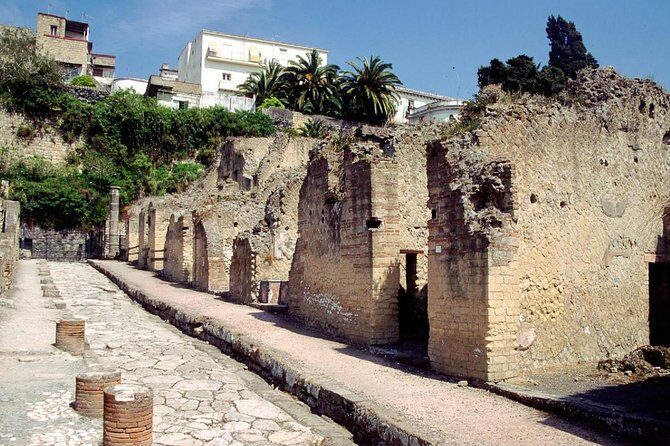
This is the classic “get the must-sees” day from Naples: you leave at 9:30am, ride in an air-conditioned deluxe minivan, and return at the end of the day. The pitch is simple: you’ll see three top Vesuvian-area attractions without losing half your day to transit.
At the heart of the value is the combination of transportation + included admissions. Pompeii and Herculaneum are huge, and Vesuvius is a full-on outing even when the weather cooperates. Putting them together makes sense if your Naples time is short and you want a structured day without needing a private driver.
Where this trip feels most “real” is that you’re not trapped in a lecture. You get time on your own at Pompeii and Herculaneum, then free time to walk up to the crater area at Vesuvius. That’s a good fit if you like setting your own pace and circling back when something catches your eye.
You can also read our reviews of more tours and experiences in Naples.


Pompeii: How 3 Hours Can Feel Like Both Enough and Not Enough
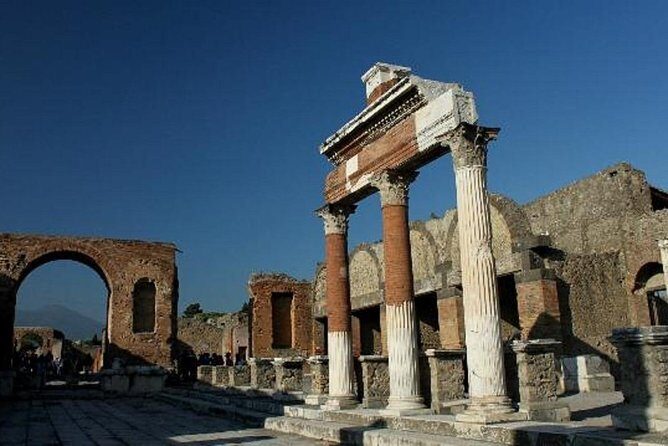
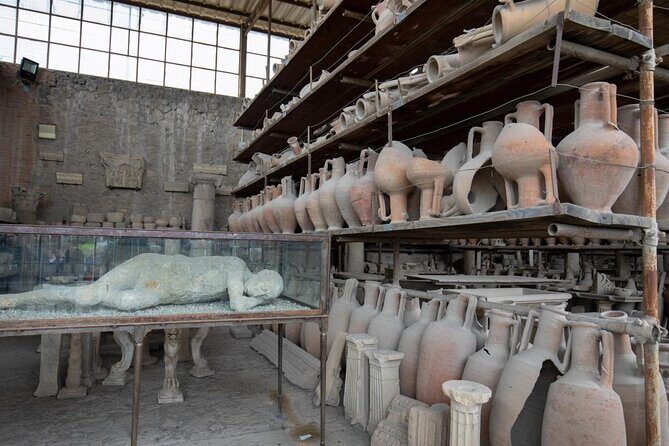
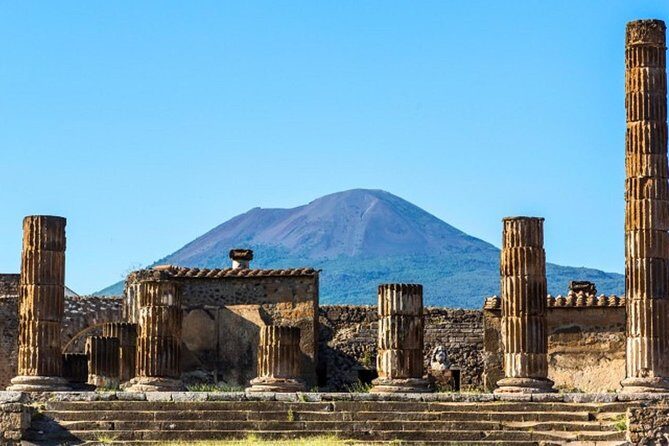
Pompeii is the headliner, and the schedule reflects that: you’re allotted about 3 hours at the Pompeii Archaeological Park, with admission included. This is where you’ll see how ancient Romans lived—the civic spaces, homes, and the everyday stuff that makes the site so gripping.
Here’s the practical part: 3 hours is solid for highlights, but Pompeii is enormous. Even with a paper map, it’s easy to zigzag into the wrong part of town, especially in the heat. One clear tip from real-world experience: grab a map on entry and mark your meeting point immediately. If you do that, you’ll lose less time and stress at the end.
Also, plan for “sun logistics.” Pompeii can be hot, and a lot of the walking is exposed. Wear a hat, bring water, and don’t underestimate how tiring it is to pack a big site into a compressed schedule.
Digital Audio vs. Live Commentary
The tour format leans on a digital audio guide approach for learning in Pompeii. The big advantage is freedom: you can stop when you want and replay what you didn’t catch.
The trade-off is that you won’t have a live guide shepherding you through the best rooms and corners. In one situation, the driver’s English level wasn’t enough to smooth out confusion, and that turned “self-guided” into a bit of wandering. Your best defense: download or prep anything you can before you arrive, and be ready to ask staff on-site if you hit a dead end.
The Meeting-Point Trap: How to Avoid Wasted Time
A theme with ruins days is that the biggest risk isn’t the sights—it’s the “where do we regroup” moment. Pompeii is especially easy to get turned around in, and timing gets tight near departure.
I recommend you do three things early:
- Locate the meeting point before you go far.
- Take a screenshot of your meeting spot on your phone map app.
- Keep your phone charged (you’ll likely use it for maps and audio).
One driver named Vincent helped a passenger who got lost by staying in contact through the situation. That’s great service. But you don’t want to rely on a rescue mission—just build in your own margin so you don’t spend precious minutes backtracking.
Watch the Add-On Detours
You may see a tourist office near Pompeii where visitors are offered maps and audio extras. One bad experience involved being directed to buy an audio/map add-on right after receiving a free map on arrival elsewhere. Since your ticket package includes skip-the-line admissions, you should confirm what you already have before paying for anything new.
In plain terms: don’t assume every “helpful” sales stop is required for entry. If you’re unsure, pause and ask, or wait until you’ve checked your voucher details.



Vesuvius National Park: Walking to the Crater With Real Weather Risk

After Pompeii, you’ll head to Vesuvius National Park, with a panoramic drive and then a walk up to about 1,000 meters before you turn toward the crater views. Your time here is about 1 hour 30 minutes, and admission is included.
This part is short, so it’s worth being mentally ready for what you’re doing: not a casual stroll, but a climb where you’ll feel the slope. Comfortable shoes matter more than you think. Also, if you’re prone to motion sickness, note that the road twists on the way up. One small-vehicle experience felt more manageable for passengers sensitive to nausea, but still go slow and bring water.
Fog Can Change the Whole Day
Vesuvius can look like a movie set—or like you’re walking into a wall. In one case, fog blocked visibility enough that the group turned back rather than waiting in hope.
You can’t control the weather. What you can control is your flexibility: bring layers (it can feel cooler at higher altitude), and keep your expectations grounded. Even if visibility isn’t perfect, the experience of being up there is still memorable for many people.
Herculaneum: Smaller Than Pompeii, Often Easier to Love
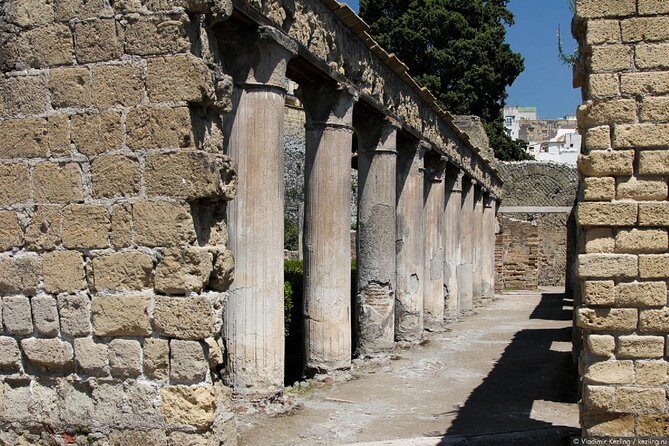
Next comes Parco Archeologico di Ercolano (Herculaneum) for about 1 hour 30 minutes, with admission included. The big advantage of Herculaneum is that it’s smaller. That matters because it makes your time feel less like a checklist and more like actual walking through a town.
The site is also known for exceptional preservation, and the difference in what you see compared to Pompeii comes down to how the eruption affected each place. The contrast is part of why Herculaneum is often the favorite after Pompeii: you get a clearer sense of everyday interiors and the shape of street life.
The best “strategy” here is to let Herculaneum be your decompression stop. After Pompeii and before Vesuvius, you’re already a bit tired. Herculaneum’s layout can feel easier to manage, and you won’t feel like you’re sprinting across acres of stone.
What the Driver Actually Does
This tour sits in a middle zone. You’re not paying for a full licensed walking guide at every site. You’re paying for transport, timing, and tickets, plus help from the driver on logistics.
In the best versions of the day, the driver acts like a friendly assistant: giving clear pickup instructions, sharing useful context while passing viewpoints, and staying calm when people need help. Drivers like Mauro, Guido, Luigi, and Vincenzo were highlighted for being friendly, communicative, and punctual, and one driver (Guido) was praised for on-the-spot advice that improved the day.
In the weaker versions, the driver offered little English support, and that turned the day into confusion—especially around finding entry points and understanding what you need at each stop. There were also complaints about time pressure at Pompeii and Vesuvius and about whether extra add-ons were presented as optional.
My practical take: you should go into this expecting a competent driver and organized timing, but don’t expect a live expert narration on demand. If you want lots of deep explanations, plan to rely on the digital audio and on-site signage.
Timing and Pace: The Real Value (and the Real Limits)
Let’s talk about the structure: 3 hours Pompeii, 1.5 hours Vesuvius, 1.5 hours Herculaneum, plus driving. It’s built for efficiency. That’s exactly why it’s popular.
But you should also understand how the pacing can feel in July heat and with crowds. Pompeii can be the hardest stop to manage because it’s vast. Some people felt that 2 hours would be more than enough for Herculaneum and Vesuvius, while Pompeii really deserved its full 3 hours, or even a bit more.
So the key decision for you is this:
- If you want the biggest “wow” sites fast, this schedule works well.
- If you want to slow down and savor details in multiple sectors of Pompeii, you may feel rushed.
Either way, come prepared to walk. This is not a sit-and-scroll day.
Comfort, Tickets, and the Things You’ll Want to Bring
A few practical items will make a day like this smoother:
- Comfortable, grippy shoes for uneven stone and uphill walking.
- A hat + sunscreen for Pompeii.
- Water and a small snack if you’re sensitive to hunger.
- A charged phone for maps and any audio.
- A plan for lunch in Pompeii, because there isn’t a guaranteed proper lunch stop built into the route.
One big “small detail” that affects comfort: there’s no promise of a perfectly timed lunch window. In one case, cafés at Pompeii were recommended for choice, because the day didn’t include a set lunch structure.
If you’re traveling with family or someone who gets tired quickly, the small group helps, but the walking still adds up.
Is This Tour Worth €180-ish? Value Math That Actually Helps
At around $180.62 per person for an ~8-hour day, the price feels high until you price out what you’re getting:
- transport by minivan
- included skip-the-line admissions for all three sights
- a tight schedule that would be hard to coordinate with public transit
- small-group pacing (max eight)
If you’re visiting Naples only briefly, the “buy time” angle is real. You’re not spending your vacation figuring out routes, ticket windows, and pickup timing across the entire volcano area.
Where value can drop is when expectations don’t match the product. If you think you’re buying a live guided experience with fluent storytelling in your preferred language, this might disappoint. If you understand that it’s mostly transport + self-guided ruins, it tends to feel like a very efficient day.
Who This Tour Fits Best
I think this works best for:
- First-timers who want Pompeii + Herculaneum + Vesuvius in one day
- Travelers who like free time more than structured lecture stops
- People who don’t want to manage transit and entry on their own
- Anyone comfortable with moderate walking and uphill terrain at Vesuvius
It’s less ideal if:
- You need constant live commentary to enjoy ruins
- You’re very sensitive to rushed pacing (especially at Pompeii)
- You rely heavily on the driver to handle language for navigation and entry
Should You Book This Tour?
Book it if you want the smart shortcut: three major sites, included tickets, and a small group without building a logistics puzzle. The tour is especially worth it when your Naples time is limited and you’d struggle to coordinate routes on your own.
Skip (or upgrade your expectations) if you’re coming for deep, continuous live guidance or if you’re worried about language barriers and tight meeting-point timing. In that case, you might prefer a more explicitly guided option.
If you do book, go in prepared: map your meeting point early, bring comfortable shoes, and confirm what audio materials are needed before you arrive. That way the day stays about the ruins and the crater views—not the hassle around them.
FAQ
How many people are in the group?
The tour has a maximum of 8 travelers. It also requires a minimum number of participants to guarantee the departure.
What’s included for entry to Pompeii, Herculaneum, and Vesuvius?
Admission tickets for Pompeii, Herculaneum, and Vesuvius are included, and the tour also includes skip-the-line entry.
Is there a live guide during the day?
No live guide is listed as included. The experience is described as using a digital audio guide approach at the sites.
Do you get time to hike at Mount Vesuvius?
Yes. You’ll have free time at Vesuvius National Park and you’ll start walking after being driven up to around 1,000 meters, aiming toward crater views.
How long are the stops at each location?
Pompeii is scheduled for about 3 hours, Vesuvius for about 1 hour 30 minutes, and Herculaneum for about 1 hour 30 minutes.
What’s the cancellation window?
You can cancel for a full refund if you cancel up to 24 hours before the experience starts, based on the local time of the activity.