REVIEW · NAPLES
Naples: Pompeii and Herculaneum Private Walking Tour
Book on GetYourGuide →Operated by Askos Tours · Bookable on GetYourGuide
Pompeii gets the headlines. Herculaneum is the wow. This private walking tour lets you compare two places crushed by Vesuvius in 79 AD, but in very different ways, from ash-covered streets to mud that locked in buildings and even everyday details. I like that you get real structure: a guided 2-hour walk through Herculaneum and then a focused 2-hour visit to Pompeii’s most important areas.
I also love that the guides bring the sites to life with clear explanations and plenty of time for questions. Guides I’ve heard praised by name include Michele, Giulia, Jasmine, Maria Laura, Paulo, and Alexander, each described as engaging and thorough enough that the ruins stop feeling like scattered stones.
One drawback to plan for: it’s not wheelchair-friendly, and the walking is on uneven ancient surfaces. Also, it can be very hot, so bring water and dress for sun.
In This Review
- Quick hits before you go
- Two Vesuvius stories: Herculaneum’s mud, Pompeii’s ash
- Herculaneum Ruins: the “smaller but clearer” walk
- Pompeii Archaeological Site: the western highlights in 2 hours
- Getting between sites: plan on real transit time
- Skip-the-line tickets and what’s included (and what isn’t)
- Guide quality is the whole point here
- What to bring so you don’t suffer in the ruins
- Is this tour worth it for you?
- Should you book this private Pompeii and Herculaneum tour?
- FAQ
- FAQ
- How long is the Naples: Pompeii and Herculaneum private walking tour?
- Where does the tour meet?
- How much guided time do you get at each site?
- Are entrance tickets included?
- Does the tour skip the ticket line?
- What languages are the guides available in?
- Is transportation included?
- What should I bring?
- Are umbrellas or backpacks allowed?
- Is it accessible for wheelchair users?
- Is entry free on the first Sunday of the month?
Quick hits before you go
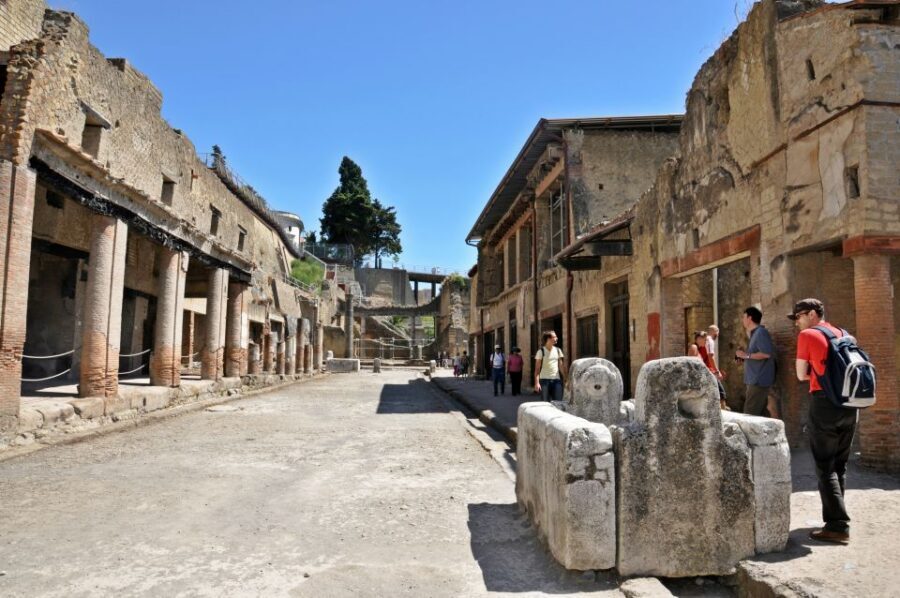
- Herculaneum’s preservation: second storeys, carbonized wooden objects, intact paintings, and mosaics can still be seen.
- Pompeii’s “city in action” feel: a guided look at the western part, including public buildings plus private houses and shops.
- Private or small-group experience: you get a live guide and can ask questions instead of guessing your way through.
- Skip-the-ticket-line: you move faster at the gates when compared with DIY entry.
- Two ruins, one 5.5-hour window: time is tight, so you’ll want comfortable shoes and a realistic mindset.
Two Vesuvius stories: Herculaneum’s mud, Pompeii’s ash
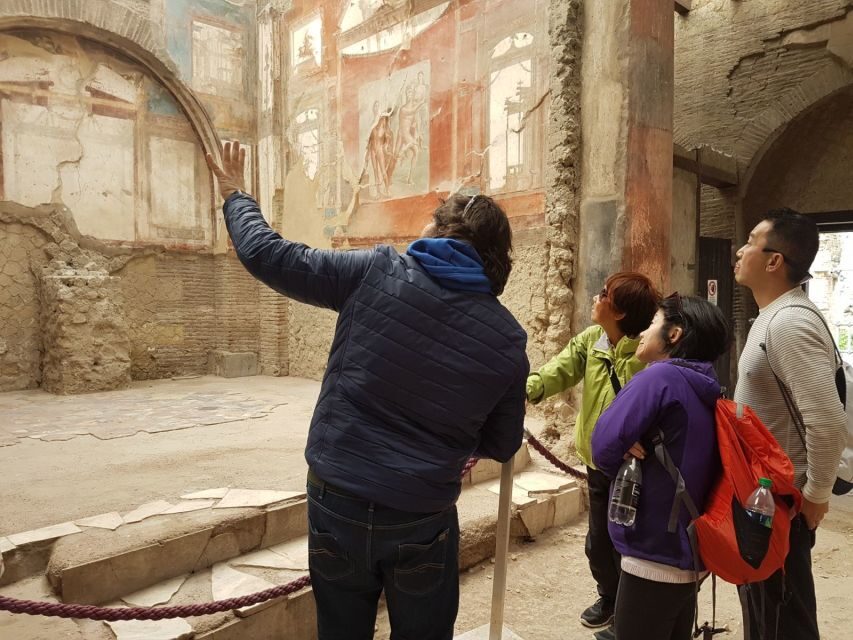
If you’re only familiar with Pompeii, this tour adds a missing chapter. Pompeii was buried under roughly 4 to 5 meters of ash, which covered and protected whole neighborhoods in a way that still feels dramatic and cinematic. Herculaneum, though smaller, was buried by an avalanche of mud estimated at about 20 meters thick, and that difference changes what you can actually see today.
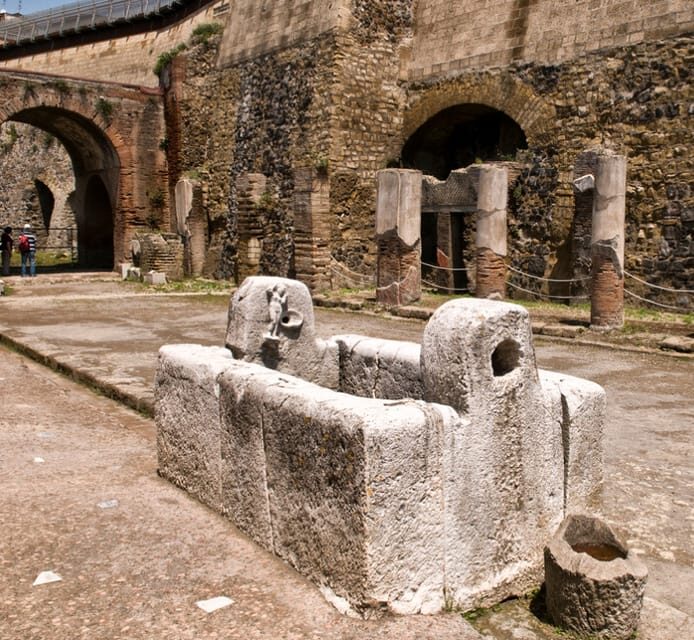
In Herculaneum, that mud acts like a freeze-frame. You can still look up and understand building heights and layouts more easily than in Pompeii. You’ll notice details like second storeys and preserved interiors that help you picture daily life without needing a lot of imagination. That’s where the guide really matters: the ruins make sense faster when someone points out what you’re seeing and why it survived.
Then Pompeii hits you with scale. It’s much larger, and it feels more like a living ancient town because there’s simply more to walk through and more types of buildings packed into the space. Your Pompeii portion focuses on the western area and the key public buildings and home spaces that shaped Roman life.
You can also read our reviews of more walking tours in Naples


Herculaneum Ruins: the “smaller but clearer” walk
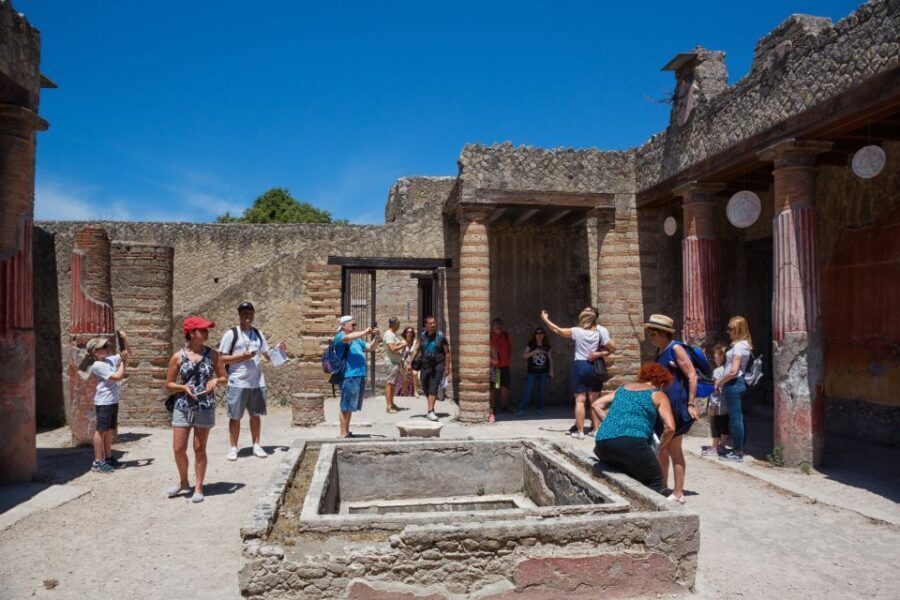
Your first guided stop is Herculaneum, and it gets a full 2 hours with a live guide. The meeting point is the ticket office of the Herculaneum Ruins, and your guide meets you at the entrance gate holding a sign with your name. That sounds minor, but it reduces stress when you arrive and just want to start seeing.
What makes Herculaneum special is how readable it is. When you stand on the street, you’re not just looking at walls—you’re seeing how people moved through their buildings. The tour emphasizes what survives: carbonized wooden objects, intact paintings, and mosaics that remain visible. You can connect art, architecture, and daily routines in a way that’s hard to do on your own when you don’t know where to look.
The best part is how quickly your brain adjusts. After a short time, you stop thinking of it as ruins and start thinking of it as a city that was interrupted. Your guide’s explanations bring it back to life, and your questions are part of the flow. If you love details, this is the portion where you’ll feel you’re learning fast without feeling rushed.
A practical note: Herculaneum is not about one big monument. It’s about many small, meaningful spaces. If you prefer “top 10 must-sees only,” you’ll still get plenty. But the payoff comes from paying attention to the everyday stuff.
Pompeii Archaeological Site: the western highlights in 2 hours
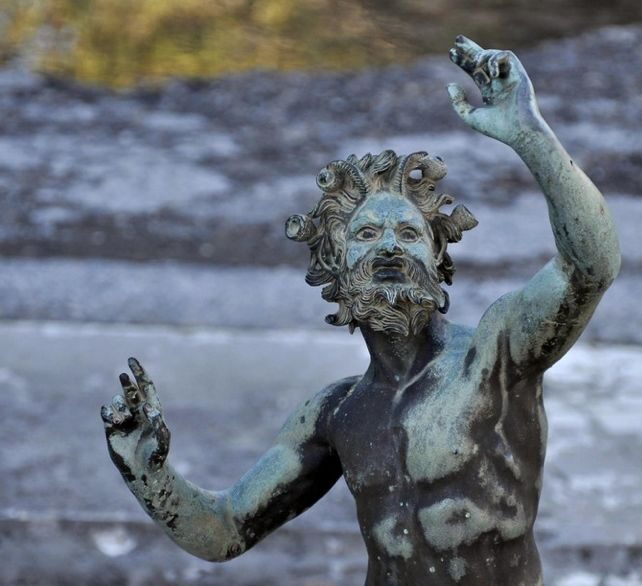
After Herculaneum, you switch to Pompeii, also with a 2-hour guided visit. The focus is the western part of ancient Pompeii, and the route is built around the places that explain how Romans organized public life and private living.
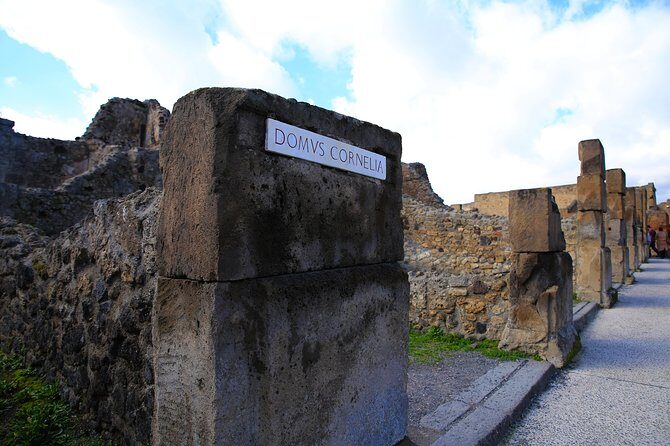
You’ll spend time at major public buildings and then shift into houses and shops. That mix is smart. Pompeii isn’t only temples and forums; it’s also how people ate, worked, traded, socialized, and lived at street level. Even if you’ve read about Pompeii before, the guide helps you “map” it—where you are, what function the building had, and how different areas connect.
One more thing: Pompeii can feel overwhelming if you go at it alone. The guided structure keeps you from bouncing randomly between areas and missing the connections. And because your guide can answer questions, you’re less likely to stand in front of a landmark and wonder what you’re supposed to notice.
Downside to consider here: Pompeii is large, and 2 hours is never going to be “everything.” The tour is designed to prioritize the most important areas in the western sector, so you’ll leave with a strong overview, not a perfect completionist checklist.
Getting between sites: plan on real transit time
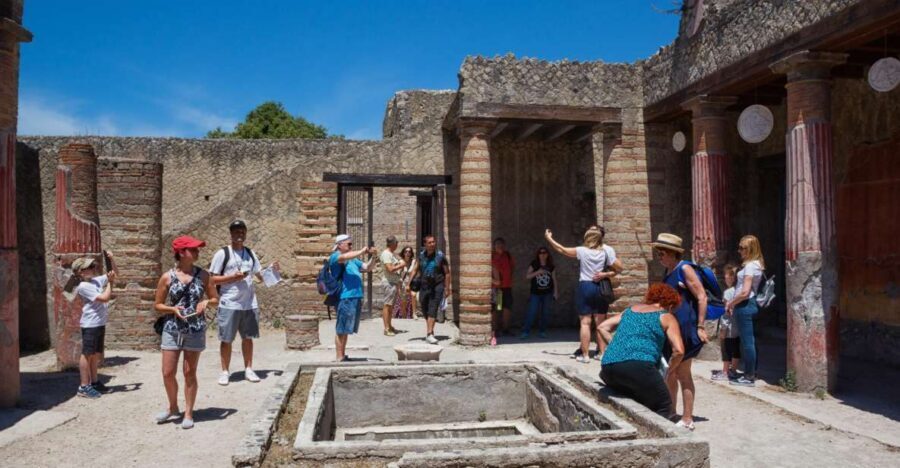
The tour schedule includes a train segment between Herculaneum and Pompeii. That’s normal for this region, and it also means you should build your day around transit rather than expecting a straight walk the whole way.
Because the tour lists transportation as not included, you may need to handle your own logistics getting to the start point (and back). The good news is that once you’re in the tour flow, your guide handles the on-site pacing and meeting you at the gate.
If you’re prone to schedule anxiety, here’s a simple mindset fix: treat this as a guided day with walking and transit, not a quick museum hop. You’ll enjoy it more when you accept that Rome’s ancient world takes time to walk through.
Skip-the-line tickets and what’s included (and what isn’t)
A private guide is included, along with entrance tickets for Herculaneum and Pompeii Express tickets for Pompeii. There’s also skip-the-ticket-line, which matters on busy days. Waiting around with everyone else can steal the best part of your day: time in the ruins.
What’s not included is transportation, food, and drinks, plus personal expenses. That’s pretty standard for tours that concentrate on guiding and site access. I’d plan to buy or carry water, and I’d budget for a snack break even if you’re not building a long meal stop into the day.
If you’re weighing value: the price is $331.36 per person, and it includes the guide and the major site entries you’d otherwise need to buy. For a private or small-group setup, that can work out well when you consider how much easier (and more meaningful) Pompeii and Herculaneum become with a guide who can point out what to see and how to connect it.
You can also read our reviews of more private tours in Naples






Guide quality is the whole point here
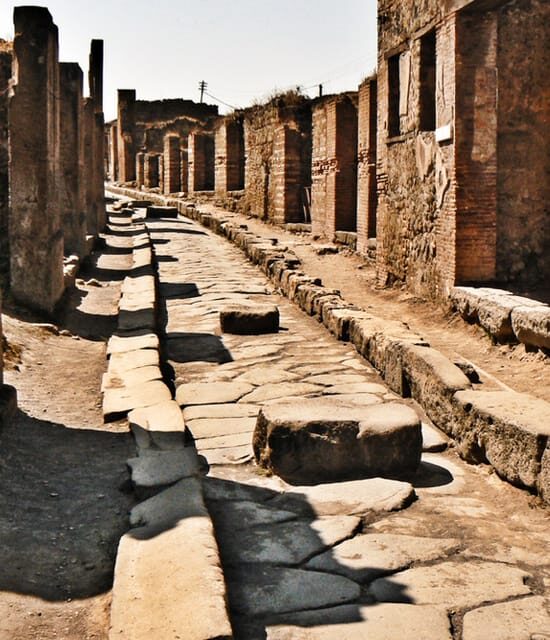
The ruins are impressive on their own. The difference is whether you can understand what you’re looking at while you’re still standing there.
That’s why the names people mention matter. Guides like Michele have been praised for thoroughness and making the visit spectacular. Giulia gets credit for being engaging, with a sense of humor, plus clear communication. Jasmine is noted for lots of detail and answering many questions. Maria Laura and Paulo are both linked with the kind of explanation that helps you picture Roman life before the eruption. Alexander is described as highly knowledgeable, with the caveat that yes, it can get very hot.
In other words: this is the kind of tour where you’re not paying just for someone to walk beside you. You’re paying for interpretation, pacing, and confidence.
What to bring so you don’t suffer in the ruins
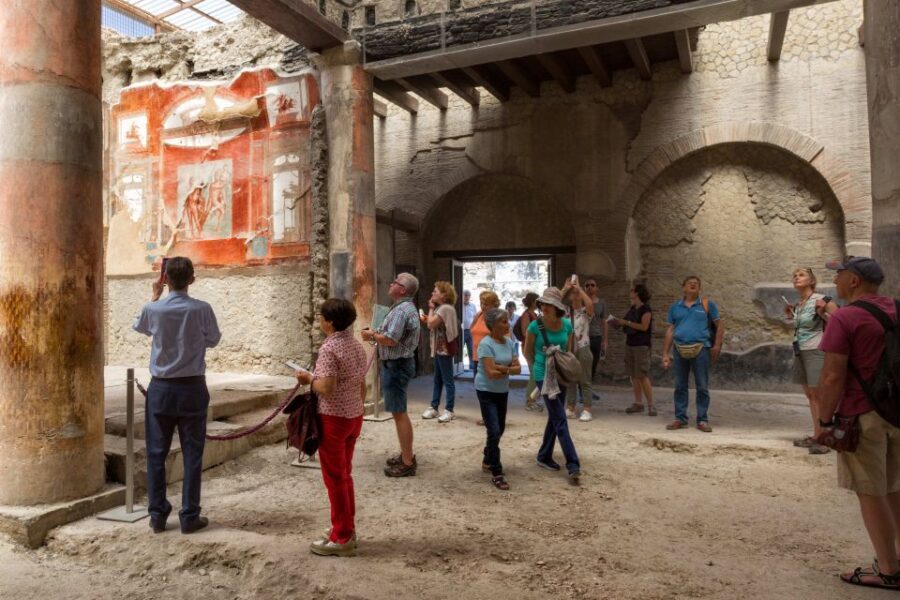
This is a walking tour in outdoor ancient sites. That means “comfort” is not optional.
Bring:
- Passport or ID card
- Comfortable shoes
- Sun hat
- Water
Not allowed:
- Umbrellas
- Backpacks
That rule matters in practice. Leave bulky bags at your hotel if you can, or travel light enough to comply. Also, skip the umbrella plan for sun protection. A hat and a bottle of water will do more good than trying to outsmart the weather with gear you can’t carry.
If you’re visiting when it’s hot, follow the example set by the guide experiences shared: plan for heat. Even with shade and thick walls, you’ll be outdoors and walking for hours.
Is this tour worth it for you?
This tour fits best if you want:
- A strong comparison between Herculaneum’s preservation and Pompeii’s scale
- Guided context for public buildings, private homes, and everyday city life
- A private or small-group pace where you can ask questions
It’s also a good pick if you like learning without drowning in facts. The structure helps you see the most important areas without feeling like you missed something crucial.
If you’re someone who hates walking, thinks only museums count as sightseeing, or needs wheelchair access, you should probably choose a different format. This one isn’t listed as suitable for wheelchair users.
Should you book this private Pompeii and Herculaneum tour?
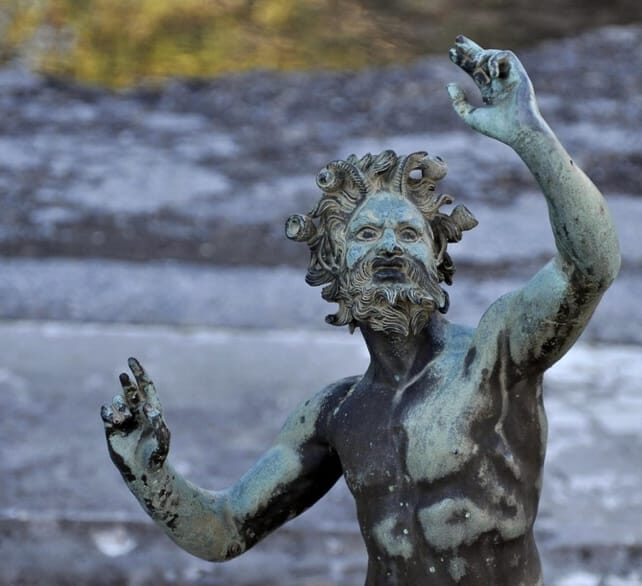
I’d book it if you want the fastest path to understanding both cities, not just taking photos and hoping the ruins explain themselves. Paying for a private guide here is practical: you’re spending real hours on the ground, and that time is worth it when someone helps you read the site as you go.
I’d hesitate only if you’re worried about heat, uneven walking, or you’re strictly budget-driven and would rather spend your time figuring it out independently. Also remember the day-of reality: Herculaneum and Pompeii are big undertakings, and 5.5 hours is plenty for a meaningful overview but not for doing everything.
If your goal is to leave with clear mental pictures of how Romans lived and how Vesuvius changed those lives, this tour makes that goal realistic.
FAQ
FAQ
How long is the Naples: Pompeii and Herculaneum private walking tour?
The duration is 5.5 hours. Starting times vary, so you’ll want to check availability for the specific time you’re booking.
Where does the tour meet?
The meeting point is the ticket office of the Herculaneum Ruins. Your guide meets you at the entrance gate holding a sign with your name.
How much guided time do you get at each site?
Herculaneum has a 2-hour guided tour, and Pompeii has a 2-hour guided tour.
Are entrance tickets included?
Yes. Entrance tickets are included for Herculaneum Ruins, and Pompeii Express entrance tickets are included for Pompeii.
Does the tour skip the ticket line?
Yes, it includes skip-the-ticket-line entry.
What languages are the guides available in?
Guides are available in Spanish, English, Italian, French, German, Russian, Chinese, Japanese, and Portuguese.
Is transportation included?
Transportation is listed as not included. The tour plan includes a train segment between the sites, but you should expect to manage your own travel logistics beyond that.
What should I bring?
Bring a passport or ID card, comfortable shoes, a sun hat, and water.
Are umbrellas or backpacks allowed?
No. Umbrellas and backpacks are not allowed.
Is it accessible for wheelchair users?
No. The tour is not suitable for wheelchair users.
Is entry free on the first Sunday of the month?
Yes, entrance is free of charge on the first Sunday of each month, but tickets can’t be reserved ahead of time, so entry isn’t guaranteed.