REVIEW · NAPLES
Herculaneum Private Tour with an Archaeologist
Book on Viator →Operated by ELIANA SANDRETTI · Bookable on Viator
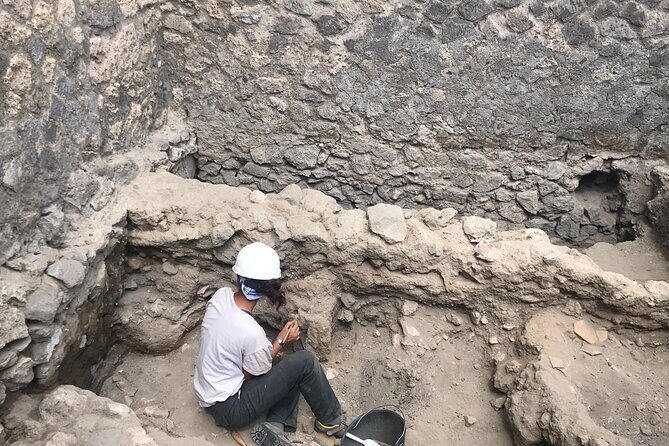
Herculaneum tells its story quietly, up close. With a private archaeologist guiding you through the Parco Acheologico di Ercolano, the ruins stop feeling like random walls and start feeling like homes, jobs, and daily routines. You’ll meet your guide at the site entrance, where the sign notes Eliana Sandretti, and you’ll get clear context for what you’re seeing as you move.
I especially love how the guide turns the site into a living conversation, not a one-way lecture. And I like the way the tour is paced through named houses and specific discoveries, from a black-painted salon to a charred boat you can see up close. One practical drawback: the main ticket price for the park is not included, so budget extra for admission before you go.
In This Review
- Key takeaways before you go
- Why Herculaneum hits differently than Pompeii
- Meeting at the Herculaneum ticket office and getting oriented fast
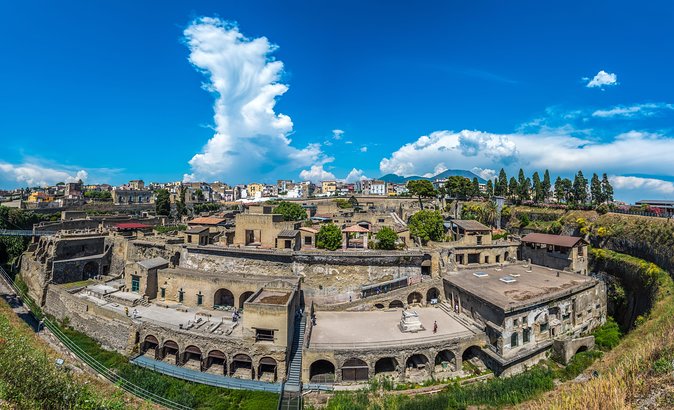
- Parco Acheologico di Ercolano: the overview that makes the rest click
- La Terrazza di M. Nonio Balbo: the eruption through the eyes of survivors
- Casa dei Cervi and the Telephus myth: luxury, sea air, and symbolism
- Partem Domus lignea and the Black Room: when char and color survive
- The boat in the Salone della Barca di Ercolano: preservation with a story
- College of the Augustales: Hercules in Olympus and the human cost
- House of the Skeleton, Samnite House, and Neptune and Amphitrite
- How much you’ll actually cover in 2 hours (and why that’s the sweet spot)
- Price and value: what you’re paying for with a private archaeologist
- Practical tips that make the tour smoother
- Should you book this Herculaneum private archaeologist tour?
- FAQ
- FAQ
- Is this tour private?
- How long is the Herculaneum private tour?
- What’s the price and group size?
- What language is the tour in?
- Do I need to pay admission fees separately?
- Where do we meet for the tour?
- Is there a mobile ticket?
- Are service animals allowed?
Key takeaways before you go
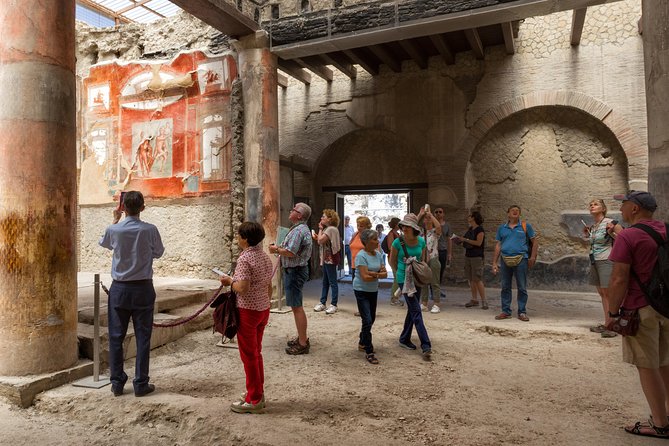
- A true archaeology-led visit with your guide waiting at the ticket office under the name Eliana Sandretti
- Vesuvius evidence you can actually see: skeletons, carbonized wood, and charred objects preserved where they fell
- Named houses in a tight route so you get the most meaningful rooms without spending your whole day wandering
- Private group up to 10 which makes questions easier and helps the guide tailor the pace to your group
- A structure that makes the site readable—you’ll know what each room is, not just that it exists
Why Herculaneum hits differently than Pompeii
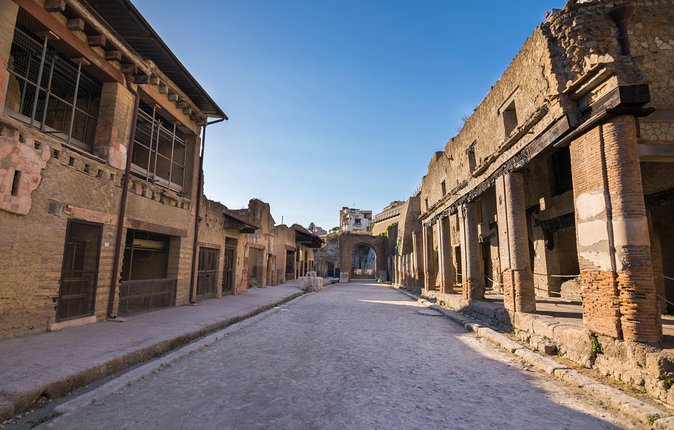
If you’ve been to Pompeii, you might expect the same kind of experience here. Herculaneum is smaller, calmer, and often more sobering in tone. The tragedy is still there, but what you’re staring at feels more intimate: rooms, surfaces, and everyday details that survived in a tighter footprint.
This is where the tour format matters. A guided visit keeps you from getting stuck in a loop of Where should we look? and What is this room supposed to be? With an archaeologist leading the way, the site becomes understandable fast, and you start noticing things you’d normally miss—like why certain houses are named for what was found inside them.
You can also read our reviews of more private tours in Naples



Meeting at the Herculaneum ticket office and getting oriented fast
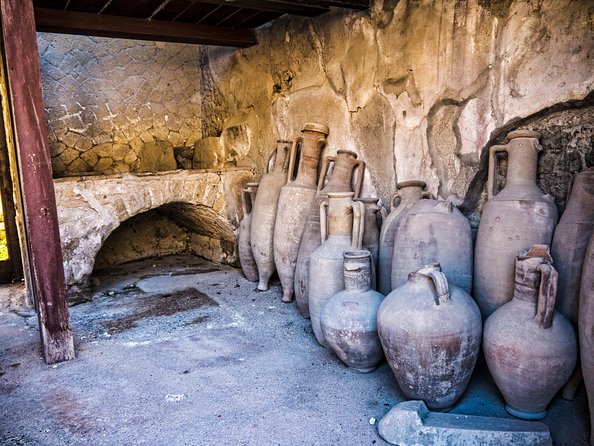
You start at the Archaeological Park of Herculaneum ticket office on Corso Resina 187, in Ercolano. If you didn’t purchase online, you can buy entrance tickets there as well, so you’re not scrambling on the fly.
The tour itself is set up to run like a guided walk with short stops. That’s helpful because Herculaneum rewards attention to small details. In about 2 hours, you’re covering multiple houses and “signature” finds—so you want your first five minutes to count.
Also, keep your expectations practical: this is a guided circuit through a real archaeological site. You’ll be standing and walking in an outdoor museum setting, and the pace is usually steady rather than slow. If you know you’ll need time with uneven footing or stairs, it’s worth telling the guide right away so they can steer you accordingly.
Parco Acheologico di Ercolano: the overview that makes the rest click
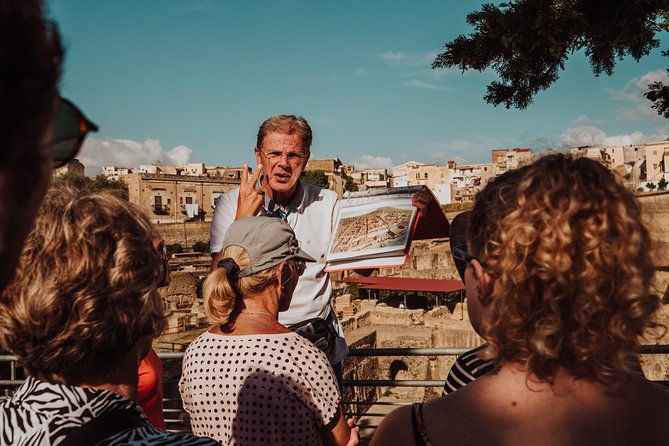
Your first stop is the main park area, and you’ll be able to see the attractions and houses covered by the tour route. Entrance tickets are separate from the tour price, but once you have that park admission in hand, you can follow the full sequence your guide has planned.
I like this opener because it prevents the most common mistake: treating the site like a checklist of ruins. Instead, your archaeologist helps connect what you’re looking at—architecture, preservation, and the human story—so that when you hit the more dramatic spots later (the skeleton area, the black-painted room, the charred boat), you already have a mental map.
In past experiences with archaeologist-led tours here, guides have also handled pacing thoughtfully—keeping things moving while still leaving room for questions. That matters more than people think, especially if your group includes someone who moves slower or needs a different route.
La Terrazza di M. Nonio Balbo: the eruption through the eyes of survivors
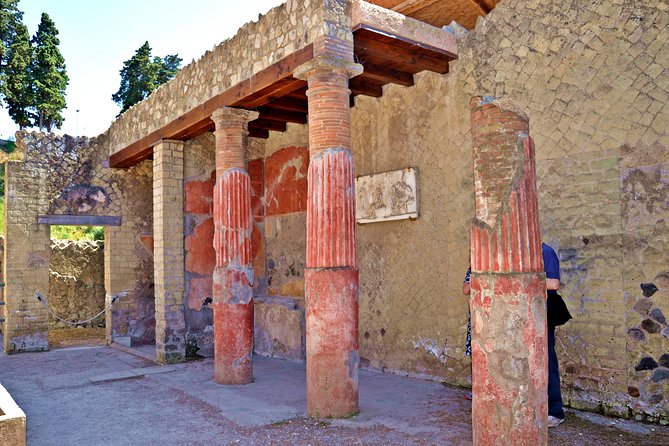
Next up is La Terrazza di M. Nonio Balbo, where you’ll see skeletons from people who died during the eruption. It’s not a “quick look and move on” kind of stop. The guide also has you look out from the terrace and imagine the panorama before the big explosion of Vesuvius.
This viewpoint is a big part of why the tour feels more powerful than a generic museum visit. Seeing the landscape from within the site helps you picture how suddenly life turned. The terrace connection turns a collection of artifacts into a moment—your brain can finally place the event in the real world, not just in a textbook timeline.
Time here is short (about 5 minutes), so listen closely, take in the view, and then use your questions while the guide is right there. If you need a moment to process, grab it now rather than trying to do it later while you’re walking.
Casa dei Cervi and the Telephus myth: luxury, sea air, and symbolism
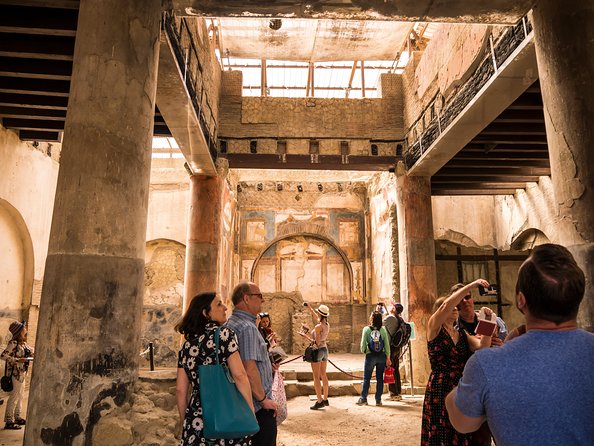
You then step into Casa dei Cervi, a luxury house with a terrace overlooking the sea. This is one of those stops that quietly shows you the social layers of daily life. You’re not just looking at household objects; you’re looking at status—views, terraces, and design choices meant to impress.
Right around this segment, you’ll also pause for a domus name clue tied to a high relief depicting the myth of Telephus. Even if you don’t know Roman mythology, the guide can explain why imagery like this mattered. In Roman domestic spaces, art wasn’t decoration only. It was identity, education, and signaling.
A useful way to enjoy this stop: focus on the contrast. Stand in the house-like setting, look out toward what the sea-facing view would have meant, then mentally switch to the reality that preservation froze daily life in place. It’s a strange kind of time travel, and a guide makes it coherent.



Partem Domus lignea and the Black Room: when char and color survive
From there, you move to Partem Domus lignea – Casa del Tramezzo di Legno, named after a wooden partition discovered charred from the eruption. It’s a haunting detail because wood usually doesn’t survive like this. Here, it does. So instead of only studying stone walls, you get a sense of internal layout—how people separated space, moved through rooms, and lived with structure.
You’ll then head to Casa del Salone Nero, the Black Room, named for its salon painted in black. One reason I like hitting this stop on a guided tour: a guide can explain what you’re looking at visually and what it likely meant socially and aesthetically. Color on walls becomes far more than a photo-worthy moment when someone connects it to how Romans used indoor spaces.
Expect this chunk to be about 15 minutes per stop. That’s enough time to see, ask one or two strong questions, and not feel rushed through everything. If you tend to wander, this is one section where you should stay close to the guide’s framing cues.
The boat in the Salone della Barca di Ercolano: preservation with a story
Next is Salone della Barca di Ercolano, where you’ll see a boat charred by the eruption and described as recently discovered. A boat isn’t just an artifact—it implies work, movement, and the relationship between the town and the sea.
This stop also changes the mood of the tour in a good way. After walking through rooms and wall art, you get an object that suggests motion and daily livelihood. Your archaeologist helps connect that find to what the eruption disrupted.
This is the kind of stop where you’ll probably want to ask: Why does this matter archaeologically? A good guide will explain what details survive, what can be inferred, and what still remains uncertain.
College of the Augustales: Hercules in Olympus and the human cost
The tour continues to the College of the Augustales, a room known for frescoes showing Hercules entering Olympus. The art gives you an anchor point in Roman culture—mythological scenes painted for a purpose inside a public or semi-public context.
You’ll also be shown a skeleton in the same room, belonging to the keeper who died during the eruption. That combination—Hercules on the wall and a person lost in the room—creates a jarring, unforgettable contrast. It’s also exactly why an archaeologist-led stop matters. The guide helps you avoid turning it into just two separate facts. You learn how art, organization, and tragedy all fit together spatially.
Spend this time looking first, then listening. If you do it the other way around, you might miss the visual clues the guide is pointing out.
House of the Skeleton, Samnite House, and Neptune and Amphitrite
The final stretch is a set of houses grouped by their “name tells.” That’s useful because it gives you a simple mental framework as you move—what you’re seeing is what the house is remembered for.
1) House of the Skeleton
You’ll see why it’s called that: the discovery of a skeleton of an inhabitant who couldn’t save himself. This stop is about 10 minutes. In a short time, it can feel heavy, so keep your attention focused on the guidance you’re receiving rather than trying to read everything at once.
2) Casa Sannitica (Samnite House)
This one is described as one of the oldest houses in Herculaneum. It’s a solid “context” stop. When you understand the age, you can better interpret how the town developed and how homes changed across time.
3) Casa di Nettuno e Anfitrite (Neptune and Amphitrite)
The tour ends with Casa di Nettuno e Anfitrite, known for dramatic scenographic compositions. The point here is that Herculaneum’s interiors weren’t flat and plain. Scenes were staged to pull your imagination inward, so a guide’s explanation helps you “read” the rooms like visual storytelling.
This segment is about 15 minutes at each stop. Done right, it feels like the tour is answering questions you didn’t know you had: Who lived here, how did they decorate, and what was their world like right before it froze?
How much you’ll actually cover in 2 hours (and why that’s the sweet spot)
This tour runs about 2 hours. That’s long enough to feel like you learned something real, but short enough to keep your attention sharp. At Herculaneum, details matter. The best guided tours don’t try to show you everything. They show you the right things and explain enough that you can keep noticing after you leave.
You’ll move through roughly a dozen key stops and features, each lasting around 10–15 minutes, plus the initial orientation. The guide’s job is to keep the story coherent while you’re walking. In guides praised in the past, a big theme has been pacing—keeping momentum without bulldozing over questions, even when heat or stairs become a factor.
If you’re short on time in Naples and you want one “anchor” visit that makes Herculaneum feel meaningful, this format is a practical choice.
Price and value: what you’re paying for with a private archaeologist
The price is $349.98 per group (up to 10) for the tour itself. That’s not cheap in the way a bus ticket is cheap, but it’s private-time pricing: you’re buying a specialist’s attention for your group, plus the guide’s direction through the key houses and discoveries.
Here’s the real value equation. Your biggest risk at Herculaneum is arriving without a guide and spending most of your time trying to interpret what you’re seeing. That’s where the archaeologist pays off. The tour is structured around named stops with strong interpretive value—skeleton discoveries, carbonized wood, fresco subjects, and objects like the charred boat. A guide helps you connect those to how people lived, not just to what survived.
Budget separately for admission:
- Private tour admission fee is €15 per person (as listed as not included)
- Entrance tickets to Herculaneum are €15 for adults, and under 18 is free
So your total cost depends on group size. For a family or group of up to 10, the private price becomes easier to justify than paying for multiple separate guided entries. It also gives you flexibility to move as one group instead of splitting up.
Practical tips that make the tour smoother
- Bring water and plan for standing. Even with a guided pace, the site is outdoors and you’ll be on your feet.
- Use your questions at the stops that have the strongest “name clues” (Black Room, boat hall, skeleton house). Your guide can connect details without you losing time.
- If someone in your group has mobility limits, it’s smart to flag it early. Past guides on this kind of route have been described as considerate with stairs and footing for people needing support.
- Wear shoes that handle uneven surfaces. Short stops add up fast.
If you’re pairing this with other Vesuvius-area sights, consider doing Herculaneum when you can stay mentally present. It’s intense, and the stories tend to stick.
Should you book this Herculaneum private archaeologist tour?
I’d book it if you want Herculaneum to feel like a place where people lived, not a set of ruins you photographed and moved past. The stop sequence is built around discoveries that need context: skeletons, carbonized wood, specific fresco themes, and objects like the charred boat.
I’d pass or reconsider if budget is tight, because you’ll pay tour price plus park admission and related per-person fees that aren’t included. Also, if your group can’t handle outdoor walking and standing for the full 2 hours, you may want a route that’s easier to manage.
If you’re the type who likes your history with facts, but also with meaning, this private archaeologist format is a strong fit.
FAQ
FAQ
Is this tour private?
Yes. It’s a private tour/activity, and only your group will participate.
How long is the Herculaneum private tour?
It lasts about 2 hours.
What’s the price and group size?
It costs $349.98 per group, up to 10 people.
What language is the tour in?
The tour is offered in English.
Do I need to pay admission fees separately?
Yes. The admission fee for the private tour and the entrance tickets to Herculaneum are not included. Adults are listed at €15 for entrance tickets, and under 18 are free.
Where do we meet for the tour?
The start point is the Archaeological Park of Herculaneum ticket office on Corso Resina, 187, 80056 Ercolano NA, Italy. The tour ends back at the meeting point.
Is there a mobile ticket?
Yes, the tour includes a mobile ticket.
Are service animals allowed?
Yes, service animals are allowed.