REVIEW · GUIDED
Excellence Private Herculaneum Guided Tour with an Archeologist
Book on Viator →Bookable on Viator
Herculaneum hits differently than Pompeii. This private tour focuses on first-century life inside a town that’s shockingly well preserved, with an expert guide helping you connect the dots street by street. You start from the seaside end of the park, where the remains of ancient residents were preserved, and you work your way through key areas like the main road, public spaces, and the Roman spa.
What I like most is the combination of an archaeologist guide and a real sense of how the town functioned day to day. The second big win for me is the pace: it’s short (about 2 hours), but it’s flexible enough to ask questions as you go. One thing to consider is that the park admission isn’t included (you’ll pay €16 per person), and you’ll want to plan for heat—this site gets warm fast, so earlier hours are smart.
In This Review
- Key Things You’ll Notice on This Tour
- Herculaneum’s Seaside Start Puts the Story in Order
- Your Archaeologist Guide Makes the Ruins Make Sense
- The 2-Hour Walk: What You’ll Actually See
- Start at the Seaside End and the Preserved Human Remains
- Holy Terrace: A Spiritual Stop With a Practical Purpose
- The Main Road With Shops and Well-Preserved Homes
- Roman Palestra and the Decumano: Public Life, Not Just Architecture
- Thermal Baths / Roman Spa: The Town’s Social Engine
- What Preservation Here Really Means (and Why It’s Rare)
- Price and Value: Paying for Expertise Plus a Separate Entry Fee
- Timing and Heat: Go Early for Comfort
- Who This Private Tour Suits Best
- Practical Details That Matter Day-of
- Should You Book This Herculaneum Archaeologist Tour?
- FAQ
- How long is the Excellence Private Herculaneum Guided Tour?
- Is the tour offered in English?
- What does the tour price include?
- Is the admission ticket included?
- Where do I meet the guide?
- Is this a private tour?
- Do I need a physical ticket?
- Can I cancel for free?
- Are service animals allowed?
Key Things You’ll Notice on This Tour
- Seaside start point that puts you in the right mindset for how people would have lived close to the harbor
- Preserved human remains still present at the site, with a guide explaining what you’re looking at and why it matters
- Homes, shops, and public facilities in one walk, so you see daily life instead of just monuments
- Thermal baths / Roman spa area that helps you understand the town’s routines and social spaces
- A true private group setup (up to 12 people) with room for questions and pacing at your level
- Artifacts still close to original form, explained in context instead of as random objects
Herculaneum’s Seaside Start Puts the Story in Order
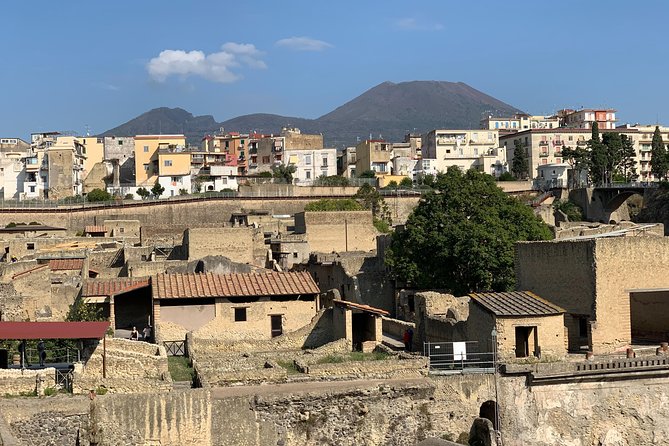
Walking into Herculaneum from the seaside end changes how you read the ruins. Instead of starting with the biggest “headline” structures, you begin where the town’s relationship to daily life and the waterline makes more sense. It helps you understand that this wasn’t just a grid of buildings—it was a working town with routines, trades, and neighbors.
This tour also leans into one of Herculaneum’s most haunting features: you’ll see where the bones of ancient inhabitants were preserved. Standing there, you’ll get a clear explanation of what you’re seeing and why it’s not just a dramatic detail—it’s part of how archaeologists reconstruct lives from the physical evidence. If you like your history grounded in “what’s actually here,” you’ll appreciate the way your guide links the human side to the built environment.
Your Archaeologist Guide Makes the Ruins Make Sense
The core value here is the guide. This is led by a professional archaeologist tourist guide, and that matters because Herculaneum can feel like a collection of rooms and corridors unless someone helps you interpret them. Your guide doesn’t just point out what’s visible; they explain what the spaces likely meant and how the town worked.
There’s also a practical benefit to the private format. A small group (up to 12) means you can ask follow-up questions without waiting your turn. If you’re curious about how public life differed from domestic life, or what a specific room function might have been, this setup makes it easier to get a direct answer.
One more nuance: I’ve seen a review that questioned the guide’s archaeologist background. The operator responded by emphasizing that their guides are archaeologists or archaeology students. The safe move? At the start, listen closely when the guide introduces their background. If you want to be extra confident, ask a simple question early like, What’s your specialization in the site? A good archaeologist will answer clearly and use the site evidence.
The 2-Hour Walk: What You’ll Actually See
This tour is designed to be doable and focused. You’re looking at roughly 2 hours on the ground, starting and ending back at the Herculaneum Ticket Office. That time window is short enough to keep your energy up, but long enough to connect multiple parts of the park.
Here’s the flow you can expect, and what each part is good for:
Start at the Seaside End and the Preserved Human Remains
You begin at the Parco Acheologico di Ercolano from the seaside side. The first big emotional and educational anchor is seeing preserved bones of ancient inhabitants still at the site. It’s a heavy moment, and a good guide helps you move from shock to understanding—what the evidence shows, what it doesn’t, and how archaeologists interpret it.
Holy Terrace: A Spiritual Stop With a Practical Purpose
Next up is the Holy terrace. Even if religion isn’t usually your main interest, this kind of stop matters because it reveals how people organized their public and sacred spaces. Your guide can help you connect terrace-like areas to how communities gathered, respected traditions, and shaped social life.
The Main Road With Shops and Well-Preserved Homes
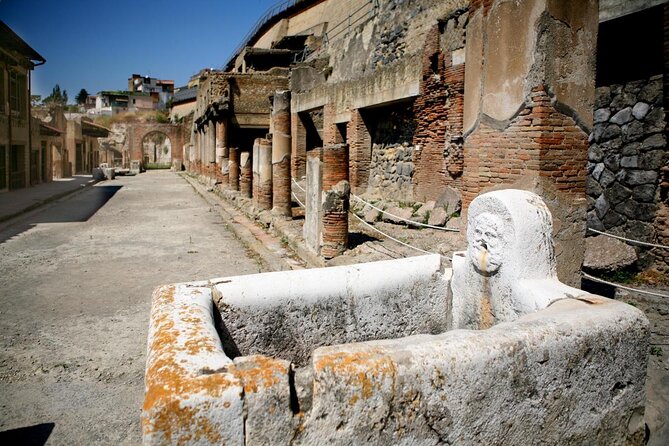
Then you head onto the main road, where you’ll see ancient shops and well-preserved houses. This is where the ruins start feeling like a lived place rather than a museum. Shops help you imagine what people bought and sold. Homes help you picture how families arranged space for daily tasks, privacy, and gathering.
If you like “reading” a place with your eyes—doorways, room layouts, and street movement—this section is especially satisfying because the town fabric is intact enough to make sense.
Roman Palestra and the Decumano: Public Life, Not Just Architecture
You’ll also visit the Roman Palestra and see the Decumano. These are key for understanding public life. A palestra is tied to exercise and social routines, so it’s a window into how people spent time beyond work and home. The Decumano gives you the main street backbone of the town, helping you understand how movement and commerce likely flowed.
This is also a good part of the tour to ask questions. I’d use this time to clarify how archaeologists label areas and what features indicate specific uses. That way, you’ll leave with mental maps, not just photos.
Thermal Baths / Roman Spa: The Town’s Social Engine
The thermal bath or Roman spa area is a standout, especially if you want to go beyond “what it looked like” and into “how people acted.” Bathing spaces were social centers. They were places to talk, relax, and keep up routines.
Your guide’s job here is to help you see the bath complex as more than stone basins. When explained clearly, it becomes a timeline of everyday life: when you might go, what roles different spaces played, and how architecture supported the experience.
What Preservation Here Really Means (and Why It’s Rare)
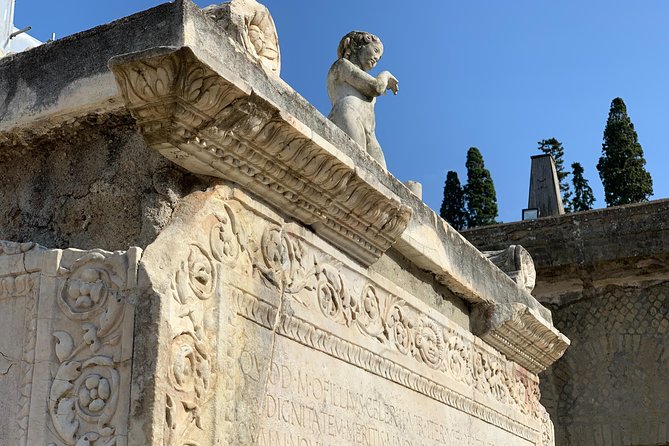
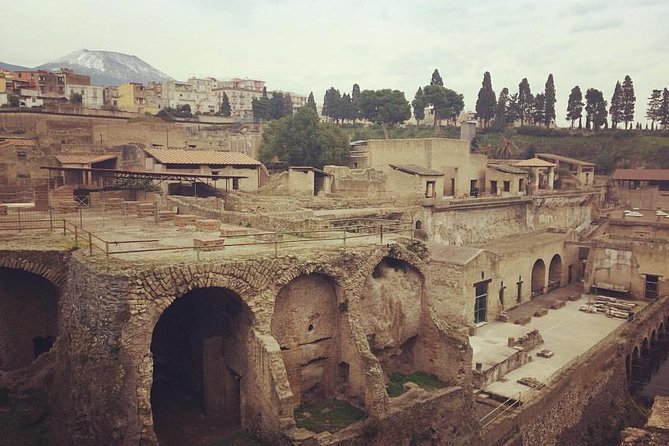
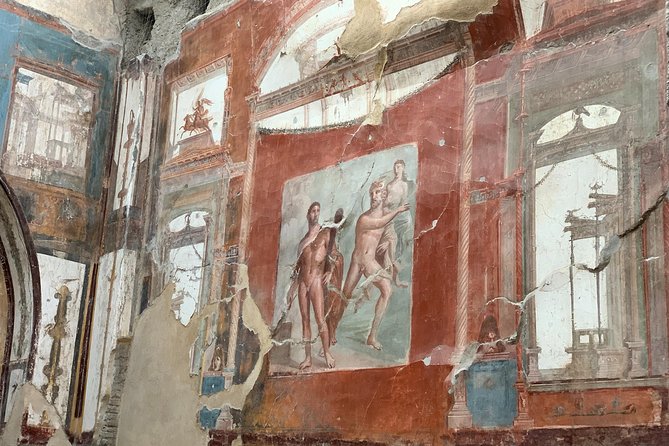
Herculaneum’s preservation is one of the reasons it feels so immediate. During the walk, you’ll encounter artifacts that have kept their original form for almost 2000 years. That detail isn’t just trivia—it changes how you interpret the past.
When objects and spaces remain close to their original state, you can often infer function more confidently. A room layout, a shop setup, and a public space can become clearer, because the evidence hasn’t been stripped away or heavily damaged. That’s where a guide makes the difference: they help you understand what you can conclude with confidence and what’s more interpretive.
You’ll also see why starting at the seaside end matters. The town’s physical arrangement helps archaeologists map how the town’s zones related to each other—public vs. domestic, work vs. leisure, and movement along the street grid.
Price and Value: Paying for Expertise Plus a Separate Entry Fee
The tour price is $294.55 per group (up to 12 people) for about 2 hours. That’s not a bargain if you’re solo or a couple, but it can be good value if you’re traveling with friends or family and want an archaeologist-led explanation without merging into a larger crowd.
One important cost factor: admission tickets are not included, and the park admission is €16 per person. So the “real” total depends on your group size. If you’re trying to decide whether it’s worth it, treat the math like this:
- You’re paying for a private archaeologist guide service for up to 12 people.
- You’ll still pay the same park entry fee per person regardless of the guide.
In practice, this tour tends to make the most sense for small groups who want clarity fast. If you prefer to wander slowly with headphones and no guiding, you might not feel the value. If you want the ruins explained as you stand in front of them, the price usually feels more reasonable.
Timing and Heat: Go Early for Comfort
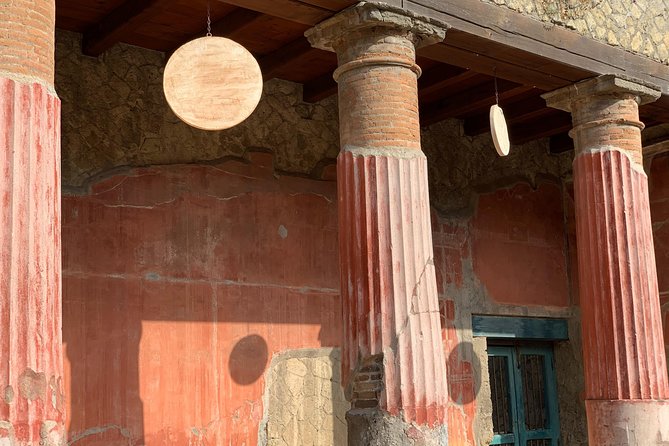
You’ll cover a lot of ground in a compact time. Also, Herculaneum can get hot, and you’ll likely spend meaningful time outside. A simple strategy helps a lot: plan an early start in the day if you can. One review specifically recommended going early because of the heat, and that tracks with what you’ll experience on-site.
What to bring is basic but important: water, sun protection, and comfortable shoes you don’t mind walking on in an archaeological park setting. Since the tour is about 2 hours, you don’t have endless time to acclimate if the weather is harsh.
Who This Private Tour Suits Best
This is a smart fit if you:
- want an archaeologist-guided experience rather than a general sightseeing walk
- travel with people who enjoy questions and a clearer narrative
- prefer a focused 2-hour route instead of a half-day commitment
- want to see both domestic and public spaces (homes, shops, palestra, and baths) in one outing
It’s also a decent option for many visitors because the format is private and the pace can be flexible. If you have mobility concerns, the tour doesn’t list specific accessibility details beyond saying most travelers can participate—so if that’s a concern, it’s worth asking before booking and confirming how much walking is expected.
Practical Details That Matter Day-of
You’ll meet at the Herculaneum Ticket Office in Ercolano and return there at the end of the tour. The tour uses a mobile ticket, and it’s offered in English.
Also, this is a private tour/activity. Only your group participates, which keeps the experience calmer and easier to follow than larger shared tours. Service animals are allowed, and the meeting point is near public transportation—handy if you’re mixing this with other Naples-area plans.
Should You Book This Herculaneum Archaeologist Tour?
If your goal is to understand Herculaneum as a working first-century town—not just take photos—then yes, this is a strong choice. The biggest reason is simple: you’re not left to guess what you’re looking at. With an archaeologist guide, the preserved remains, the street layout, and the public spaces connect into a coherent story.
I’d book it if:
- you’re short on time and want a well-structured 2-hour visit
- you care about interpretation as much as scenery
- you’re traveling with a group where the per-group price spreads out
I might skip it if:
- you’d rather self-guide at your own pace without paying for expert time
- you’re traveling solo and the admission fee plus guide cost makes the math less appealing
Either way, do yourself a favor: go earlier in the day for comfort, and come prepared with a couple of questions you genuinely want answered. A good private guide will meet you there.
FAQ
How long is the Excellence Private Herculaneum Guided Tour?
It lasts about 2 hours.
Is the tour offered in English?
Yes, it’s offered in English.
What does the tour price include?
The price includes a guided tour by a professional archaeologist tourist guide and full office assistance.
Is the admission ticket included?
No. Admission tickets are not included, and the park entry is €16.00 per person.
Where do I meet the guide?
You meet at the Herculaneum Ticket Office, 80056 Ercolano, Metropolitan City of Naples, Italy.
Is this a private tour?
Yes. It’s private, and only your group will participate (up to 12 people).
Do I need a physical ticket?
No. You’ll receive a mobile ticket.
Can I cancel for free?
Yes. Free cancellation is available, and you can cancel up to 24 hours in advance for a full refund.
Are service animals allowed?
Yes, service animals are allowed.