REVIEW · SORRENTO
Sorrento: walking in the Grand Tour with stunning landscapes
Book on GetYourGuide →Operated by Silvana Gargiulo · Bookable on GetYourGuide
Sorrento hits hard in the best way. This private stroll strings together Grand Tour fame, seaside village life, and big-view stops with stories you cannot pick up from a quick photo walk. I especially like that the route mixes myth (mermaids) with literature and music (Torquato Tasso, De Curtis brothers), so you understand why Sorrento became a magnet for Greeks, Romans, and later writers.
I also love the “small access” feel. You get to look into places most big group tours never touch, like terrace viewpoints and cloister calm at Chiostro di San Francesco, plus a limoncello tasting that focuses on the traditional production side. The main drawback is simple: it is not suitable for people with mobility impairments, and the walking is part of the experience.
In This Review
- Key Things You’ll Notice on This Grand Tour Walk
- Sorrento Feels Like a Grand Tour Movie Set
- Bellevue Syrene: Start Above Roman Ruins and Mermaid Myth
- Marina Grande: Fishermen Life, Movie Details, and Vesuvius in Reach
- Imperial Hotel Tramontano: Where Grand Tour Names Left Their Mark
- Chiostro di San Francesco: A Cloister That Makes You Lower Your Voice
- The Public Garden: Panorama From Ischia to Punta del Capo and Vesuvius
- Excelsior Vittoria, Piazza S. Antonino, and the Grand Names Suite
- Limoncello at Giardini di Cataldo: The Taste With a Time of Year Twist
- Piazza Tasso and the Inlaid Wood Work Factory (That Gaming Table)
- Vallons of Mills Finish: Rare Plants and a Slower Ending
- Price and Logistics: Is It Worth $84.96?
- Should You Book This Sorrento Grand Tour Walk?
- FAQ
- How long is the Sorrento walking tour?
- Where does the tour start?
- What language is the guide available in?
- Is this a private tour or a group tour?
- What is included in the price?
- Is food included?
- Do I need to bring anything?
- Is hotel pickup included?
- Is the tour suitable for people with mobility impairments?
- Is cancellation free?
- What if I’m traveling in winter?
Key Things You’ll Notice on This Grand Tour Walk
- Mermaids and music as your guide thread, not just a list of stops
- Bellevue Syrene viewpoints tied to Roman history (Agrippa Postumo and nymphaeums)
- Marina Grande details like fishermen’s nets and the classic movie balcony moment
- Chiostro di San Francesco quiet, with a sense of how locals live a different pace
- Real limoncello tasting at Giardini di Cataldo using the traditional method
Sorrento Feels Like a Grand Tour Movie Set
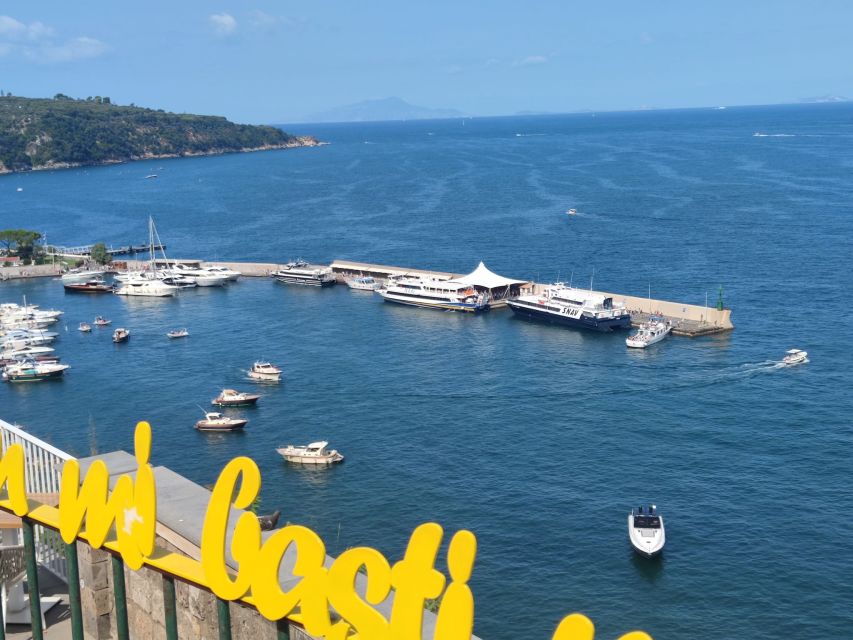
Sorrento has the kind of geography that turns every turn into a photo you want to keep. The cliffs and coast pull your eyes outward to the Gulf of Naples, and the town’s lanes pull you inward to scenes of everyday life. This walk uses that effect on purpose: story first, views second, then the practical “how did they live here?” details.
You’ll start the tour at Vittoria square near Hotel Bellevue Syrene. From there, the guide sets the tone with the myth of the Land of the Mermaids, then ties it to the kind of people who put Sorrento on the map: Torquato Tasso, Homer, Goethe, and Ibsen. If you like travel that explains the why behind the where, this format works.
The value is in how the stops connect. You’re not hopping randomly. You’re moving through a sequence that shows how Sorrento became a destination for artists, writers, and royalty—then you see the living seaside village right after.
Bellevue Syrene: Start Above Roman Ruins and Mermaid Myth
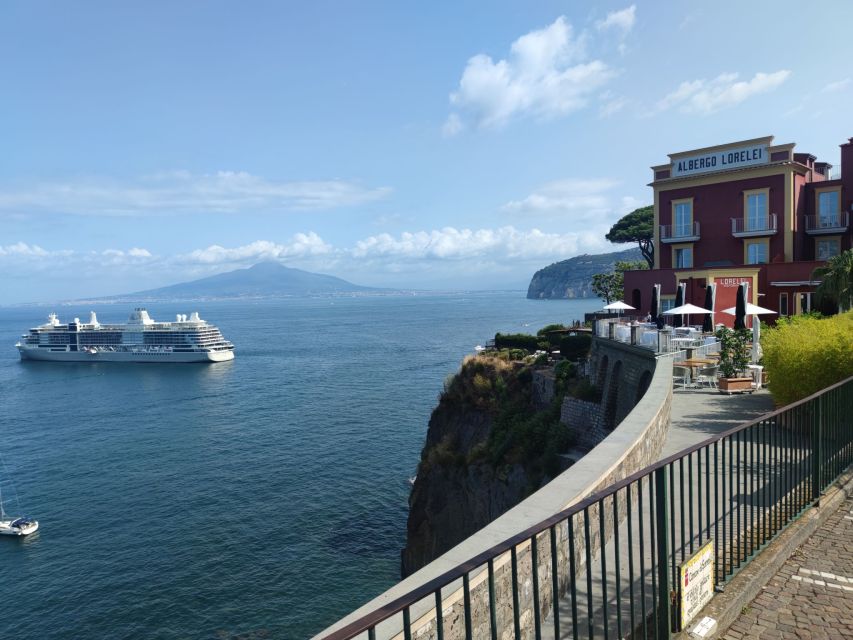
Your first big moment is the view area around Hotel Bellevue Syrene. The guide frames it as more than scenery by introducing the ruins below: the Roman Villa of Agrippa Postumo, plus the two nymphaeums and a Roman fish pond. That mix matters because it changes how you read the coastline. You stop thinking of it as just a postcard and start seeing it as layered time.
Right away, you get the myth angle too. The tour leans into the idea of mermaids and their song—so your first minutes feel like you’re stepping into a story, not just walking from point to point. It also helps you slow down. When someone is explaining a legend while you look out, you naturally take your time with the horizon.
Practical tip: bring your camera, but also give your eyes a minute before you shoot. The guide’s stories make the view make more sense.
Marina Grande: Fishermen Life, Movie Details, and Vesuvius in Reach
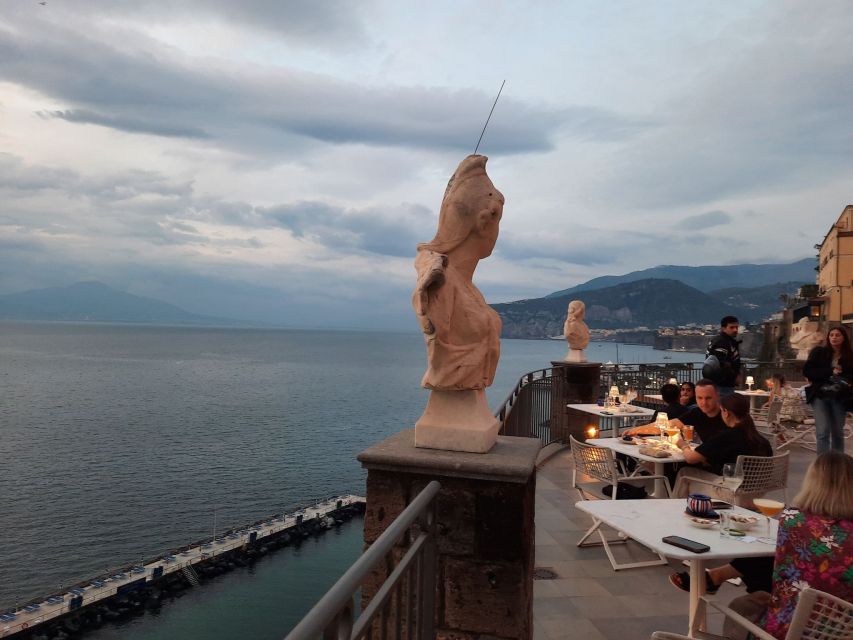
After a short walk, you reach Marina Grande, Sorrento’s seaside village. This is where the town feels grounded. You’ll notice the atmosphere tied to work: fishermen’s nets, the rhythms of the port, and typical Sorrentine scenes that don’t look staged.
This section also includes a very specific pop-culture breadcrumb. You’ll see the balcony where Sofia Loren leaned out in the famous film Pane, amore e… with Vittorio De Sica. It’s a quick moment, but it’s the kind of detail that makes places stick in your memory.
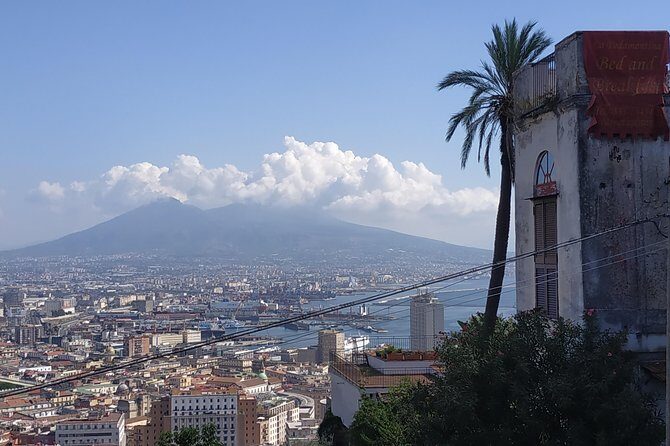
The guide also encourages you to look outward toward Vesuvius and the beauty of the Gulf of Naples. For many people, that’s the first time Vesuvius feels close enough to understand from street level, not from a distance. It is one of those “wait, this is Italy in 3D” moments.
What to watch for: Marina Grande has a working-port feel, so you may see boats, gear, and activity that changes day to day. That’s part of the charm.
Imperial Hotel Tramontano: Where Grand Tour Names Left Their Mark
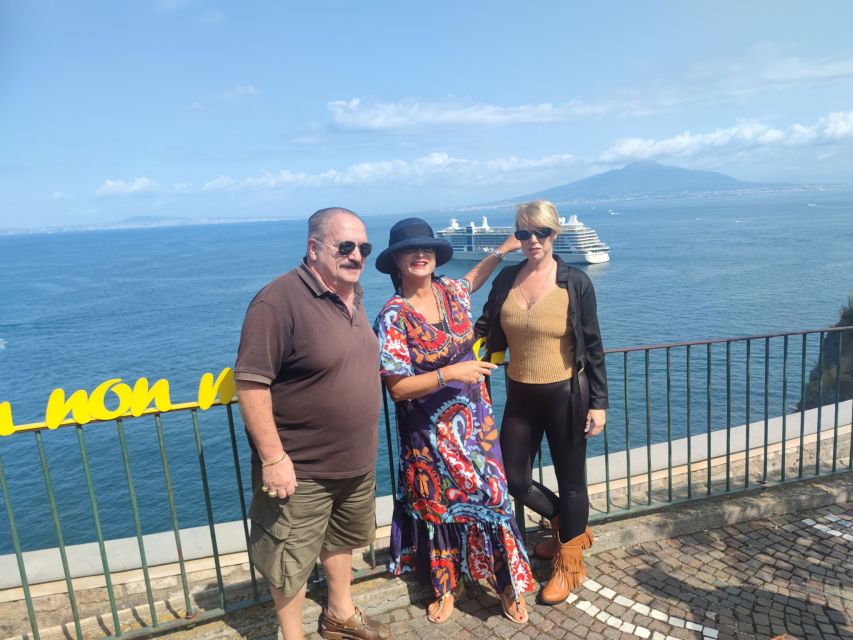
Next comes Hotel Tramontano, and this is where the walk shifts into “why Sorrento mattered to famous people.” The tour points out that the hotel welcomed the big names of royal houses, along with painters and writers connected to Grand Tour culture. In other words, this isn’t just about pretty buildings; it’s about status and influence.
You’ll hear about the song Torna a Surriento, linked to the De Curtis brothers. That matters because it shows how Sorrento’s identity didn’t stay in antiquity or aristocratic circles. It moved into popular music too, and the town stayed in the cultural spotlight.
From the terraces, the views take over again. The guide has you admiring the seaward perspective and connects it to literary roots: the tour includes the area tied to Torquato Tasso, including his birthplace and his garden with secular trees. Even if you only catch glimpses rather than a full-on garden experience, the point is clear—Sorrento’s fame is personal, not abstract.
Chiostro di San Francesco: A Cloister That Makes You Lower Your Voice
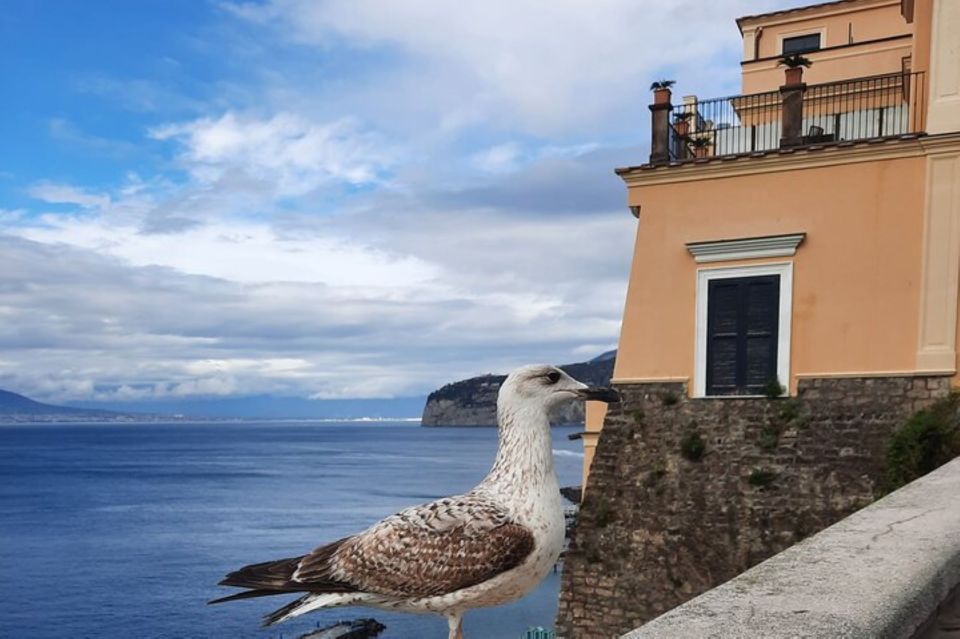
The Chiostro di San Francesco stop is a time-out. This 14th-century cloister has an intimacy that feels worlds away from the noisy parts of town. You’ll see it as a place of ceremonies too, since civil weddings can take place here, and it hosts classical music concerts in summer.
The guide frames the cloister as a working rhythm of faith and craft: Franciscan monks live in isolation from the worldly Sorrentine pace, with prayer and the creation of the Neapolitan nativity scene. That detail changes the atmosphere. You’re not just looking at pretty architecture—you’re understanding why the place feels calm.
There’s also a practical visual moment: the colonnade, plus the feeling of space created by the cloister’s layout. And yes, you’ll likely notice the weeping willow, which adds a soft, almost theatrical touch to the stone.
If you’re the type who rushes: don’t. This stop is where you slow down the whole day.
The Public Garden: Panorama From Ischia to Punta del Capo and Vesuvius
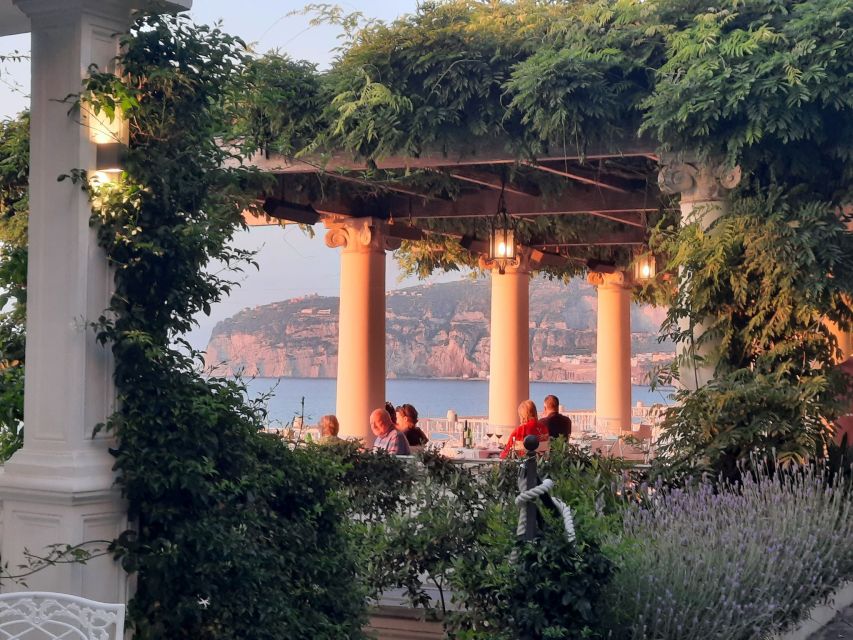
Then you shift back into open air at the public garden dedicated to composer Salve d’Esposito, known for the song Anema e core. This is another stop where music and landscape meet, but the emphasis is on what you can actually see from here.
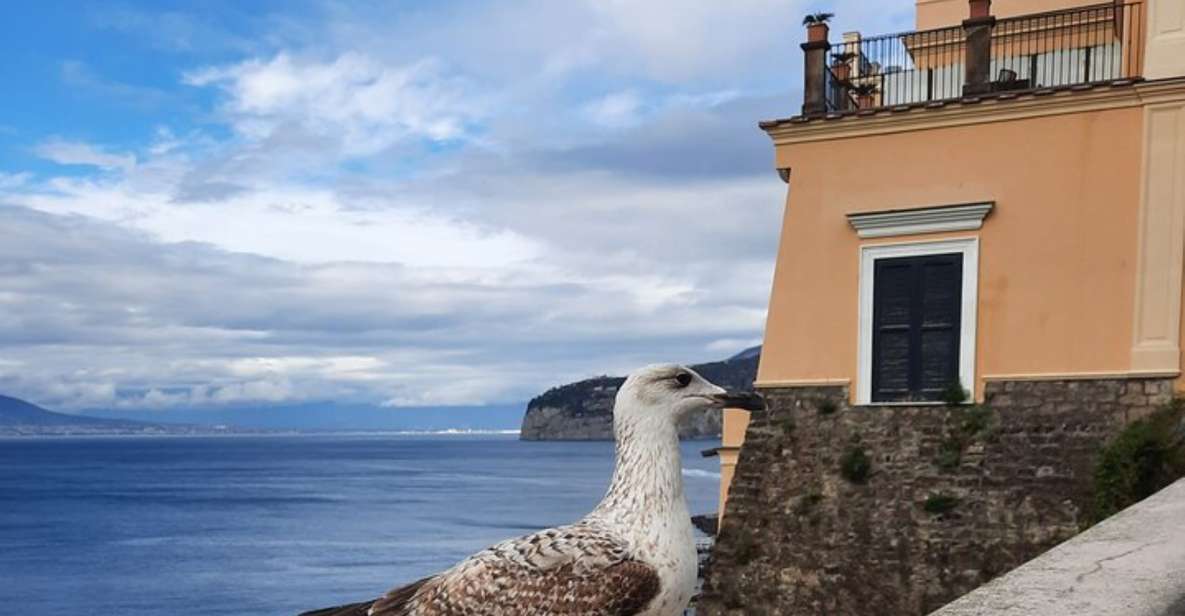
The view range is spelled out clearly: from Ischia to Punta del Capo di Sorrento, with Vesuvius and the entire Gulf of Naples in view. It’s a big horizon, and the guide’s job is to help you read it.
This is also a great photo break, but try to treat it like a viewing deck, not a scramble. Look once, then look again while the guide connects the scene to the cultural layers you’ve been learning about.
Small consideration: since this is outdoors, plan for sun. Shade helps, and a hat is a cheap upgrade.
Excelsior Vittoria, Piazza S. Antonino, and the Grand Names Suite
At some point in the walking flow, you’ll pass through Piazza S. Antonino and see a statue dedicated to Sorrento’s patron saint. It’s a quick touch, but it grounds the day in local religious identity.
From there, you’ll reach Grand Hotel Excelsior Vittoria and also the guest house Rosa Magra. The tour shares that the hotel has famous suites dedicated to Enrico Caruso and singer Lucio Dalla. Important note: the suites are not visitable, but the guide’s context helps you understand why these names belong in Sorrento’s story.
This is one of those sections where you get “the sense of wealth and culture” without it turning into a hard sell. You’re also not being locked behind rules the whole time—just guided through what you can access.
Limoncello at Giardini di Cataldo: The Taste With a Time of Year Twist
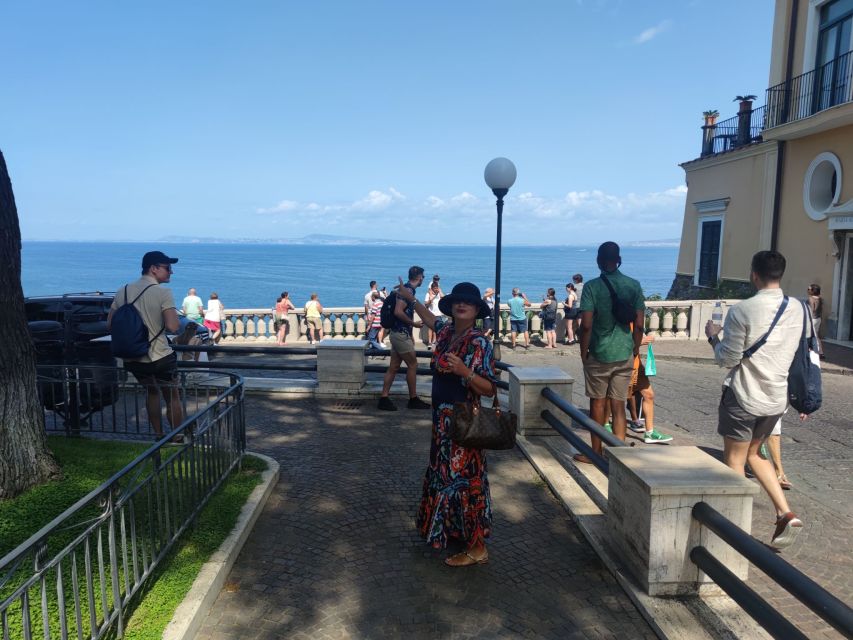
One of the most memorable parts of this tour is the limoncello tasting at Giardini di Cataldo, in a traditional Sorrento producing location. The focus here is on the real traditional flavor, not a sugary souvenir pour.
There’s also a seasonal adjustment you should know. From January 6 until mid-March, the degustation is replaced by lemon ice cream in a local shop. So if you’re traveling in winter, don’t expect limoncello every time—expect a lemon-flavored version of the experience instead.
This stop is valuable because it connects food/drink to place. You learn that Sorrento’s citrus identity isn’t a random branding move; it’s a long-standing local practice. Even if you do not become a limoncello superfan, the tasting makes the town’s flavor identity click.
Tip: if you’re sensitive to strong alcohol flavors, take small sips and slow down.
Piazza Tasso and the Inlaid Wood Work Factory (That Gaming Table)
The tour ends with a crafts-focused moment at Piazza Tasso and an inlaid wood work factory. This is where Sorrento’s creative reputation shifts from art and music to hands-on work.
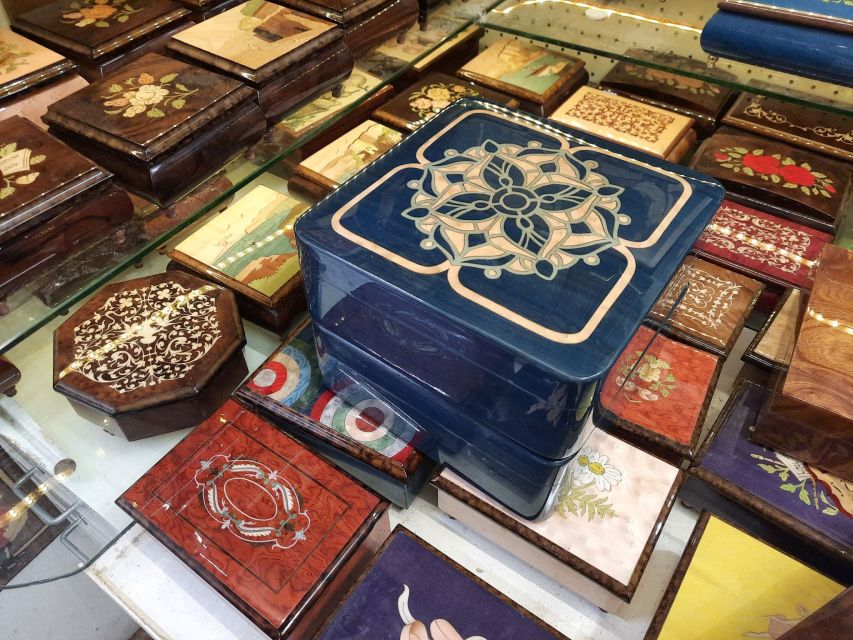
You’ll see inlaid wood work products, including an incredible gaming table. That detail is more than a quirky souvenir hook. It shows how decorative craftsmanship ties into leisure and social life—how the same culture that hosted artists also produced objects people used daily.
If you like buying travel items that feel personal and made with skill, this is the part of the day that actually earns your attention. Even if you skip shopping, you’ll come away with a better eye for what you’re seeing.
Vallons of Mills Finish: Rare Plants and a Slower Ending
The final stop is Vallons of Mills, called that because there were once mills there. Today, it’s the realm of rare plants, which changes the mood as the tour wraps up.
This ending is subtle. You’re not being rushed into a final viewpoint. You’re finishing where the land still looks lived-in and specific to the region’s ecology.
It’s a nice contrast to earlier stops, and it makes the day feel more rounded: coast, culture, quiet, craft, and then nature.
Price and Logistics: Is It Worth $84.96?
The price is $84.96 per person, for a 2–3 hour private experience. For a private guide route that includes limoncello tasting and built-in access to multiple high-interest stops, it’s not a bad deal—especially if you’re comparing it to paying separately for tastings, guided time, and the value of having someone stitch the meaning together.
Pickup is where value can swing. The tour includes hotel pickup and drop-off by car if you’re within 1 km of the meeting point (Hotel Bellevue Syrene) and if your group is no more than 3 people. If you’re farther—between 1 km and 7 km—there’s a €10.00 charge per person for pickup. If you’re in that wider ring, it’s smart to weigh whether you want to walk to the meeting point to avoid the extra fee.
A few other “logistics” notes matter more than they seem:
- Private group means the pace can stay comfortable and the tour can be shaped to you.
- It’s not suitable for mobility impairments, so plan for walking and uneven streets.
- No oversize luggage, so keep bags compact.
If your goal is a meaningful Sorrento orientation with hands-on access to lemon tasting and craft, I think this is a solid use of time.
Should You Book This Sorrento Grand Tour Walk?
Book it if you want Sorrento with context—myth, literature, and music threaded into the streets and viewpoints. The private format is a plus if you don’t want to feel herded, and the limoncello tasting plus the inlaid wood work stop give you tangible takeaways beyond photos.
Skip it if you need fully accessible routes. This is a walking tour with stairs and city lanes in mind, and the experience data is clear that it’s not built for mobility impairments.
If you enjoy routes where the guide connects art and everyday life, this one makes Sorrento feel like a story you can actually walk through.
FAQ
How long is the Sorrento walking tour?
The duration is 2–3 hours. Exact starting times can vary, so check availability.
Where does the tour start?
It starts at Vittoria square (Hotel Bellevue Syrene area), with starting options that may include Piazza della Vittoria or Piazza Tasso depending on the option booked.
What language is the guide available in?
The live guide is available in Italian, French, and English.
Is this a private tour or a group tour?
It is a private group experience.
What is included in the price?
Included: limoncello tasting at a traditional producing location, hotel pickup/drop-off by car under certain conditions, and suggestions for cultural attractions in the area. It also includes exhibition of inlaid wood work art in a traditional factory.
Is food included?
No. Food is not included.
Do I need to bring anything?
Bring a camera.
Is hotel pickup included?
Pickup/drop-off by car is included only if you are within 1 km of the meeting point and your group is no more than 3 people. If you are between 1 km and 7 km, pickup is available with a €10.00 per person charge.
Is the tour suitable for people with mobility impairments?
No. It is not suitable for people with mobility impairments.
Is cancellation free?
Yes. You can cancel up to 24 hours in advance for a full refund.
What if I’m traveling in winter?
From January 6 to mid-March, the limoncello tasting is replaced by lemon ice cream at a local shop.