REVIEW · SORRENTO
Private Pompeii Tour with Archaeologist & Winery on Mt Vesuvius
Book on Viator →Operated by Fabrizio Belleni - Leisure Italy Private Guide · Bookable on Viator
A perfect Pompeii day starts with a smart guide. This private tour blends a private Pompeii walking tour with an archaeologist plus a Mt Vesuvius-area winery meal and wine tasting. I like that you get skip-the-line Pompeii entry and door-to-door comfort in an A/C Mercedes van. One consideration: the winery lunch and wine tasting cost extra, and the day does not go to the volcano summit.
The Pompeii route is focused on the big hits around the Forum, so you spend your time in the places that make the whole city click. Stops like the Basilica, Temple of Apollo, the Forum Baths, and the famous houses are set up so you can connect daily life, public buildings, and status in one flowing walk. You can also ask for special tweaks, and the guide can adjust to your physical pace.
This is a great fit if you want a private, English-guided day from Sorrento or Naples and you also like good food and wine. The walking is real, and the site is big, so bring comfortable shoes and plan for a moderate fitness level.
In This Review
- Key things to know before you go
- Why this Pompeii-with-winery schedule works
- Price and value: what you pay for and what you pay extra for
- Getting picked up: A/C Mercedes transport from Sorrento and Naples
- Your Pompeii route starts with the Forum for a reason
- Porta Marina: entering Pompeii through its main sea gateway
- Basilica Pompeiana: the Forum’s courthouse and business engine
- Temple of Apollo: a Greek-leaning sacred site with a Vesuvius view
- Forum of Pompeii and the Macellum: politics, markets, and state religion
- Forum Baths: the daily social life stop, not just hot water
- House of the Faun and Casa dei Vettii: money, art, and status
- House of the Faun
- Casa dei Vettii
- Theater time and modern archaeology: Teatro Grande and the Casti Amanti block
- Teatro Grande
- Insula dei Casti Amanti
- Antiquarium di Pompei: your fast orientation inside Porta Marina
- Cantina del Vesuvio: vineyard walk, five wines, and a proper lunch
- Timing, walking comfort, and how to pace this day
- Who this tour is best for
- Should you book this private Pompeii and winery day?
- FAQ
- Is this a private tour?
- How long is the Pompeii and winery experience?
- What language is the tour offered in?
- Does the tour include Pompeii admission?
- Is lunch and wine tasting included in the tour price?
- Will the tour take us to the top of Mount Vesuvius?
- Can I cancel for a full refund?
Key things to know before you go
- Private archaeologist guidance designed around what you want to see and your pace
- Skip-the-line Pompeii Express entry so you lose less time waiting
- Forum-focused Pompeii highlights plus quick stops like the Antiquarium and Teatro Grande
- Winery on Mt Vesuvius area with a vineyard walk and lunch paired with five wines
- A/C Mercedes van pickup and drop-off from Naples and Sorrento
- No summit visit to Mt Vesuvius, but you still get big views from the winery area
Why this Pompeii-with-winery schedule works
Pompeii is one of those places where timing and focus matter more than most attractions. You can wander and still miss the point. This day is built to help you do the opposite: you get a guided route that hits the major public spaces first, then layers on markets, baths, entertainment, and elite homes. By the time you’re done, you understand how the city functioned, not just what it looked like.
The other half is the winery stop. Instead of rushing back to town right after ruins, you get a relaxed meal paired with local wines. The winery visit sits in the Mt Vesuvius National Park area, with views over the Bay of Naples and the volcano crater from the countryside. It’s a nice rhythm shift: hard walking and stone details, then warm light, good pasta, and a slow glass.
You can also read our reviews of more private tours in Sorrento



Price and value: what you pay for and what you pay extra for

The tour is listed at $434.46 per person. For that money, you’re mainly buying three big things:
- Private logistics and time savings
You get A/C Mercedes van pickup and drop-off, and Pompeii Express skip-the-line tickets. Those two factors add up when you’re aiming for a focused Pompeii day.
- A private walking tour with an official guide
This isn’t a generic audio route. The itinerary is guided, and the guide is set up to tailor the route to your interests and physical ability.
- A reserved winery plan
You’ll have the winery experience scheduled. The key detail: the lunch and wine tasting are not baked into the main price.
At the winery, you’ll pay for the wine-and-lunch package on site. The tour notes two options: a classic tasting around €50 and a superior experience around €60. The winery description you’re given also mentions €55 for classic and €65 for superior as the all-inclusive lunch-and-five-wines pricing. Either way, expect an additional per-person cost for the meal and tasting.
If you want a guided Pompeii day with minimal stress, plus a structured winery lunch, the value usually makes sense. If you don’t drink wine or you’d rather eat elsewhere, then the extra winery cost is the part you should think about first.
Getting picked up: A/C Mercedes transport from Sorrento and Naples
This is set up as a true private day trip. You get pickup and drop-off, and the transfers are in an A/C Mercedes minivan. That matters for two reasons.
First, Pompeii days can start early and run late. A comfortable ride helps you stay fresh for the walking. Second, it reduces the hassle of coordinating buses or taxis across the Naples region.
One small but real detail from the tour experience: the guide provides water during the day (in a cooler in the van). In Pompeii heat, that’s not luxury. It’s practical.
Your Pompeii route starts with the Forum for a reason
Pompeii is huge—about 150 acres—and it once held around 18,000 inhabitants. Trying to see everything is a trap. This tour avoids that by staying focused on the highlights around the Forum area, where you can quickly understand politics, commerce, public religion, and daily routines.
You’ll walk enough to feel like you did the real thing, but the guide keeps the route tuned to what you want and your physical attitude. In practice, that means you’re not stuck in a rigid march where every stop is mandatory no matter what. If you have mobility concerns, this is exactly the type of tour where pace adjustments are built in.
Porta Marina: entering Pompeii through its main sea gateway
Your day begins at the Pompeii archaeological park, then you move to Piazza Porta Marina. This is a dramatic entry area: the ancient gate was designed as a dual-arched entrance for both pedestrians and carts, built right into Pompeii’s defensive wall system.
It’s not just an impressive stone entrance. It’s also a way to get your bearings fast. From here, the slope of Via Marina funnels you toward the administrative and religious core of the city. You’ll also be in the right zone for the Forum highlights that follow, including nearby museum space.
You can also read our reviews of more wine tours in Sorrento






Basilica Pompeiana: the Forum’s courthouse and business engine
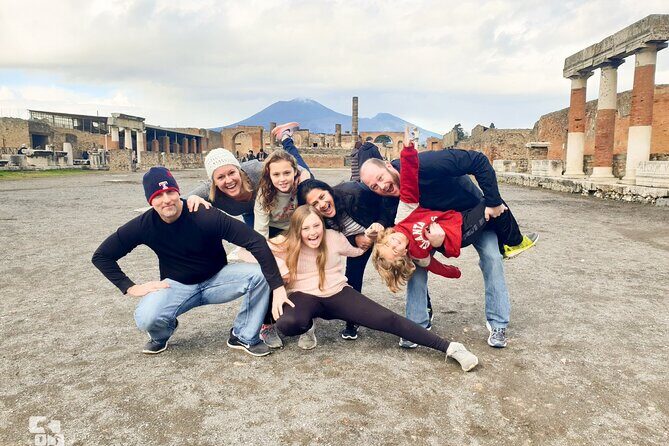
Next comes the Basilica Pompeiana at the southwest corner of the Forum. People often think of Pompeii as temples and gods. The Basilica reminds you that this was a functioning legal and commercial center.
You’re looking at a massive three-aisled building that dates back to the 2nd century BC. The big visual here is the central nave and the bases of the columns that once rose high above you. At the far end is the raised tribunal platform where magistrates handled legal matters.
Why I think this stop is so valuable: it connects architecture to how people actually lived. Markets and laws weren’t separate from religion; they were part of the city’s daily rhythm.
Temple of Apollo: a Greek-leaning sacred site with a Vesuvius view
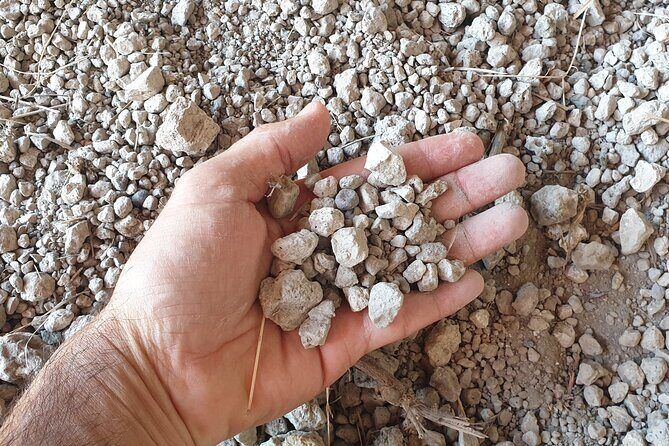
Then you reach the Temple of Apollo, one of the oldest major sacred areas in Pompeii. It’s known for a mix of Greek and Italic influences, and it sits on a prominent podium with a portico of 48 columns.
Look for the elevated cella area and the preserved altar details. There are also replica bronze statues of Apollo (as an archer) and Diana that help you picture the original courtyard atmosphere. The real crowd-pleaser is the setting: you can line up a classic view toward Mount Vesuvius, with stone columns framing the volcano in the distance.
One thing to be aware of: like many major Forum stops, this area can be busy with other visitors. The private guide helps here because you’re not just standing there. You’re being pointed to the right details without wasting time.
Forum of Pompeii and the Macellum: politics, markets, and state religion
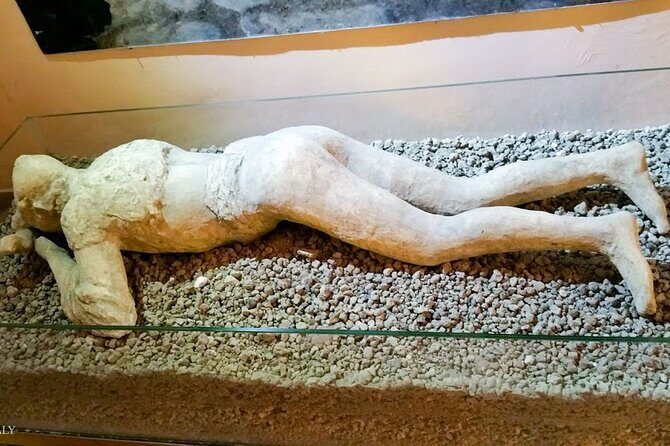
The Forum of Pompeii is the main plaza heart of ancient Roman city life. It’s where you’d find markets, legal proceedings, and religious ceremonies. It’s also where you can still see the travertine paving and the remains of column pedestals that once held statues.
From the Forum, you shift to the Macellum, Pompeii’s primary covered food market. This stop is the one that turns ancient Rome into something you can almost smell. The market had small shops around the perimeter for items like fruits, vegetables, and meats. There’s also a circular pavilion area linked to seafood handling, and the space ties trade directly to imperial-era symbolism.
If you like the practical side of history—how people fed themselves and paid for things—this is one of the most satisfying sections. You’re not only looking at buildings. You’re seeing the city’s supply chain.
Forum Baths: the daily social life stop, not just hot water
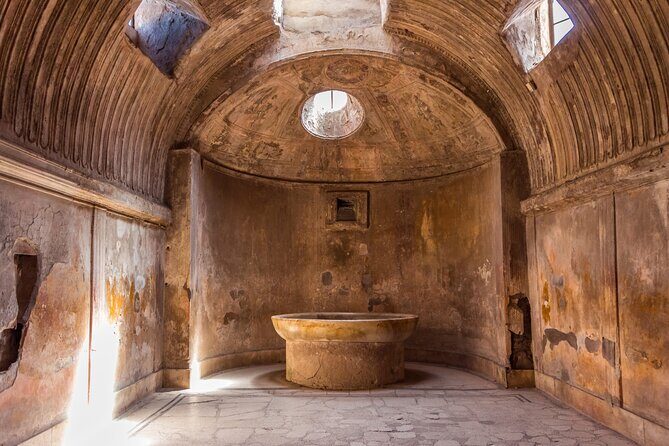
Right behind the Temple of Jupiter, you visit the Forum Baths (Terme del Foro). This complex is special because it was one of the baths still operational during the 79 AD eruption.
You’ll move through the key bathing sequence:
- apodyterium (changing room)
- frigidarium (cold bath)
- tepidarium (warm room)
- calidarium (hot room)
The engineering is a major part of what you’ll see: hypocaust-style heat circulation, bronze heating elements, and stucco reliefs in vaulted spaces. There are also sections restored in a way that helps you understand how bathing worked for people across society.
For me, this is where Pompeii stops feeling like a museum and starts feeling like a place where people actually hung out. Even if you only remember one “lifestyle” stop, make it this one.
House of the Faun and Casa dei Vettii: money, art, and status
Pompeii is famous for elite homes, and you get two strong ones on this route.
House of the Faun
The House of the Faun is massive and luxurious, covering an entire insula block. It’s known for its peristyle gardens and atriums, and for two landmark artworks. The original bronze statue of the Dancing Faun and the Alexander mosaic are mostly displayed as replicas here, with originals held in Naples. Even so, the scale of the home and the quality of fresco work and flooring help you understand why this property mattered.
Casa dei Vettii
Then you go to the House of the Vettii, often described in tours as a high-art highlight. It reopened after a long restoration, and it’s known for vivid Fourth Style frescoes and the entrance painting of Priapus, a symbol tied to prosperity.
You’ll also get a sense of the owners’ story. This home belonged to brothers who rose from slavery into wealth through commerce. Inside, the rooms include trade-related scenes and mythological masterpieces.
A practical tip: in homes, details fade if you hurry. The private format helps because you can linger at the spots your guide thinks are worth your attention.
Theater time and modern archaeology: Teatro Grande and the Casti Amanti block
Pompeii isn’t frozen in time. It’s still being excavated, and this tour includes a newer, more “today” feeling stop.
Teatro Grande
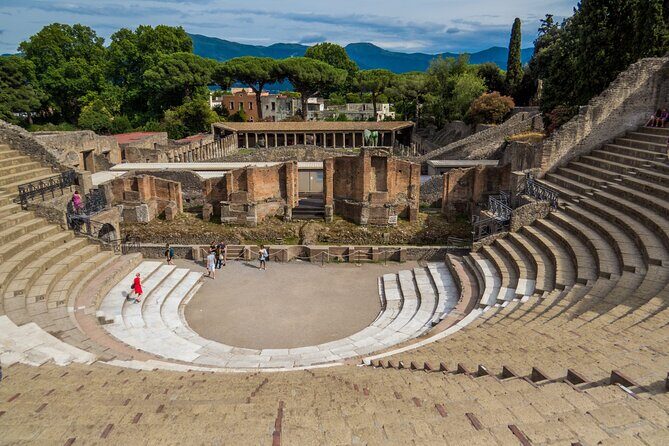
At the Teatro Grande, you get ancient Roman entertainment and social structure in one view. The horseshoe-shaped theater could seat around 5,000 people. The seating sections reflect hierarchy, from the ima cavea for local elites up to areas for the broader public.
One fun detail: you can test the theater’s acoustics by speaking from the orchestra area. That’s a great moment to try it with your group and see how sound carries in stone.
Insula dei Casti Amanti
Next is the Insula dei Casti Amanti, the Block of the Chaste Lovers, along Via dell’Abbondanza. This stop is known for its connection to ongoing research and for the elevated walkway system that lets you look over architecture and excavation areas.
It can feel like a bridge between sightseeing and learning how archaeology works in real time. If you like seeing ruins as a living process rather than a finished product, this is a smart add-on.
Antiquarium di Pompei: your fast orientation inside Porta Marina
Before you go too far into the walking, you also visit the Antiquarium di Pompei at Porta Marina. This is the climate-controlled museum that houses fragile artifacts and gives context you’ll feel in your feet once you step back outside.
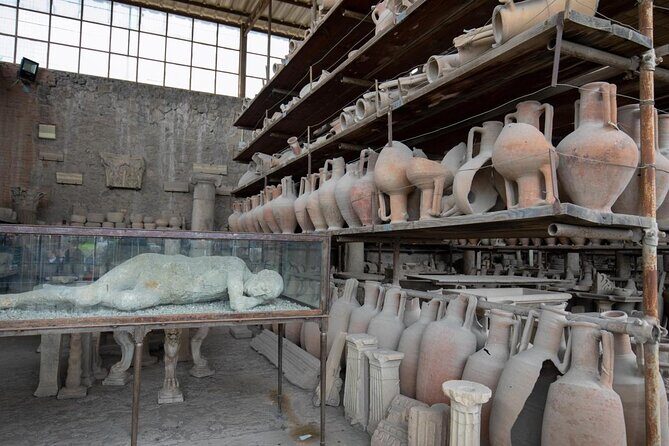
Expect exhibits tracing Pompeii from pre-Roman roots to the eruption of 79 AD. You’ll see important treasures, including metalwork and collections of smaller objects, plus casts that show the human side of what happened.
If you’re the kind of person who likes to understand what you’re seeing before you spend hours scanning stone streets, this stop is especially helpful.
Cantina del Vesuvio: vineyard walk, five wines, and a proper lunch
After Pompeii, the day shifts to the Cantina del Vesuvio winery, part of the Mt Vesuvius National Park area. You’ll start with a guided 15-minute stroll through the vineyards, learning about the Lacryma Christi wines (the famous local variety associated with Vesuvius slopes).
The big value here is the structured meal. You sit down to a set menu lunch paired with five separate wines. The tour description lists a menu that includes:
- appetizers like bruschetta, cheeses, and cured meats
- spaghetti with Vesuvius cherry tomatoes and meatballs
- Neapolitan Pastiera for dessert (with vegetarian and gluten-free options available)
You’ll also have the option of classic or superior wine packages, with pricing listed as classic around €50 and superior around €60 in the tour notes. The winery description also lists classic at €55 and superior at €65 as all-inclusive meal-and-five-wines pricing. Either way, you’re budgeting for that lunch package during the day.
One more perk: the winery experience mentions you can ship your favorite wines and olive oils home. If you like taking a taste of Campania back with you, it’s a nice touch.
And again: the day does not reach the very top of Mt Vesuvius. You’re visiting in the park area from where you still get crater and bay views, just without the summit hike stress.
Timing, walking comfort, and how to pace this day
This tour is listed at 4 to 7 hours. That range matters because Pompeii walking speed varies a lot based on how many stops you linger at and how often you pause for photos, shade, and questions.
I like that this route is set up as a private walk where the guide can tune the pace to you. A helpful detail from the experience: the guide can adjust for people who need a slower tempo. So if you’re not a fast walker, you should feel comfortable asking for breaks.
Bring comfortable shoes and plan for sun and uneven stone paths. Also, keep your water needs in mind. The van includes water for the day, but it’s still your job to manage your own comfort.
Who this tour is best for
This is a strong match for:
- people who want Pompeii with real guidance and not just random browsing
- wine and food lovers who want lunch paired with local wines without planning it yourself
- couples and small groups who value private pacing and fewer crowds
- anyone who wants a day that mixes public buildings, daily life, and elite houses
It’s also a good pick if you like modern archaeology details. The elevated walkway at Insula dei Casti Amanti adds a less “finished” feeling to the day.
If you’re only interested in the volcano summit, you’ll be disappointed. If you want to see every corner of Pompeii, you’ll also need a different style of tour. This one is about smart highlights and connection, not checklist completion.
Should you book this private Pompeii and winery day?
If you want a guided Pompeii day that stays focused on the most meaningful highlights around the Forum, this is a very solid booking. The mix of private archaeologist-style guidance, skip-the-line Pompeii entry, and A/C van pickup removes a lot of the usual stress.
Add in the winery lunch and five-wine pairing, and you’re getting a complete day plan: ruins, context, and then a meal in the Vesuvius area with great views. The only reason I’d hesitate is if the extra winery cost feels like it won’t fit your budget, or if you specifically want to hike to the top of Mt Vesuvius.
FAQ
Is this a private tour?
Yes. It’s a private tour/activity, and only your group participates.
How long is the Pompeii and winery experience?
The duration is listed as approximately 4 to 7 hours.
What language is the tour offered in?
The tour is offered in English.
Does the tour include Pompeii admission?
Yes. The tour includes Pompeii Express skip-the-line tickets, and admission is marked as included for multiple Pompeii stops.
Is lunch and wine tasting included in the tour price?
Lunch and wine tasting are not included in the main price. The tour includes a reservation for the wine experience, and lunch is paid on site. Classic and superior tasting options are listed with separate costs.
Will the tour take us to the top of Mount Vesuvius?
No. The tour does not reach the top of Mt Vesuvius.
Can I cancel for a full refund?
Yes. Free cancellation is available if you cancel up to 24 hours in advance of the experience start time.
You Might Also Enjoy


More Private Tours in Sorrento



More Tours in Sorrento




More Tour Reviews in Sorrento
- Sorrento Farm and Food Experience including Olive Oil, Limoncello, Wine tasting
★ 5.0 · 2,524 reviews