REVIEW · POMPEII
Pompeii Small Group with an Archaeologist and Skip The Line
Book on Viator →Bookable on Viator
Pompeii goes by too fast without help. This small-group tour with archaeologist Eliana Sandretti makes it feel manageable, mainly because you get skip-the-line entry and start seeing the best-preserved sights right away. I also love the way the route mixes places with different uses, like theaters, baths, and the Forum, so you’re not just reading stones.
The main trade-off is the pace. It’s a 2-hour sprint, so you’ll see the big moments, not linger like you could on a slower, self-paced visit. Also, Pompeii can be noisy and spread out, so if you’re sensitive to sound, you may need to stay close to your guide.
In This Review
- Key highlights at a glance
- What skip-the-line really buys you in Pompeii
- Your 2-hour route through the Pompeii you came for
- Stop 1: Pompeii Archaeological Park (the quick start)
- Stop 2: The small theater for music and singing
- Stop 3: Teatro Grande, comedies and tragedies
- Stop 4: Granai del Foro and the casts of the victims
- Stop 5: Stabian Baths (Terme Stabiane) and the frescoes
- Stop 6: Foro di Pompei, Pompeii’s main square
- Stop 7: La Basilica, justice in session
- Stop 8: Cross the main street for the color (and the vibe)
- Stop 9: Temple of Jupiter with Vesuvius in view
- Stop 10: Quadriporticus of the theatres and the gladiator barracks
- Stop 11: The Lupanar, Pompeii’s old red light district
- Stop 12: Temple of Venus
- Stop 13: Casa del Fauno, one of the grand residences
- Guides that change the feel of the ruins
- Price and value: is $217.69 worth it?
- Heat, sound, and a few real-world considerations
- Who should book this Pompeii small-group tour?
- Should you book Pompeii Small Group with an Archaeologist and Skip the Line?
- FAQ
- How long is the Pompeii tour?
- Is skip-the-line entry included?
- What language is the tour offered in?
- How many people are in the small group?
- Where does the tour start?
- Is admission to the attractions included?
- Are food and drinks included?
- Do I need good weather for the tour?
- Is mobile ticketing used?
- Is free cancellation available?
- Are service animals allowed?
Key highlights at a glance
- Skip-the-line entry so you spend your energy inside the ruins, not outside the gates
- Archaeologist-led guidance with real stories about how Pompeii worked and what you’re looking at
- A tight route through major areas like Teatro Grande, the Forum zone, Stabian Baths, and Casa del Fauno
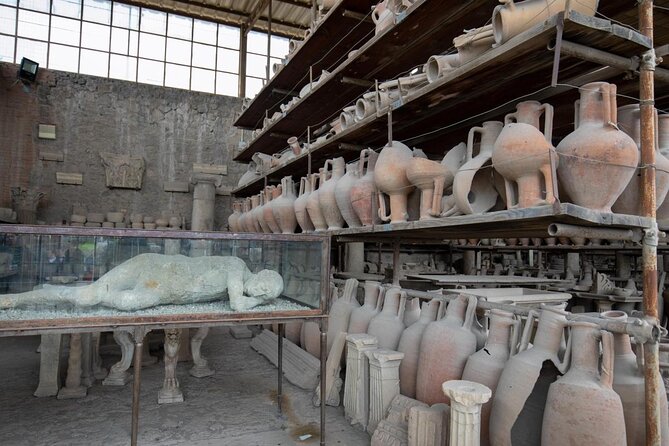
- The human scale of 79 AD at Granai del Foro, where victims’ casts help everything feel immediate
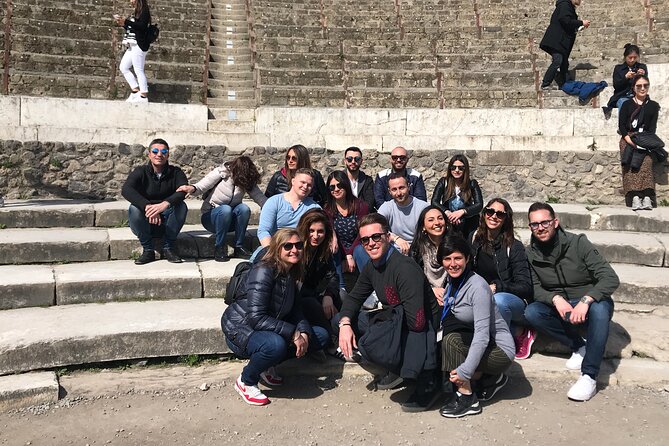
- Small group size (up to 10) for questions and a calmer pace than big bus tours
What skip-the-line really buys you in Pompeii
In Pompeii, time is the hidden cost. The site is huge, walking takes longer than you expect, and the crowds can steal your focus. This tour’s big value is simple: you show up with your ticket and avoid the main entrance line, which helps you actually see the highlights instead of spending the first hour parked in a queue.
Then comes the second advantage: you’re not left to interpret everything alone. An archaeologist guide (including Eliana Sandretti, when she’s available) can point out patterns in the city—how public spaces, entertainment, religion, and daily life fit together. The result is that your visit feels organized, not like random wandering.
One more plus: this experience includes tickets and admission for the stops in the itinerary. That keeps you from doing the math at the gate and wondering what you’re missing.
Your 2-hour route through the Pompeii you came for
This tour is built for a short visit. You’ll move through the Pompeii Archaeological Park and hit a series of anchors that most people want to see: theaters, public buildings, bath frescoes, forum spaces, temples, and a top-tier home.
Most groups finish back at the same meeting point, so you don’t have to stress about where you’ll end up after the last stop.
Stop 1: Pompeii Archaeological Park (the quick start)
You begin at Ristorante Suisse, Piazza Esedra, 10/13, 80045 Pompei NA, and head straight into the Pompeii Archaeological Park with skip-the-line tickets. Since the tour runs about two hours, this first step matters: you’re already in motion while other visitors are still lining up.
Practical tip: wear comfortable shoes. The ground in Pompeii can be uneven, and the walking adds up fast when the schedule is tight.
Stop 2: The small theater for music and singing
Next you’ll visit the small theater, described as the designated place for musical and singing performances. This stop helps you understand that Pompeii didn’t just run on gladiators and drama. It also had spaces for music and performance in a smaller, more intimate setting.
A small theater also gives your brain a reset. After crowds and noise at the entrance, this kind of stop can feel more human in scale.
Stop 3: Teatro Grande, comedies and tragedies
Then it’s on to Teatro Grande, where Greek-Roman comedies and tragedies were performed. This is the “main stage” moment in the entertainment zone, and it tends to be the stop where you start thinking in crowds again: performers, audience, and how the building shaped sound and visibility.
You’ll spend about 15 minutes here. That’s enough time to look around and pick up key details without turning it into a long lecture.
Stop 4: Granai del Foro and the casts of the victims
One of the most memorable stops is Granai del Foro, the barns of the forum. This is where you see casts of the victims who died during the eruption of 79 AD.
This stop is emotionally heavy, but it’s also one of the most effective ways to make the eruption real. Instead of treating the disaster as a distant date, the casts put faces to the story and make the city’s final day feel close.
Stop 5: Stabian Baths (Terme Stabiane) and the frescoes
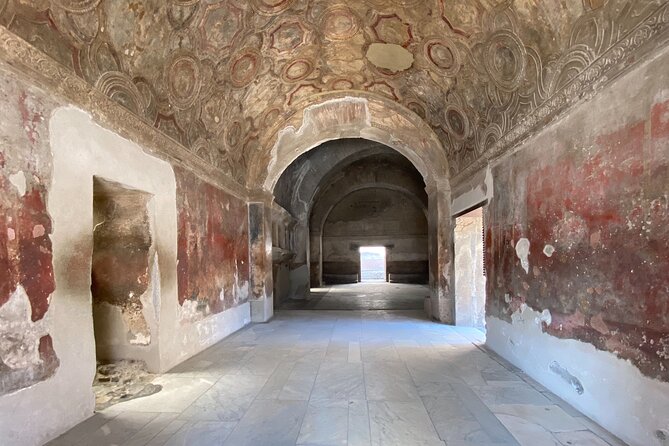
After the forum barns, you shift into the world of daily routine at the Stabian Baths. Here you’ll focus on colorful frescoes, and the effect is often immediate: the walls look lived-in, even though the city froze in time.
The tour gives you about 15 minutes, which is just enough to notice the style and understand what you’re seeing, without exhausting yourself in the heat.
Stop 6: Foro di Pompei, Pompeii’s main square
Next is Foro di Pompei, the ancient forum and the city’s main square. This is where Pompeii’s public life becomes obvious. You’re looking at a space built for movement, announcements, commerce, and civic activity.
Even if you only have a short time, this stop helps you place the rest of the city in context.
Stop 7: La Basilica, justice in session
Just as important is Pompei La Basilica, where justice was administered and where the court sat. A forum without governance doesn’t feel like a real city, and the Basilica stop ties the whole civic picture together.
Expect a quick but focused visit, around 15 minutes, that helps you understand why these public buildings mattered.
Stop 8: Cross the main street for the color (and the vibe)
You’ll also cross the main street to admire its colors. This part is less about one single building and more about atmosphere: Pompeii’s design, layout, and visual impact are part of what makes it so hard to look away.
It’s also a nice way to break up the heavier stops with something lighter and more visual.
Stop 9: Temple of Jupiter with Vesuvius in view
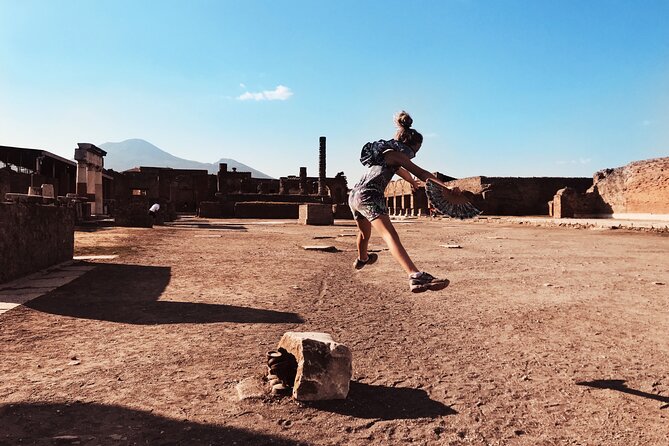
The tour then highlights the Temple of Jupiter, with Vesuvius as the backdrop. If you’ve seen photos, this stop is where the view clicks into your mind. The city feels anchored to its geography in a way that flat, indoor museum displays can’t recreate.
This is the kind of stop where having a guide helps you avoid treating it as just a pretty viewpoint.
Stop 10: Quadriporticus of the theatres and the gladiator barracks
Next you’ll move into the theatre complex area and visit the quadriporticus of the theatres, including the Gladiator Barracks. This is where you can see the apartments and where gladiators trained.
This stop adds texture. It answers a question many people have: where did the performers live, prepare, and keep routines? You get the sense that entertainment was also labor, discipline, and community.
Stop 11: The Lupanar, Pompeii’s old red light district
Then comes Lupanar, Pompeii’s old red light district. It’s one of those stops that can surprise people, but it’s also part of understanding how the city functioned day to day.
The tour gives you about 15 minutes, enough to view the space and get context without making the experience purely sensational.
Stop 12: Temple of Venus
After that, you’ll visit the Temple of Venus, where the city venerated its divinity. This is your reminder that Pompeii wasn’t only civic and entertainment. Religion and daily devotion also shaped the city’s layout and priorities.
You’ll cover it quickly at about 15 minutes, but it’s a key piece in the overall puzzle.
Stop 13: Casa del Fauno, one of the grand residences
The route ends with Casa del Fauno, described as one of the richest and most luxurious residences in Pompeii. This final stop shifts you from public spaces and performance areas into private wealth.
It’s a strong ending because it reframes Pompeii as a city with big social differences. When you leave, you’ll likely feel the urge to understand more about daily life at each class level, not just the famous tragedy.
Guides that change the feel of the ruins
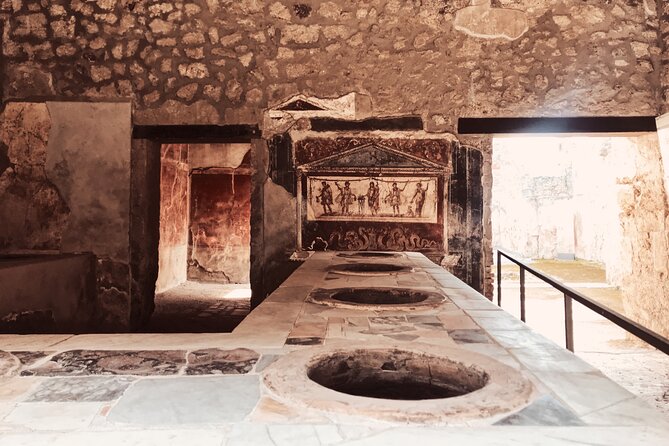
This is where the reviews really lean positive, and you should care. The guides are not just giving a script. In multiple situations, you’ll hear first-hand connections to Pompeii excavation work and what daily site life looks like.
Eliana Sandretti is the named archaeologist provider, and several guides have stepped in when schedules shifted. I’ve seen the experience described as thoughtful and interactive, with guides encouraging questions and keeping the tour light enough to handle heavy topics without getting gloomy.
One practical benefit of small groups is that you can ask things and get answers without feeling rushed. This matters in Pompeii, where details live in small corners and inscriptions.
Price and value: is $217.69 worth it?
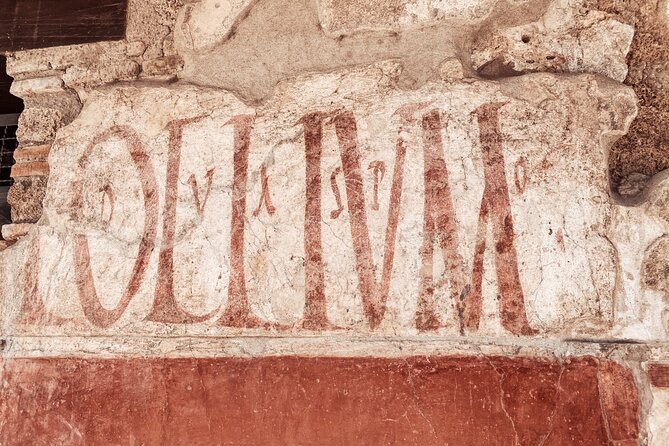
At $217.69 per person, this tour costs more than a basic entry ticket plus casual wandering. So the question isn’t the price by itself. It’s what you get that you can’t easily buy on your own.
Here’s the value math that makes sense:
- Skip-the-line entry saves time, and time is the most expensive thing in Pompeii
- You also get admission included for the tour stops
- You have an archaeologist guide, which helps you interpret what you’re seeing instead of guessing
- It’s small group (up to 10), so the pace is calmer than big tours
If you’re visiting Pompeii for a short window, or you don’t want to spend your trip studying guidebooks and maps, this price starts to look more reasonable. If you’re the type who loves to go slow and read every inscription, you might feel the time crunch.
Also remember the tour does not include food or drinks, so factor in that you’ll need water and snacks separately.
Heat, sound, and a few real-world considerations
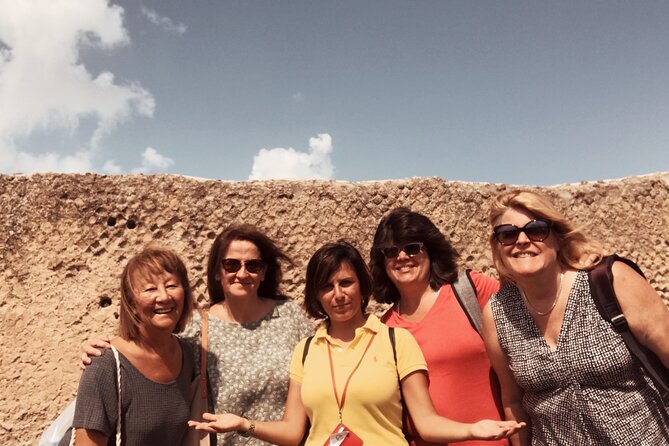
Pompeii can be hot and exposed. One theme that shows up in real experiences is the need to come prepared. Pack water, and bring sunscreen plus a hat or umbrella if the day looks bright.
Sound can be tricky too. If the guide is a bit farther away or the area is busy, it can be harder to hear. A simple fix is staying close during the briefing moments and keeping an eye on the guide’s position.
Family note: this experience includes help and assistance during the tour, and one family reported a smooth experience even with a stroller. Still, Pompeii’s ground can be uneven, so think about how your group handles stairs and cobblestones.
Who should book this Pompeii small-group tour?
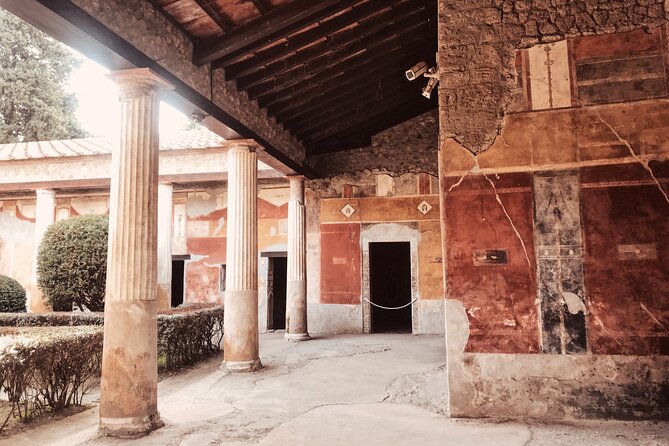
I think this works best if you match one of these styles:
- You have limited time and want the main hits without planning a whole day
- You want context for the big sights, not just photos
- You prefer a small group where questions feel normal
- You like a route that moves, but not at breakneck speed
It’s also a smart choice if you’re visiting with kids, as long as you’re comfortable with a schedule that’s tighter than a half-day plan. One benefit of the small group is that your guide can adjust a bit to keep everyone on track.
Should you book Pompeii Small Group with an Archaeologist and Skip the Line?
Book it if you want a focused two-hour tour that helps you see the city’s structure, not just its most famous views. The skip-the-line entry plus an archaeologist guide makes the time feel efficient, and the stops cover public life, entertainment, religion, and elite homes.
Skip it (or pair it with more time on your own) if you’re the type who wants to linger at every site or you know you’ll want a long, quiet look inside the houses and details. This tour is designed for the “greatest hits” visit, not for slow absorption.
If you can swing the price, it’s a strong way to get your bearings quickly and leave Pompeii feeling you understood what you saw.
FAQ
How long is the Pompeii tour?
It runs for about 2 hours (approx.).
Is skip-the-line entry included?
Yes. Skip-the-line tickets are included so you can enter faster.
What language is the tour offered in?
The tour is offered in English.
How many people are in the small group?
The group size is up to 10 travelers.
Where does the tour start?
The tour starts at Ristorante Suisse, Piazza Esedra, 10/13, 80045 Pompei NA, Italy.
Is admission to the attractions included?
Yes. Tickets entrance are included, and admission is included for the listed stops.
Are food and drinks included?
No. Food and drinks are not included.
Do I need good weather for the tour?
Yes. The experience requires good weather. If it’s canceled due to poor weather, you’ll be offered another date or a full refund.
Is mobile ticketing used?
Yes. The tour includes a mobile ticket.
Is free cancellation available?
Yes. You can cancel for a full refund up to 24 hours in advance of the experience start time.
Are service animals allowed?
Yes, service animals are allowed.