REVIEW · SORRENTO
Pompeii, Herculaneum and Winery on Vesuvius with an Archaeologist
Book on Viator →Operated by Fabrizio Belleni - Leisure Italy Private Guide · Bookable on Viator
One day. Two ancient cities. One volcano backdrop.
This private excursion is interesting because it doesn’t treat Pompeii and Herculaneum like two checkboxes. You get a real archaeologist guide, private time, and a natural pause at a winery in the Vesuvius National Park area. I especially like the hands-on way the guide works through the ruins, plus the flexibility to adjust the pace when people get tired, stuck in the heat, or (yes) dealing with kids. The main drawback to plan for is that admission tickets for Pompeii and Herculaneum are not included, and the walking is real, often over uneven stone.
You’ll start with Pompeii’s best-known civic core and also hit the houses and theater that show Roman daily life as something more than marble. Then you switch gears to Herculaneum, which feels smaller but more personal because of the preservation. The day is built for comfort too: an air-conditioned vehicle, water and Wi‑Fi on board, and a group limited to up to 7 people, so you’re not shuffled around like luggage.
In This Review
- Key things to know before you go
- Why this Pompeii + Herculaneum day feels different
- Entering Pompeii through Piazza Porta Marina
- Temple of Apollo and the Forum: the Roman “center of gravity”
- Casa dei Vettii and “chase-the-details” frescoes
- Insula of the Chaste Lovers: watching excavation in action
- Teatro Grande: Roman entertainment with real acoustics
- Antiquarium di Pompei: the emotional gear shift
- Cantina del Vesuvio: winery lunch and wine tasting in Vesuvius Park
- Price value check
- Why Herculaneum can feel even more powerful
- Antiquarium di Ercolano and the preserved-material story
- Boat Pavilion and the ancient shoreline evidence
- Ancient beach reopened: the 79 AD shoreline moment
- House of the Stags and House of Neptune and Amphitrite
- Women’s Baths and the Palestra gym: Roman life in full color
- The tiny stop that adds flavor: an ancient wine ad
- Getting the most from the day (and avoiding stress)
- Price and what you’re really paying for
- Who this tour suits best
- Should you book this Pompeii, Herculaneum, and Vesuvius winery day?
- FAQ
- FAQ
- Is this a private tour?
- Where can you be picked up?
- How long is the day trip?
- What language is the tour guide?
- Are admission fees included?
- Is lunch included?
- Do you visit Mount Vesuvius summit?
- What’s included in the tour price?
- What’s the cancellation policy?
- How physically demanding is it?
Key things to know before you go
- A private archaeologist guide who can explain what you’re looking at, not just point at it
- Order and pacing flexibility, including options that can reduce time in heavier crowds
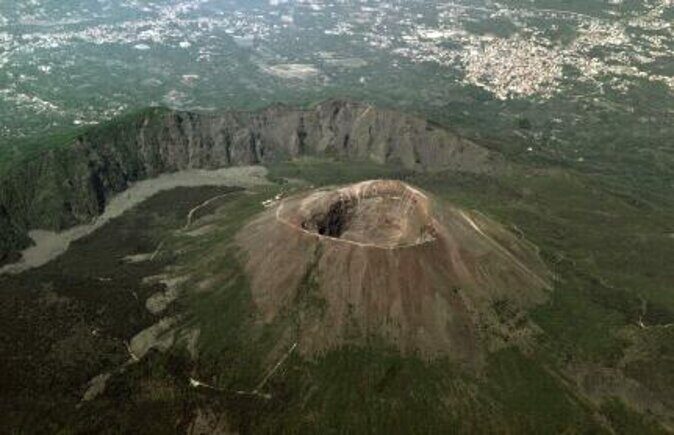
- Vesuvius National Park winery lunch with a guided vineyard walk and wine tasting
- Herculaneum preservation moments (carbonized and organic finds) that hit harder than you expect
- Family-friendly approach with active kid engagement and frequent pace check-ins
Why this Pompeii + Herculaneum day feels different
Pompeii gets the big fame, but the real win here is how the guide structures your time. Instead of letting you wander and guess, you’re walked through the city in a way that connects public life (forums, temples, theaters) to private life (houses with frescoes, mosaics, and everyday spaces).
The guide’s background matters. This is an archaeologist who has been guiding Pompeii for decades, and that shows in the way the explanations land. You don’t just hear what things were; you learn what Roman life looked like—how people gathered, shopped, ate, worked out, and worshipped. And because the tour is private, the guide can match your energy level and your interests. In hot weather, that’s not a small detail. It’s the difference between a day you remember and a day you survive.
Two big strengths come up again and again:
- The guide is excellent at adapting if plans change on the fly, including for kids and slower walkers.
- The route is built to avoid crowd crush as much as possible, so the ruins still feel like ruins instead of a moving queue.
You can also read our reviews of more wine tours in Sorrento
- Sorrento Farm and Food Experience including Olive Oil, Limoncello, Wine tasting
★ 5.0 · 2,524 reviews



Entering Pompeii through Piazza Porta Marina
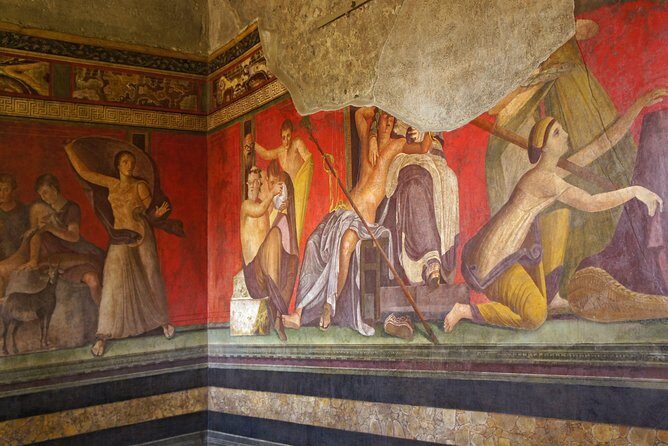
Pompeii starts with a smart “transition moment.” You begin near Piazza Porta Marina, where the modern entrance connects you to the ancient gateway built into the city walls. It gives you bearings fast: you’re stepping from the present into a place that was laid out to move people in and out efficiently.
From there, you move into the Forum area, and that’s where Pompeii turns from impressive to understandable. You’ll see the civic center as a working machine: religious buildings, public meeting space, and commercial activity in the same zone.
Temple of Apollo and the Forum: the Roman “center of gravity”
At the Temple of Apollo, you get a great mix of religion and architecture. It’s an open-air site where you can see how Greek roots were carried into Roman practice. The guide points out features like the surrounding columns, replicas you can view on site, and the relationship between sacred space and the view toward Mount Vesuvius.
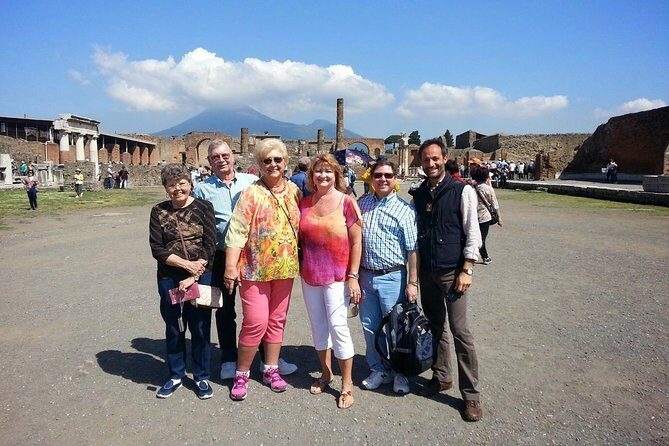
Then comes the Forum of Pompeii. This is the big stage where politics, religion, and commerce collided. You’ll walk across original travertine paving stones and see the grandest architecture in the city. The Temple of Jupiter and the Basilica frame the space, with Vesuvius in the distance adding a dramatic punch to an already sobering story.
Practical note: Pompeii can get crowded, especially later in the day. The best move is to trust your guide when they adjust timing and route. This tour is designed to keep you moving but not rushed, with breaks built around what your group needs.
Casa dei Vettii and “chase-the-details” frescoes
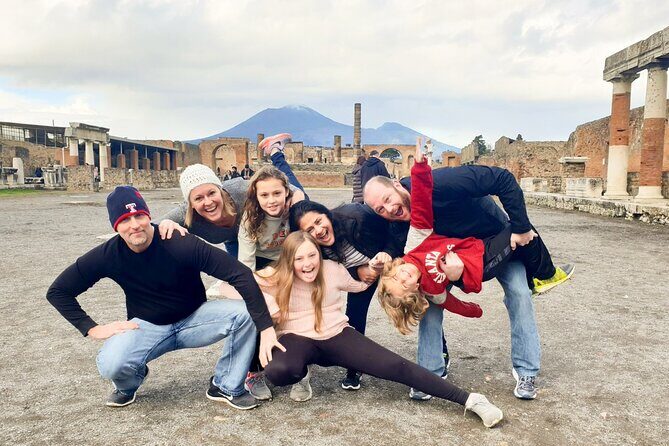
If you like interiors, the House of the Vettii is a highlight. This is the kind of place where frescoes feel like they’re still bright, and the scale of decoration makes sense when you hear who lived there and why it mattered socially.
You’ll also notice the guide’s approach: you’re not just looking at pretty wall art. You’re learning how Roman wealth communicated status—through art styles, myths, and decorative choices. The home’s restored spaces and vivid imagery make it feel less like a museum display and more like a window into private life.
Insula of the Chaste Lovers: watching excavation in action
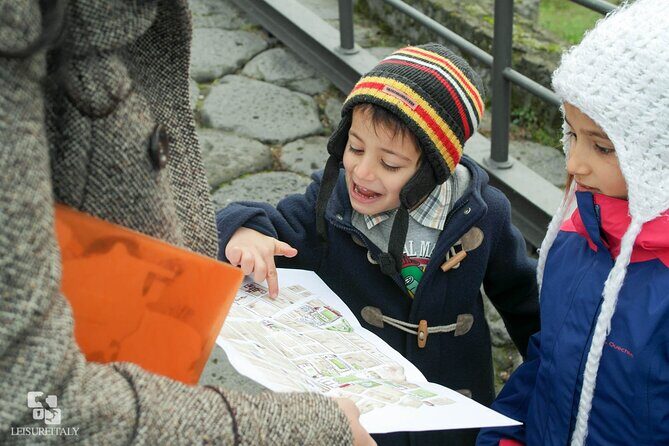
One of the most moving parts of Pompeii is the sense that it’s still being uncovered. You’ll visit the Insula dei Casti Amanti, which has reopened with elevated walkways that let you see down into an entire block area—homes plus the working spaces between them.
This stop is special because it’s not only “look at the past.” You can also watch the process of archaeology happening where the ground still yields information. It’s the kind of moment that turns ancient history from fixed and untouchable into something living and unfinished.
If your day hits peak heat, this is also a good place to pause, because the overhead views can reduce the need to constantly look down at the ground.
- Sorrento Farm and Food Experience including Olive Oil, Limoncello, Wine tasting
★ 5.0 · 2,524 reviews



Teatro Grande: Roman entertainment with real acoustics
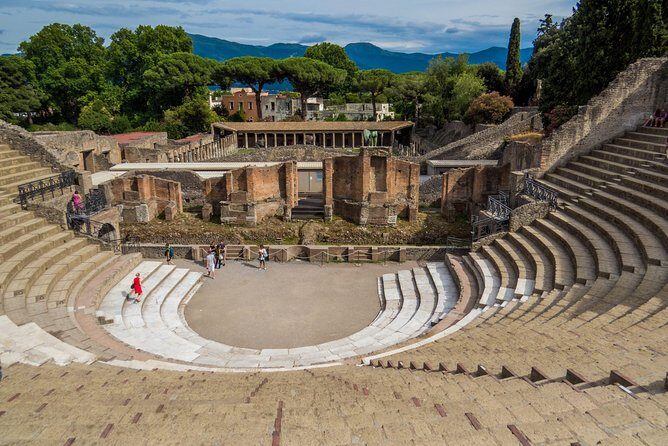
Pompeii’s Teatro Grande makes the city feel human again. You explore a theater from the 2nd century BC, with seating arranged by social rank. You can get a sense of how audiences separated by class would have watched performances together but not as equals.
The theater is famous for its acoustics, and your guide will help you understand the layout. Even if you don’t test the sound yourself, the architecture makes it easy to imagine voices carrying across thousands of seats—ancient entertainment, but engineered.
Antiquarium di Pompei: the emotional gear shift
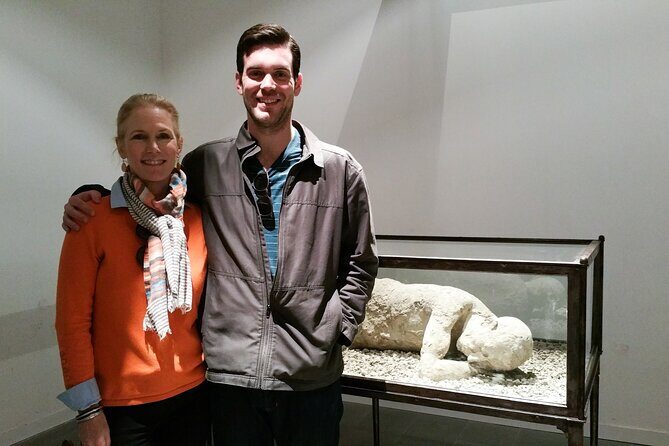
Right near Porta Marina, the Antiquarium di Pompei provides essential emotional context. You’re not thrown back into the ruins without warning; you’re given a modern space that helps you understand what the excavated evidence actually means.
The museum is known for plaster casts showing the final moments of victims. It’s heavy in the best way—because it makes the ruins stop being “cool buildings” and start being a record of people. This stop is worth building time for, even if you prefer to move quickly through museums.
Cantina del Vesuvio: winery lunch and wine tasting in Vesuvius Park
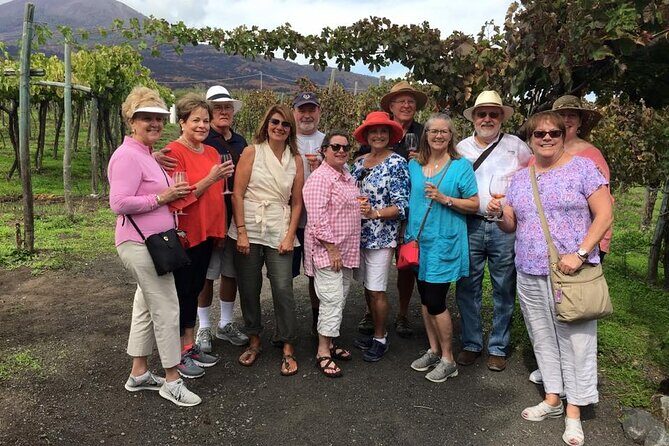
Now you slow down. The winery stop is inside the Vesuvius National Park area, with views toward the Bay and toward the volcano itself. You start with a guided stroll through the vineyards (about 15 minutes), learning how local wine culture works and what makes grapes like those used for Lacryma Christi special.
Lunch is a set menu paired with 5 local wines. Based on the details provided, the meal includes items like bruschetta, cheeses, cured meats, spaghetti with Vesuvius cherry tomatoes and meatballs, and Neapolitan pastiera for dessert (with vegetarian and gluten-free options). You can also ship wines and olive oils home if you want a longer souvenir.
Price value check
The tour price for the group covers private guiding and transportation. The winery experience itself is listed as an add-on: about €50 per person all inclusive, or €60 if you choose a superior wine upgrade. In practice, that can be a strong deal because you’re getting wine tasting plus a guided vineyard walk plus a full meal, and you avoid the hassle of finding lunch during a day that’s otherwise tightly scheduled.
One more practical point: this tour does not reach the top of Mount Vesuvius. You’ll see the volcano from the winery area rather than doing a summit hike.
Why Herculaneum can feel even more powerful
Herculaneum is the quieter cousin, but it often lands harder. Because of how the eruption preserved the city, you can see details that feel startlingly close to everyday life—wood, textiles, and objects that don’t survive elsewhere.
Your guide curates an exclusive route through the highlights, keeping you focused on the spaces where preservation tells the story best.
Antiquarium di Ercolano and the preserved-material story
Start with the Antiquarium di Herculaneum, where the modern museum space helps you understand why the town’s artifacts feel so intact. You’ll see evidence of organic materials—items like carbonized wooden furniture and textiles—which is rare in the Roman world.
This is where the emotional impact gets clearer. You learn what kind of place Herculaneum was: a wealthy seaside retreat, not just a tragedy.
Boat Pavilion and the ancient shoreline evidence
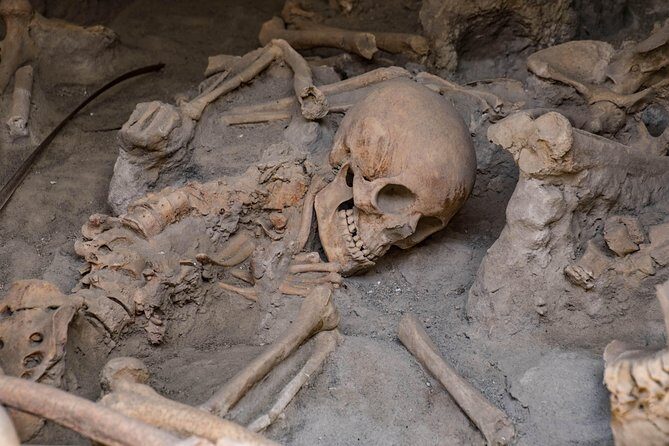
Next, the Boat Pavilion offers a direct, visceral link to the victims and the maritime life of Herculaneum. You’ll see the carbonized keel of a boat (about 9 meters long) and smaller maritime artifacts like fishing weights and nets. The location near the ancient shoreline matters because it helps you connect what you’re seeing to how people might have tried to flee.
Ancient beach reopened: the 79 AD shoreline moment
One of the most memorable stops is the ancient beach area, reopened to the public after restoration. You walk on the reclaimed shoreline area and look up toward the arches of boat sheds where more than 300 residents were discovered.
This stop makes the eruption feel physical. The shoreline sits at a lower level compared to modern ground, showing how the flows reshaped the area. If you like “stand here, feel the setting” travel, you’ll appreciate this.
House of the Stags and House of Neptune and Amphitrite
Herculaneum’s private homes are built for visibility and comfort, and the guide makes the design make sense.
- Casa dei Cervi (House of the Stags): you’ll see the inverted layout concept, with a panoramic terrace and a garden designed for sea breezes and views. The house is named for two marble stag statues found there.
- Casa di Nettuno e Anfitrite: this one is all about visual detail—especially a vibrant wall mosaic using shimmering gold and blue glass paste. You’ll also spot an outdoor summer triclinium and learn about the connected shop.
That nearby shop is one of the most interesting “small world” experiences in Roman ruins: original wooden shelves and carbonized storage bins give you a tangible sense of daily commerce.
Women’s Baths and the Palestra gym: Roman life in full color
At Terme Femminili, you’ll see a women’s bath complex that feels more complete than similar Pompeii sites. The guide points out preserved details like the black-and-white mosaic in the changing room and elements of the heating system.
Then the tour moves into the Palestra, the gymnasium complex. It includes a large cross-shaped pool area and a fountain shaped like a hydra, with artistic and hydraulic design that sounds like a myth until you see it in front of you. The size of the complex and its “empty stage” feel makes it easier to imagine athletes training there before everything changed.
The tiny stop that adds flavor: an ancient wine ad
You’ll also see an ancient wine advertisement, short but fun in the right way. It’s the kind of object that reminds you Romans left messages the way we do—just with a different paint and a lot more dust.
Getting the most from the day (and avoiding stress)
This is a long, full day: Pompeii plus Herculaneum plus winery lunch. To keep it from turning into an endurance test, focus on three things:
- Pick your priorities early. If you want art and interiors, lean into the houses. If you want city life, the Forum and theater are key.
- Dress for heat and stone. Pompeii and Herculaneum have uneven surfaces. Wear shoes you trust.
- Use the guide’s flexibility. The guide is built for pacing, including changing order when it helps reduce crowds and keeping kids engaged with questions and check-ins.
Also, the vehicle details matter more than you might think. You’ll ride in an air-conditioned car with water and Wi‑Fi on board, which helps you reset between stops.
Price and what you’re really paying for
The base price is about $861.07 per group (up to 7) for a private 8–9 hour day with an archaeologist guide and private transportation. That price can feel steep until you compare what it replaces: separate admissions, independent logistics, and a self-guided experience that costs time and mental energy.
Then you add the separate costs:
- Admission fees for both archaeological sites are roughly €40 per adult (free under 18 with valid ID).
- The winery lunch and wine tasting is listed separately at about €50 per person all inclusive (or €60 for a superior wine upgrade).
For many people, the value is the “time saved plus meaning gained” equation. You’re not wandering and hoping you understand what you’re seeing. You’re getting interpretation, pacing, and help when the day gets hot or a child needs attention.
Who this tour suits best
This fits best if you want:
- A private, guided day rather than a crowded bus experience
- Deep context on Roman life, not just a quick look at ruins
- A day that includes both Pompeii’s major landmarks and Herculaneum’s preservation-driven moments
- A winery stop with lunch that actually feels like part of the day, not an afterthought
Families do well here too, especially because the guide is described as actively engaging children and adapting to their pace.
Should you book this Pompeii, Herculaneum, and Vesuvius winery day?
Book it if you want a guided day that feels like someone handed you the city’s meaning with a map in words, not just pictures. The private format, the archaeologist’s explanations, and the added winery lunch make it a strong value for a first visit to this region.
Skip it—or at least be cautious—if you hate walking on uneven stone, if you need frequent bathrooms right on schedule (ruins can limit options), or if you only want the fastest highlights. This is a full day by design.
FAQ
FAQ
Is this a private tour?
Yes. It’s a private tour/activity, and only your group participates. The group size is up to 7.
Where can you be picked up?
Pickup is available anywhere in the Naples or Sorrento area. If you’re staying on the Amalfi Coast, you should contact the provider.
How long is the day trip?
It runs about 8 to 9 hours.
What language is the tour guide?
The tour is offered in English.
Are admission fees included?
No. Admission fees are not included and are approximately €40 per adult for both sites. Under 18 can be free with valid ID.
Is lunch included?
Lunch is not included in the main tour price, but there is a winery lunch and wine tasting experience that costs about €50 per person all inclusive (or about €60 with a superior wine upgrade).
Do you visit Mount Vesuvius summit?
No. The tour does not reach the top of Mount Vesuvius.
What’s included in the tour price?
Included items are an air-conditioned vehicle, water and Wi‑Fi on board, private guided tour in both Pompeii and Herculaneum, and private transportation.
What’s the cancellation policy?
Free cancellation is available. You can cancel up to 24 hours in advance for a full refund. If you cancel less than 24 hours before the start time, the amount paid is not refunded.
How physically demanding is it?
The tour lists a moderate physical fitness level. Expect walking on uneven terrain at archaeological sites.
You Might Also Enjoy

More Wine Tours in Sorrento
- Sorrento Farm and Food Experience including Olive Oil, Limoncello, Wine tasting
★ 5.0 · 2,524 reviews



More Tour Reviews in Sorrento
- Sorrento Farm and Food Experience including Olive Oil, Limoncello, Wine tasting
★ 5.0 · 2,524 reviews