REVIEW · SORRENTO
Pompeii and Herculaneum from Sorrento or Naples
Book on Viator →Operated by Mondo Guide Srl · Bookable on Viator
History feels close here.
This is a great way to see two very different sides of Roman life in one day—Pompeii’s dramatic scale plus Herculaneum’s stunning preservation—without turning your morning into a logistical puzzle. I like that you get guided walking time built for understanding, not just ticking off ruins, and you travel with comfortable air-conditioned transport and scenic views of the Bay of Naples and Mount Vesuvius.
One thing to plan for: entrance fees are not included (Pompeii €19, Herculaneum €16), so your total cost is a bit higher once you add tickets. The day also runs long (about 8 hours), and you’ll start at 8:00 am, so build in a relaxed evening later.
The guiding style seems to matter here. In past feedback tied to the operator, Serena is singled out for being highly knowledgeable and making the day feel memorable, and Chiara is mentioned for keeping plans smooth when there’s island time involved. That’s the vibe you want for Pompeii and Herculaneum: clear explanations, good pacing, and fewer moments of wandering.
In This Review
- Key highlights to know before you go
- Why Pompeii + Herculaneum works so well on one day
- Getting there from Sorrento or Naples: the morning matters
- Pompeii’s 3-hour guided walk: where you’ll actually spend your time
- What this timing is good for
- A realistic drawback
- Herculaneum’s 2-hour preservation tour: more intact, more intimate
- Why 2 hours feels right here
- A practical consideration
- Skipping lines and getting value from the day
- The real cost: base price plus entrance tickets
- What group size and guide format mean for your experience
- Tips to make your 8 hours feel smooth
- Start prepared for walking
- Plan your photos with the guide’s pacing
- Bring basic essentials
- Don’t overpack your expectations
- Who should book this tour (and who might want a different plan)
- Should you book this Pompeii and Herculaneum tour?
- FAQ
- What time does the tour start?
- Do I need to pay entrance fees separately?
- How long are the guided walking tours?
- Where does the tour depart from?
- How big are the groups?
- Can I cancel for a full refund?
Key highlights to know before you go
- Small groups on foot: Pompeii and Herculaneum walks are up to 8 people.
- Two different preservation stories: Pompeii is buried in ash for centuries; Herculaneum is preserved in a rarer, more intact way.
- Skip-the-lines time savings: the tour is designed to cut down waiting and get you moving.
- Guided walking focus: you get about 3 hours in Pompeii and 2 hours in Herculaneum.
- Comfortable round-trip transport: air-conditioned minivan/minibus with an English-speaking driver, and often a guide depending on group size.
- Cost clarity: base price plus €35 total in entrance fees for the two sites.
Why Pompeii + Herculaneum works so well on one day
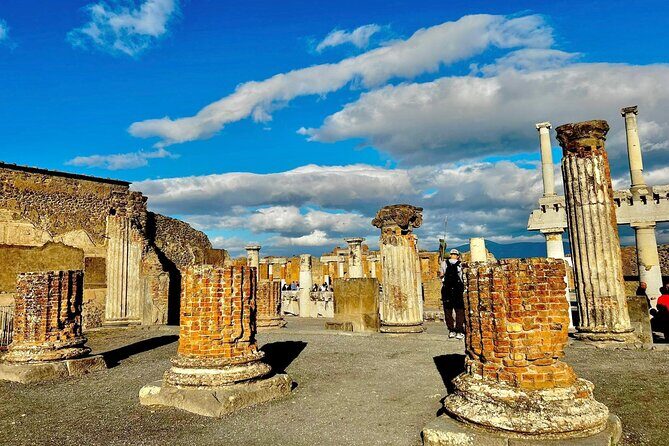
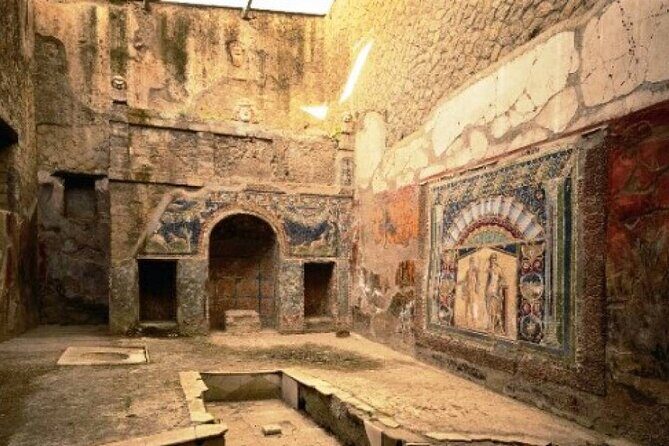
If you only see Pompeii, you get one kind of impact: a whole city frozen by catastrophe, its streets and buildings laid bare. If you only see Herculaneum, you get a different kind of shock: the smaller city preserved with more intact details, including patrician villas and fine decoration.
The value of doing them back-to-back is perspective. Pompeii shows you scale, variety, and how a big urban life looked before 79 AD. Herculaneum turns the volume down, but the details get personal—brickwork, mosaics, frescoes, and the kinds of household remnants you wouldn’t expect to survive.
And because this is a guided plan with set walking time at each site, you’re less likely to spend the day chasing the perfect viewpoint and more likely to understand what you’re seeing.
You can also read our reviews of more tours and experiences in Sorrento.
- Sorrento Farm and Food Experience including Olive Oil, Limoncello, Wine tasting
★ 5.0 · 2,524 reviews



Getting there from Sorrento or Naples: the morning matters
The tour runs from Sorrento or Naples and starts at 8:00 am. That early start is not just for convenience—it helps you hit the sites with less daytime congestion.
You ride in a minivan for smaller groups (up to 8 people) or a minibus for groups of 9–19. Either way, you’re covered with an English-speaking driver, and for the larger group format you’ll also have an English-speaking guide for the whole excursion.
You also get travel time that isn’t wasted. The route includes views of the Bay of Naples and Mount Vesuvius, so the trip has a sense of place, not just transit.
Pompeii’s 3-hour guided walk: where you’ll actually spend your time
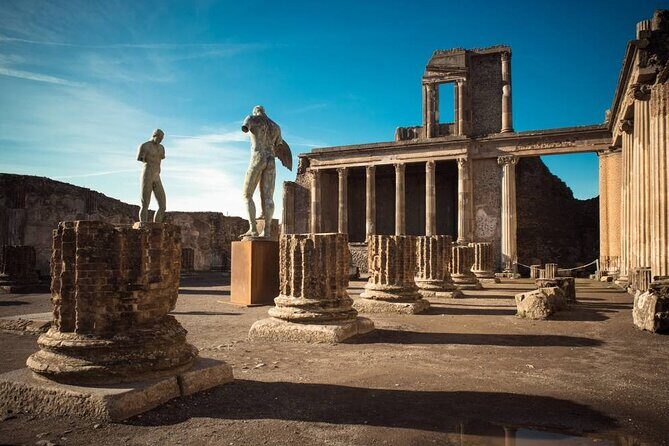
Pompeii is the big-name stop, and it can feel overwhelming if you show up cold. This plan gives you a 3-hour walking tour with a guide, which is the sweet spot for getting your bearings fast and learning what to look for as you move.
You’ll experience Pompeii as an open-air museum—a city that sat under ash until it was uncovered centuries later. The “wow” factor is obvious, but the real win is using that guided time to understand how the city worked day-to-day before the eruption.
What this timing is good for
In three hours, you can’t see everything, and the guide doesn’t try to pretend you can. Instead, the value is that you’ll focus on major streets and key areas that explain the layout and daily rhythm of the city.
A realistic drawback
Three hours in Pompeii still means you’ll do quite a bit of walking. If you’re someone who wants to linger for long photo stops at every corner, you might wish you had extra hours, but the structure of the tour is built to keep you moving with context.
- Sorrento Farm and Food Experience including Olive Oil, Limoncello, Wine tasting
★ 5.0 · 2,524 reviews



Herculaneum’s 2-hour preservation tour: more intact, more intimate
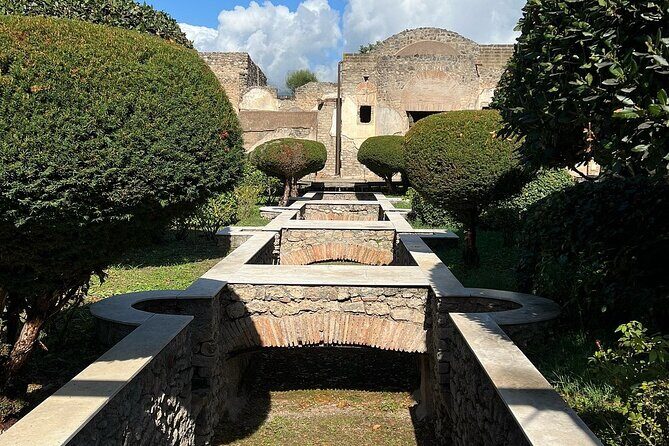
Herculaneum is the smaller sister, and it has a different kind of power. The walking time here is about 2 hours, which makes sense: the city’s preserved areas can feel more detailed, so you spend less time scanning and more time noticing.
This is also where the “miracle” effect comes in. Herculaneum is famous for how much remains in place—so you’re not just looking at stone walls. You can see the kinds of materials and household elements that were once part of everyday life.
The tour focuses on patrician villas, plus the look of craftsmanship—brickwork, mosaics, and frescoes. The contrast with Pompeii is part of the lesson: both cities were affected by Vesuvius, but the preservation story is different enough that it feels like visiting two separate worlds.
Why 2 hours feels right here
Herculaneum’s beauty is in the details, and two hours is enough time to absorb that without rushing through it like a checklist. You get time to slow down, compare spaces, and understand why this city reads like a snapshot rather than just ruins.
A practical consideration
Because Herculaneum is detail-heavy, you’ll get the most out of it if you’re comfortable reading the guide’s explanations while walking. If you prefer full self-paced wandering, this part may feel more structured than you’d like—but the upside is that you’ll understand what you’re seeing.
Skipping lines and getting value from the day
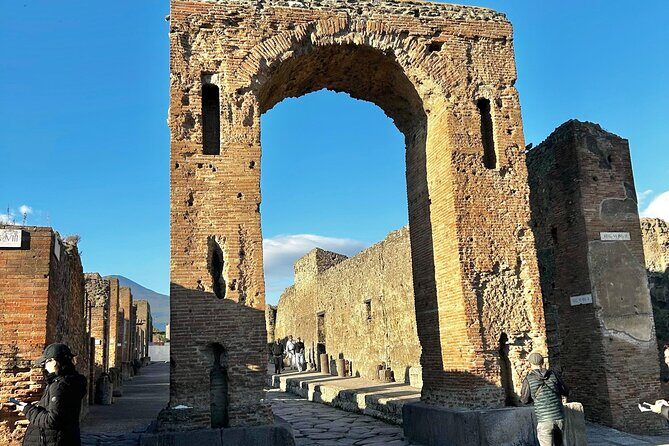
The tour is designed to skip long lines and start exploring sooner. With Pompeii and Herculaneum, time isn’t just time—it’s also your energy and attention span. Cutting waiting helps you spend more of your day actually looking at the ruins, not standing around.
Pacing is the other value. You’re not stuck in one giant site all day. Instead, you split your time across both cities with guided walks, so your brain doesn’t melt from only one type of scenery.
And the group sizes matter. For the walks, you’re capped at up to 8 people, which generally means the guide can point, explain, and manage questions without losing the flow.
The real cost: base price plus entrance tickets
The tour price is listed at $188.90 per person, and the big thing to budget for is that entrance tickets are not included. You’ll pay €19 for Pompeii and €16 for Herculaneum, for about €35 total in site admission.
Is it worth paying extra entrances on top of a tour fee? In many cases, yes, because the paid portion covers logistics and guided walking time. You’re buying:
- transportation (minivan/minibus),
- driver and guide time,
- time-saving planning,
- and the structured walking tours.
If you were to do this independently, you’d still face the reality of coordinating timing, getting to both locations, and figuring out where to go. Here, the plan handles the hardest parts of sequencing, so you can focus on the ruins.
What group size and guide format mean for your experience
Your tour could run in two formats based on group size.
For smaller groups, you’ll have a minivan with an English-speaking driver and small-group walking tours capped at 8 people for Pompeii and 8 for Herculaneum. That’s a good setup if you want a more human scale, where questions don’t get lost.
For groups of 9–19, you’ll use a minibus and you’ll have an English-speaking guide for the entire excursion. That helps you keep a consistent thread through the day instead of switching between “transport time” and “site time” explanations.
Either way, the key is that the walking tours are designed for active learning. You’re not just getting dropped at the entrance with a map and hope.
Tips to make your 8 hours feel smooth
Here are the practical things that will make this day feel easier and more rewarding.
Start prepared for walking
You’ll be on your feet for multiple hours, split across Pompeii and Herculaneum. Wear comfortable shoes you trust on uneven ground, and bring a light layer, especially if the morning is cool and the afternoon warms up.
Plan your photos with the guide’s pacing
Pompeii and Herculaneum reward attention. If you try to photograph everything the second you see it, you’ll miss the explanations that make the ruins click. Let the guide point out what matters, then take photos with intent.
Bring basic essentials
Food and drinks aren’t included. So pack water and a simple plan for snacks. Also, bring sun protection. You’ll want it as you move through open areas.
Don’t overpack your expectations
No one can see every corner of Pompeii properly in three hours. The goal here is understanding and comfort, not “complete coverage.” If you go in expecting highlights explained well, you’ll be happy with the outcome.
Who should book this tour (and who might want a different plan)
This is a strong match if you want:
- guided walking time in both sites,
- a day that’s structured but not rushed in a single location,
- and a smaller feel on foot (up to 8 people during the walks).
It may be less ideal if you:
- want a very slow, self-directed pace,
- need lots of resting time between sites,
- or are hoping to roam without any structure at all.
For first-timers to Roman ruins, it’s also a smart choice because you’ll leave with clear contrasts: ash-buried Pompeii versus the more intact story of Herculaneum.
Should you book this Pompeii and Herculaneum tour?
Yes—if you want a smart day trip that trades some independence for clarity, pacing, and time savings. The price makes more sense once you factor the guided time and transport, and the entrance fees are clearly separate so you won’t get surprised.
Book it especially if you care about understanding what you’re walking through, not just staring at stone. You’ll get the best kind of combo: Pompeii for scale and big-city life, then Herculaneum for the details that make the whole event feel painfully real.
If you prefer a totally flexible schedule, or you’re determined to spend much longer in Pompeii than the guided walk allows, you might consider a more open-ended option. But for most people, this is a well-timed, efficient way to see both cities in one go.
FAQ
What time does the tour start?
It starts at 8:00 am.
Do I need to pay entrance fees separately?
Yes. Pompeii entrance fee is €19 per person, and Herculaneum entrance fee is €16 per person.
How long are the guided walking tours?
You’ll have about 3 hours at Pompeii and about 2 hours at Herculaneum.
Where does the tour depart from?
It departs from either Sorrento or Naples and ends back at the meeting point.
How big are the groups?
The tour caps at a maximum of 19 travelers. The walking tours are up to 8 people.
Can I cancel for a full refund?
Yes. You can cancel up to 24 hours in advance for a full refund. If you cancel less than 24 hours before the start time, the amount you paid is not refunded.
You Might Also Enjoy


More Tour Reviews in Sorrento
- Sorrento Farm and Food Experience including Olive Oil, Limoncello, Wine tasting
★ 5.0 · 2,524 reviews