REVIEW · CITY TOURS
Pompeii Ancient City Walking Tour – Italian & English Guide
Book on Viator →Operated by Sesto Continente Tours · Bookable on Viator
Pompeii hits differently with a plan. This two-day Pompeii walking tour pairs an Italian & English guide with practical entry-gate facilitation, so you can get into the Pompeii Archaeological Park without stalling your day. It’s run by Sesto Continente Tours and capped at 25 travelers, keeping things easier than the usual free-for-all.
What I really like is the way the tour uses the ruins to explain the story, including the eruption tragedy, while still making time for the artwork people actually come to see. A guide named Simone impressed one group with clear, energetic explanations and even adjusted language when needed, which is exactly the kind of flexibility you want in a mixed group.
One drawback to keep in mind: the Pompeii entrance ticket is not included. You’ll budget an extra €22 per person for the park ticket, and the rest of your timing depends on staying flexible with crowd levels and weather.
In This Review
- Key Things You’ll Notice On This Tour
- Why a Two-Day Pompeii Walk Feels Smarter Than Speed-Seeing
- Meeting at Piazza Porta Marina and Getting Into the Site Fast
- Day 1: The Pompeii Archaeological Park Launch, Then the Key Stops
- Anfiteatro Romano: Gladiators, scale, and social tiers
- Temple of Apollo: the oldest religious building, plus the statue detail
- Tempio di Giove Capitolino: religion framed through the Roman triad
- Casa del Fauno, Casa del Menandro, and Casa dei Vettii: How the Homes Tell the Story
- Casa del Fauno: a mosaic you can’t unsee
- Casa del Menandro: named for a fresco, not for the original owner
- Casa dei Vettii: freedmen showing they made it
- Villa dei Misteri and the Apollo-to-Eruption Thread
- Day 2: Roman Catholic Sanctuary Visit, a Different Kind of Meaning
- Price and Value: What You’re Really Paying For
- Group Size and Pacing: When Walking Tours Work (and When They Don’t)
- Language Comfort: English-First, With Real Flexibility
- Practical Tips to Get More Out of Your Time in Pompeii
- Who This Tour Is Best For (and Who Should Consider DIY)
- Should You Book This Pompeii Walking Tour?
- FAQ
- FAQ
- Is the Pompeii entrance ticket included?
- Are tickets included for the Roman Catholic Sanctuary of Pompeii on Day 2?
- How long is the tour?
- What language is the tour offered in?
- Where do I meet the guide?
- What’s the group size limit?
- Does the tour include help at the ticket office?
- What’s the total cost to budget for?
- Does weather affect the tour?
- Is free cancellation available?
- Are service animals allowed?
Key Things You’ll Notice On This Tour
- Entry-gate facilitation with Sesto Continente Tours helps you start faster at the Ticket Office area.
- Villa-and-temple focused stops mean you see major religious sites and famous homes with mosaics and frescoes.
- A manageable group size (max 25) keeps the walking tour from turning into a bottleneck.
- Day 2 includes the Roman Catholic Sanctuary of Pompeii (ticket included), so the second day doesn’t feel like filler.
- Language support can be flexible even though the tour is offered in English.
Why a Two-Day Pompeii Walk Feels Smarter Than Speed-Seeing
Pompeii is big, and it rewards slow attention. The big win here is that you’re not just paying to move from point A to point B. You’re getting a guided route that clusters major sights and homes into a sequence you can follow, which makes the whole place less confusing when the streets, courtyards, and building names start to blur.
Also, this is a guided walking tour, not a bus loop. That matters because Pompeii is about details: a floor mosaic, a wall painting, a temple layout, or a scale of the amphitheater. When you’re walking with someone who can point out what you’re looking at, you get more from the same time on site.
There’s also a real practical benefit: the guide provides facilitation at the entrance to the Ticket Office. Even if you’re a confident traveler, Pompeii can scramble your sense of time if you lose it at the start. Here, you’re trying to avoid that exact problem.
Meeting at Piazza Porta Marina and Getting Into the Site Fast
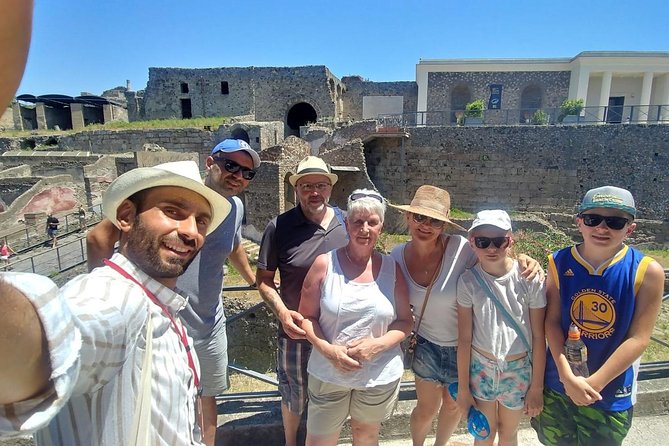
The tour starts back-to-back with the reality of Pompeii logistics: you meet at Piazza Porta Marina, 80045 Pompei NA, Italy. The end point is back at the same meeting location, which is helpful if you’re planning onward travel later.
The main thing to plan for is that “walking tour” means you should arrive ready to move. This tour includes help for the entry process, but you’ll still want your ticket situation sorted. The Pompeii entrance ticket itself is not included, so you should budget for it ahead of time and have your documents easy to access when you arrive.
You’ll also want good shoes. Pompeii is a lot of uneven stone and worn pathways. If you hate thinking about your feet, it’s still doable, but you’ll enjoy the ruins more if you treat the walk like part of the experience, not a chore.
Day 1: The Pompeii Archaeological Park Launch, Then the Key Stops
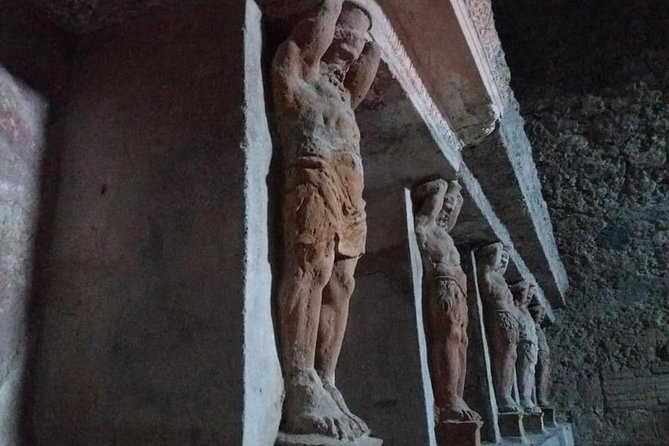
Day 1 begins at the Pompeii Archaeological Park. After you meet the guide with the Sesto Continente Tours sign and enter, you get a structured walk through several of the site’s standout areas. The time block for the park visit is listed as about 2 hours, and the stop durations afterward are short and focused.
Here’s the rhythm you can expect on Day 1: you’ll move between major landmarks, then get a quick “what you’re seeing and why it mattered” explanation at each stop. It’s not a slow museum tour where you can sit and stare for an hour. It’s more like guided orientation with enough context to make the rest of your exploring easier.
Anfiteatro Romano: Gladiators, scale, and social tiers
One of the anchors of Day 1 is the Roman Amphitheater. It’s described as built in 80 a.C. and treated as the oldest amphitheater of its type, with capacity for up to 20,000 spectators. The tour framing here matters: you’re not only looking at stone seating, you’re also learning how performances were tied to Roman social order, with seating divided into three sections by class.
If you’re the type who normally walks past big ruins without feeling the “why,” this stop is a good fix. The amphitheater is visual, and a guide helps you read what that structure meant in daily life.
Temple of Apollo: the oldest religious building, plus the statue detail
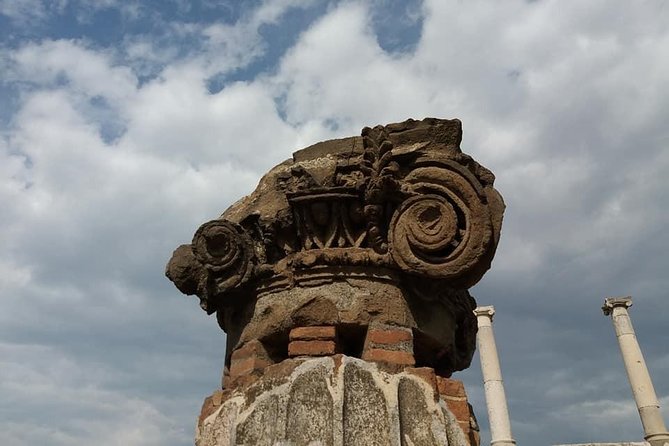
Next is the Temple of Apollo, identified here as one of the oldest religious buildings in Pompeii. The highlight is the reproduction of a bronze statue showing Apollo in a pose as if he’s holding a bow and arrow, surrounded by a row of Corinthian columns.
This is one of those moments where you’ll get more out of the tour if you slow down just slightly. Corinthian columns can look like “columns” unless someone points out the pattern and why it’s significant. The guide’s job is to make those visual cues click.
Tempio di Giove Capitolino: religion framed through the Roman triad
You also get the Capitoline Temple of Jupiter (Tempio di Giove Capitolino), presented with the idea of the Capitoline triad: Jupiter, Juno, and Minerva. The tour emphasizes how Romans viewed Jupiter as the supreme deity.
If religion in Roman sites sometimes feels like a dry lecture, this is a chance to connect the temple to a power structure people actually believed in. Even if you don’t memorize names, you’ll walk away with a clearer sense of what the building was doing for the community.
Casa del Fauno, Casa del Menandro, and Casa dei Vettii: How the Homes Tell the Story
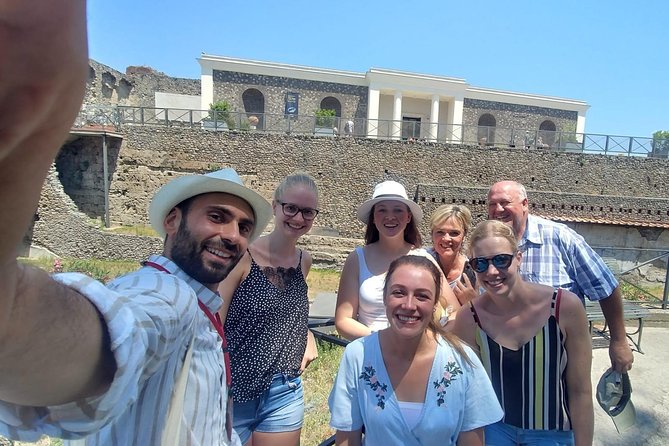
After the big landmarks, Day 1 turns to the residential side of Pompeii. This is where the tour gets especially compelling because these homes are about culture and personal display, not just big public monuments.
Casa del Fauno: a mosaic you can’t unsee
The Casa del Fauno is one of the larger residences referenced in the route, and it features a reproduction of the famous floor mosaic of Alexander showing the battle between Alexander the Great and King Darius III.
That’s a huge selling point. A mosaic like this instantly makes Pompeii feel less like ruins and more like a place where people used art to communicate taste and identity.
Casa del Menandro: named for a fresco, not for the original owner
The Casa del Menandro gets its name not from the original family but from a painting showing the Greek poet Menander. The tour description keeps it simple and practical: you’re seeing how Pompeians used art and themes to shape the meaning of a household space.
Even in a short stop, this kind of naming detail helps you avoid the common problem of forgetting what you’ve just seen. When you know why the house is called what it is, you remember it.
Casa dei Vettii: freedmen showing they made it
The Casa dei Vettii is framed around the story of the Vettii brothers, who became freed slaves. The tour explains that they didn’t hold back on expenses to signal their new social status, and the focus becomes the house’s splendid frescoes and wall paintings.
This is a stop that’s more emotional than technical. You get the sense that art wasn’t just decoration; it was a public statement. In a place destroyed by disaster, those statements are still visible, which is both haunting and fascinating.
Villa dei Misteri and the Apollo-to-Eruption Thread
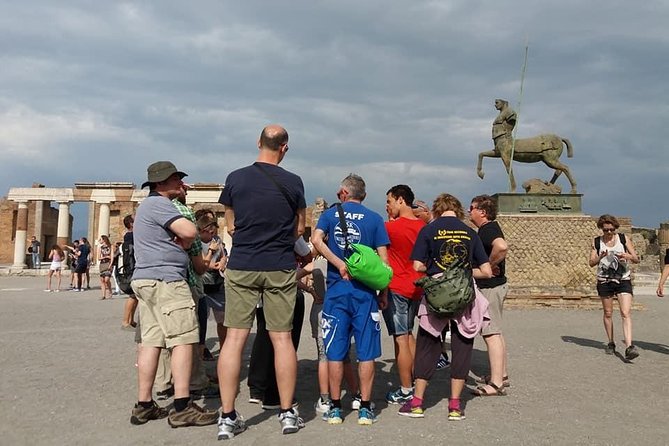
Day 1 ends with the Villa dei Misteri, highlighted for its nine painted scenes in sequence on the “Initiation Chamber” walls. The tour description connects this rite of passage for a bride becoming an adult woman with the worship of Dionysus, described here as a Greek god linked to wine and fertility.
This is one of the stops where the guide’s framing matters most. A wall painting can look like ornament if you’re not sure what it’s representing. Here, the tour gives you the core “what you’re looking at” idea so your brain can actually follow the story across the scenes.
If you’re tired after a day at big ruins, this is still worth it because it changes the pace. Instead of architecture, you’re looking at narrative art—painted sequences meant to be read in order.
Day 2: Roman Catholic Sanctuary Visit, a Different Kind of Meaning
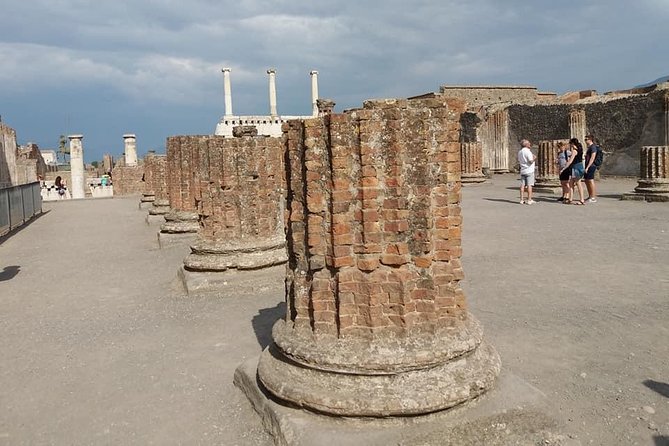
Day 2 is shorter and calmer: you’ll visit the Roman Catholic Sanctuary of Pompeii with a free visit block of about 1 hour, and the admission ticket is listed as included.
What makes Day 2 interesting isn’t that it replaces Pompeii’s ancient setting. It’s that it adds another layer of meaning to the same place. Even if you’re mostly here for the Roman-era ruins, a second day that shifts tone helps you avoid the “same texture, different stones” feeling.
If you like having your feet on the ground across two days, this structure is a good compromise: Day 1 hits the big ancient highlights; Day 2 gives you a different perspective without eating up the whole day.
Price and Value: What You’re Really Paying For
The tour price is listed at $36.12 per person, and it includes entry-gate facilitation plus guided stops across both days. The big separate cost is the Pompeii entrance ticket: €22.00 per person (and the listing notes free entry for minors under 18, EU seniors +65, and certain categories like journalists and students/docents from the EU).
So the real value question is simple: does paying for the guide improve your experience enough to justify the guide fee on top of the entrance price?
In my view, this tour makes sense if you want help reading what you see. The stops you’re given aren’t random. They’re structured around major public spaces (like the amphitheater and temples) and the more human side of Pompeii (mosaics, frescoes, and named houses). Without a guide, you can absolutely wander—but you’ll likely spend more time working out what’s where and what matters.
If you already have a strong Pompeii plan and you enjoy independent museum-style wandering, you might not need a guided route. But if you want context delivered while you’re still standing in front of the artwork, the price starts to feel more justified.
Group Size and Pacing: When Walking Tours Work (and When They Don’t)
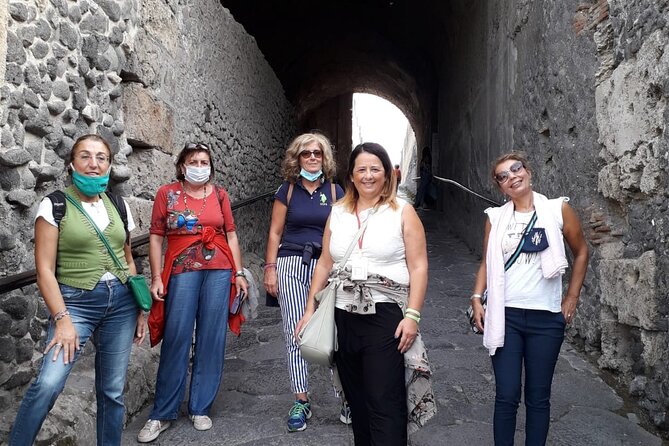
This tour is capped at 25 travelers. That’s big enough to meet your day and not too big to become chaotic. It usually means you can keep up without feeling like you’re sprinting through rooms while the guide waits for stragglers.
The pacing is also worth noting. Many of the stops are brief (around ten minutes per listed stop), which keeps the group moving and allows you to cover several key sights. The trade-off is that you won’t have long “linger and study” time at each location. If your travel style is slow and sketchbook-driven, you may want extra free time on your own after the guided portion.
Also, Pompeii requires good weather. If conditions are poor, you’ll be offered a different date or a full refund, which matters because ruins photos and comfort depend heavily on the forecast.
Language Comfort: English-First, With Real Flexibility
The tour is offered in English, and that’s what you should plan around. At the same time, I like that the setup can handle a mixed group better than some tours. One guide named Simone was described as able to do the full English visit and repeat in Italian when needed, without creating confusion.
So here’s the practical take: if you’re not fluent, you should still be able to follow the main ideas because visual stops help a lot. But bring patience. Short stops mean you’ll catch key points faster when you’re actively listening.
If you’re traveling as a couple or small group with different language comfort levels, this is a decent choice because the guide can often adjust on the fly rather than leaving one person lost.
Practical Tips to Get More Out of Your Time in Pompeii
A guided tour is only as good as how you show up ready. Here are smart, low-effort ways to make the day go smoother.
- Wear shoes you trust. You’ll be walking between sites, and Pompeii’s surfaces are not friendly to flimsy soles.
- Bring a snack strategy. The tour is structured with short stops, so plan a quick break rhythm rather than expecting long downtime.
- Take one photo per stop you care about. Then listen for what the guide says. If you just shoot everything, you’ll miss the story.
- Budget for the entrance ticket (€22). This is the most common “why does it cost more” surprise.
- Confirm your meeting plan early. You meet at Piazza Porta Marina. Once you arrive, make it easy for yourself to find the group sign.
Who This Tour Is Best For (and Who Should Consider DIY)
This tour is a great fit if you:
- Want an organized walk through Pompeii’s most recognizable public sites and notable homes.
- Prefer clear explanations while you’re standing in front of the ruins and artwork.
- Like the idea of seeing both Day 1 ancient landmarks and Day 2 the Roman Catholic Sanctuary without scrambling to plan it yourself.
- Are traveling with people who want structure, not just wandering.
You may want to choose DIY (or add extra independent time) if you:
- Need long stays at each house or want to read everything at your own pace.
- Already know Pompeii well enough that you don’t need stop-by-stop context.
- Feel strongly about guaranteed refunds and want an itinerary that has zero communication risk. In general, it’s still wise to double-check meeting details and keep your confirmation handy.
Should You Book This Pompeii Walking Tour?
My straight call: book it if you want Pompeii guided and you’re okay paying the extra €22 entrance fee. The guide-led route covers a smart mix—amphitheater, temples, and homes where mosaics and frescoes carry the emotional weight. The two-day structure also gives you a breather, especially with Day 2 focusing on the Roman Catholic Sanctuary for about an hour.
Skip or rethink it if your travel style is slow-and-deep on-site and you’re already building your own Pompeii map. For pure independence, Pompeii can be done alone. But if you want the “what you’re looking at and why it matters” package delivered while you walk, this is a solid value.
FAQ
FAQ
Is the Pompeii entrance ticket included?
No. The Pompeii entrance fee is listed separately at €22.00 per person.
Are tickets included for the Roman Catholic Sanctuary of Pompeii on Day 2?
Yes. The sanctuary visit shows admission ticket included.
How long is the tour?
It’s listed as approximately 2 days.
What language is the tour offered in?
The tour is offered in English.
Where do I meet the guide?
You meet at Piazza Porta Marina, 80045 Pompei NA, Italy. The tour ends back at the same meeting point.
What’s the group size limit?
This experience has a maximum of 25 travelers.
Does the tour include help at the ticket office?
Yes. It includes facilitation at the entrance to the Ticket Office.
What’s the total cost to budget for?
You’ll pay the tour price of $36.12 per person, and you should also budget for the separate Pompeii entrance ticket (€22.00 per person). The Day 2 sanctuary admission is included.
Does weather affect the tour?
Yes. The experience requires good weather. If canceled due to poor weather, you’ll be offered a different date or a full refund.
Is free cancellation available?
Yes. You can cancel up to 24 hours in advance for a full refund.
Are service animals allowed?
Yes, service animals are allowed.