REVIEW · PAESTUM
Paestum Archaeological Tour: 3-Hour Private Exploration
Book on GetYourGuide →Bookable on GetYourGuide
Three hours in Paestum changes your angle.
This private tour is built for focused looking at Magna Graecia, not quick photos. I like the skip-the-line priority tickets, because Paestum is at its best once you’re actually inside and learning the place. One drawback to consider: it’s not suitable for wheelchair users, so plan accordingly.
What really makes it click is the human factor. A certified archaeologist guide keeps the story grounded, and the experience stands out for strong guide performances—Mario is specifically mentioned in the feedback I reviewed. You also get Museum time for the famous fresco, the Tomb of the Diver, which is hard to interpret on your own.
In This Review
- Key highlights that matter before you go
- A 3-hour Paestum plan that actually fits your day
- Skip-the-line access: how it changes your first hour
- Where you meet: the Neptune temple starting point
- The Greek temples walk: 2 hours inside Paestum’s archaeological park
- The museum hour: what the Tomb of the Diver adds
- Languages and guide attention: you actually get to talk
- Price and value: what you’re paying for at $260.56 per person
- Who this tour suits best (and who might want to rethink it)
- Practical tips for getting the most from your 3 hours
- Should you book Paestum in Depth?
- FAQ
- How long is the Paestum in Depth private tour?
- Where do we meet the guide?
- Is it a private tour or a group tour?
- Which languages are available?
- Are skip-the-line tickets included?
- What’s included in the price?
- Is hotel pickup or drop-off included?
- Is the tour wheelchair accessible?
- Provider
Key highlights that matter before you go
- 3 hours, private group, certified archaeologist guide for real back-and-forth questions.
- Skip-the-line tickets so you spend more time with temples and less time waiting.
- Archaeological Park guided tour for 2 hours with attention to the big Greek structures.
- National Archaeological Museum for 1 hour focused on artifacts and key artworks.
- Tomb of the Diver included, with meaning tied to the life-to-death message.
- Meeting at the Neptune temple entrance with a name sign, making it easier to start on time.
A 3-hour Paestum plan that actually fits your day
Paestum is one of those places where the scale can fool you. From outside, the temples look impressive. Once you’re walking the paths with someone who can explain what you’re seeing, the site becomes specific—materials, styles, symbols, and the logic behind how these spaces worked.
This “Paestum in Depth” format stays practical: 3 hours total, split into 2 hours in the archaeological park and 1 hour in the museum. That pacing is a sweet spot. You get enough time to understand the main temple complex and still finish with museum context, rather than leaving after only a quick outdoor circuit.
You’re not squeezed into a large group either. This is a private group tour, which matters here. Paestum rewards details—tiny differences in how columns and layouts are handled, and how Greek worship spaces relate to the culture around them. In a small setting, you’re more likely to ask the question that’s on your mind instead of saving it for later.
The other “small but important” factor: the guide is not just a storyteller. You’re with a certified archaeologist guide. In other words, you’re not relying on someone’s best guesses. The facts are the foundation, and the explanation is the payoff.
Skip-the-line access: how it changes your first hour
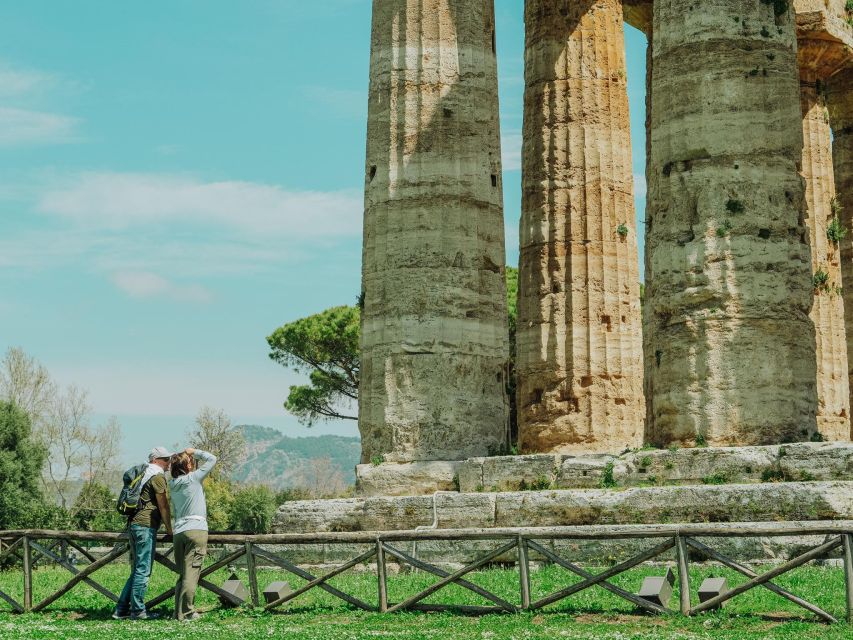
Priority entry doesn’t sound dramatic until you picture your day. Paestum’s attractions are time-dependent in a simple way: the best experience is when your attention is fully on the site, not split between waiting, checking your watch, and wondering if you missed your group.
With skip-the-line tickets, you get direct access to the park’s key areas so you can start the guided portion without that dead time. For a 3-hour tour, shaving off waiting time is not a luxury. It’s part of the value.
And it helps the guide too. When you arrive ready, your guide can move you from overview to details faster—explaining what you should notice and then pointing it out as you walk. That’s the difference between seeing temples and understanding them.
Where you meet: the Neptune temple starting point
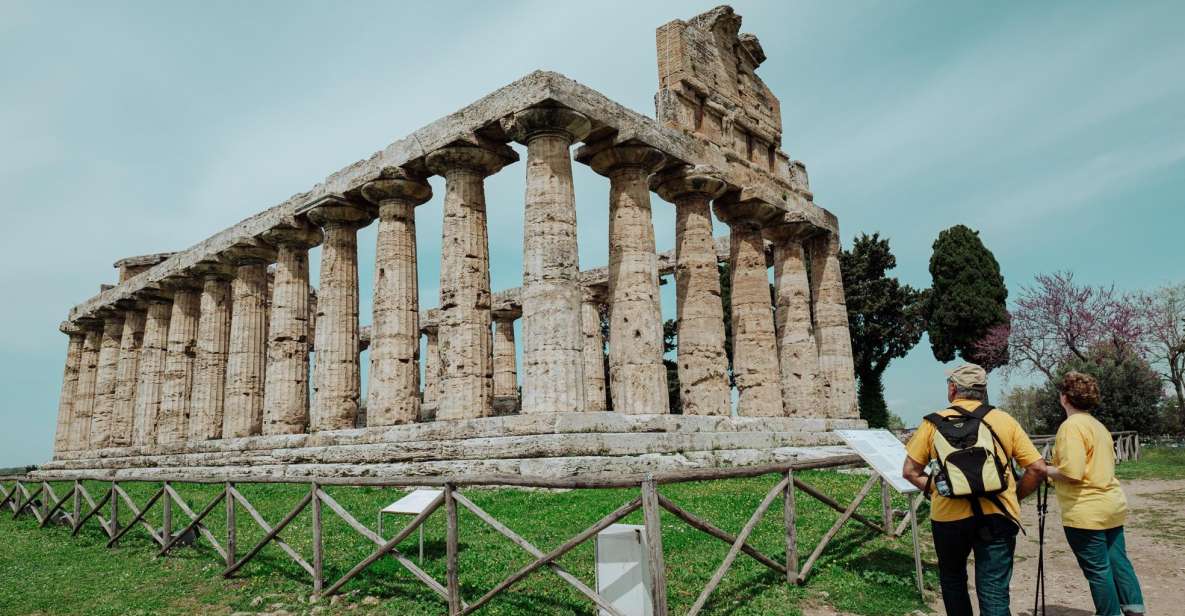
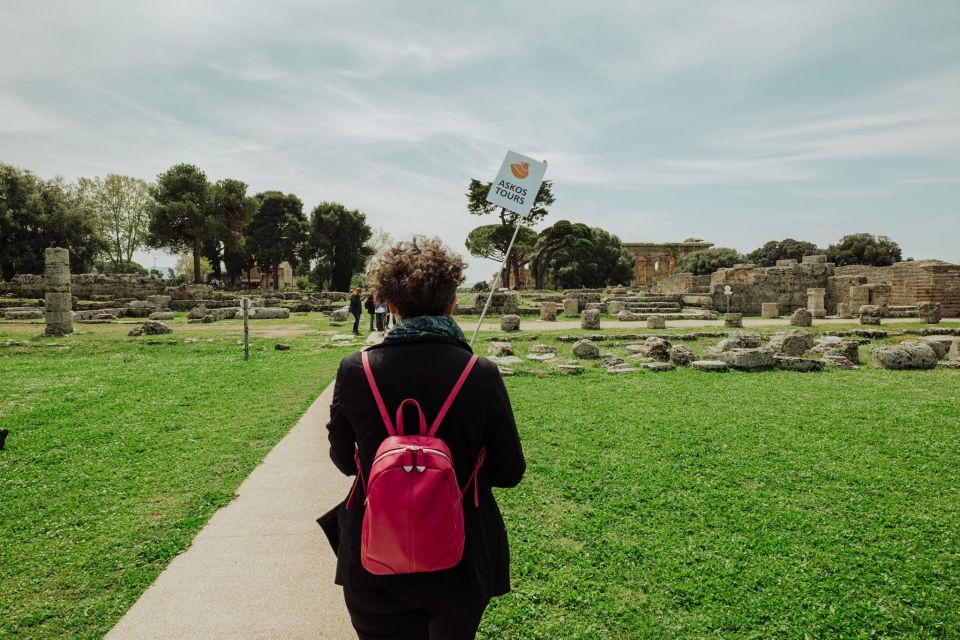
You start at the Archaeological Park of Paestum, and the meeting point is very concrete: the guide meets you at the entrance of the Neptune temple holding a sign with your name so you can recognize the right person.
Why I like this setup: you don’t need a complicated scavenger hunt. Paestum has multiple entrances and ways to orient yourself. A clear start point reduces stress, especially if you’re arriving with a plan already in your head.
The tour ends back at the meeting point as well, so you’re not stuck figuring out a new pickup location later.
The Greek temples walk: 2 hours inside Paestum’s archaeological park
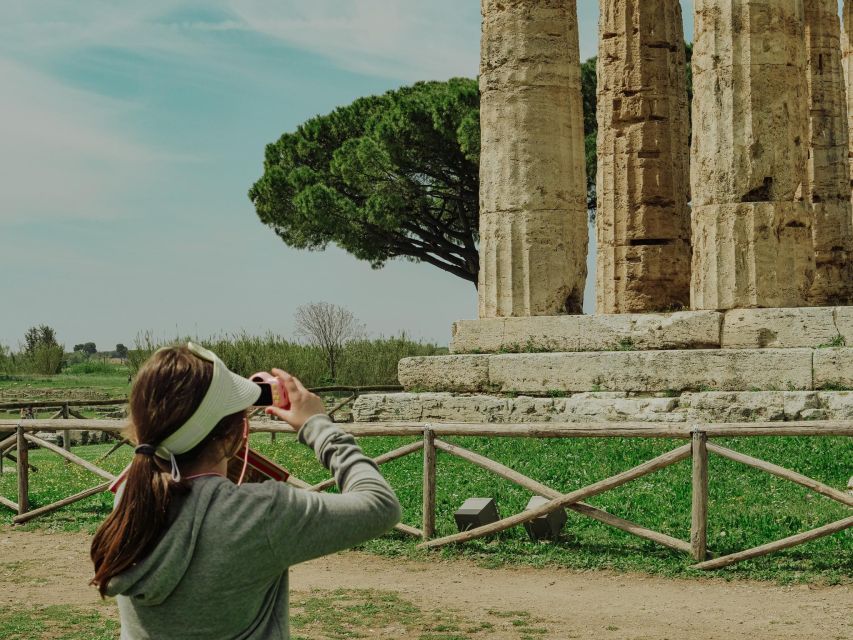
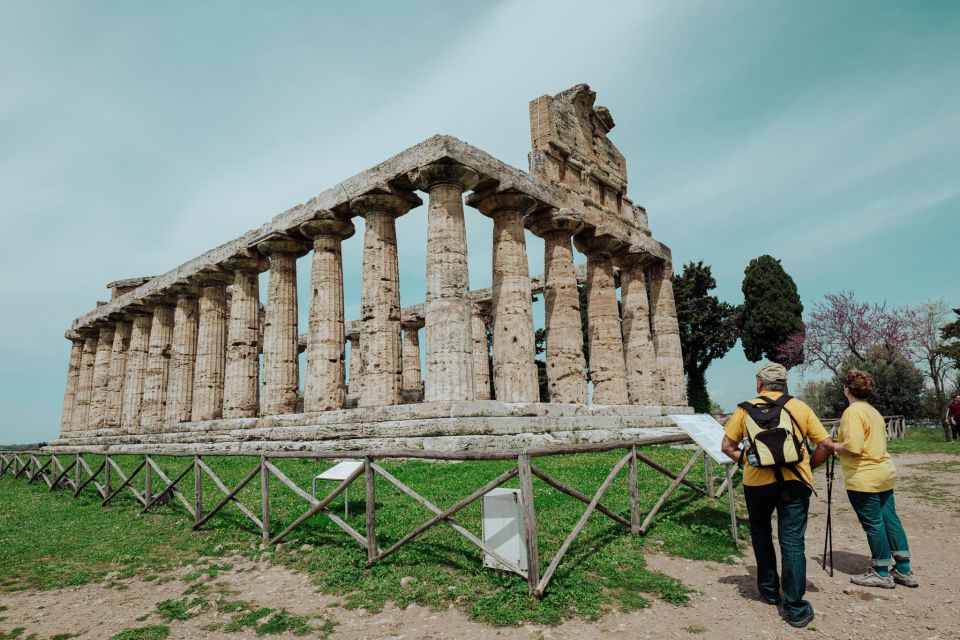
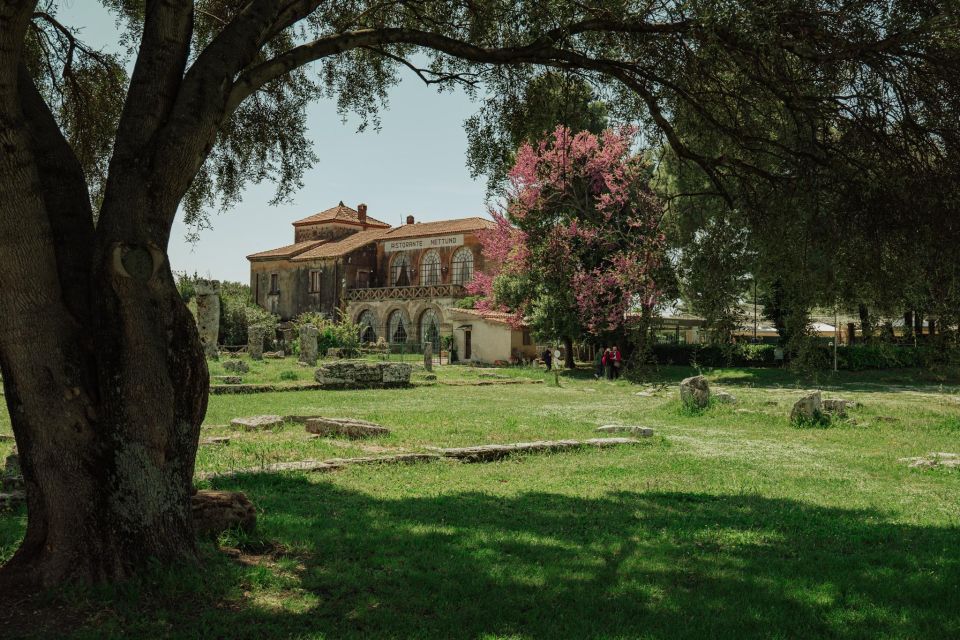
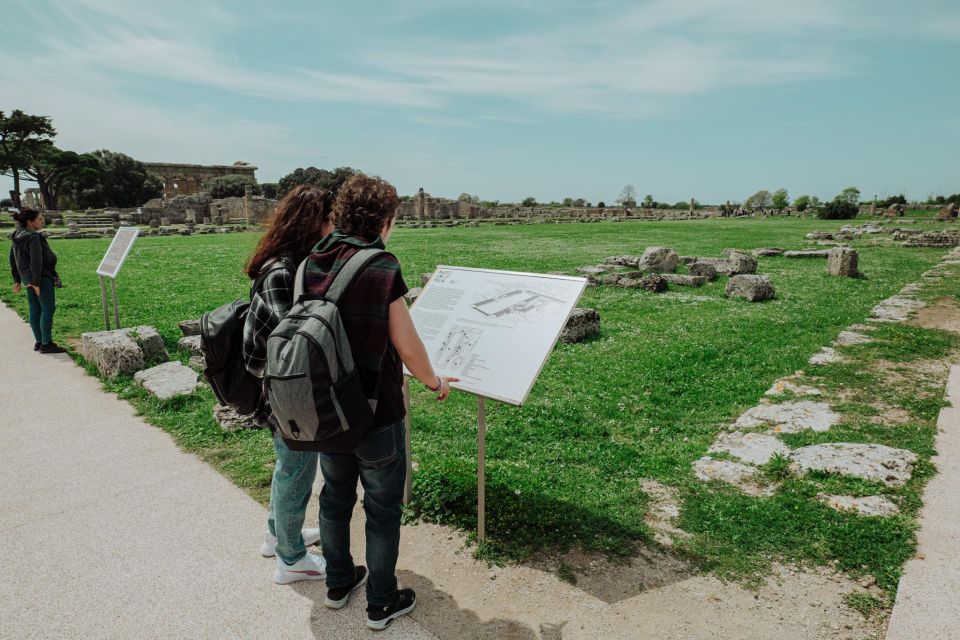
The heart of the tour is the guided tour in the Archaeological Park of Paestum for 2 hours. This is where you’ll see some of the best-preserved Greek temples in the world, including the Temple of Hera, Temple of Neptune, and Temple of Ceres.
What you do with those temples is the real story. A private archaeologist guide can help you move beyond “big columns” and toward a clearer idea of how the site was designed for Greek religious life.
Here’s what this kind of guided walk tends to unlock:
- Temple names become more than labels. You’re not just hearing names. You get the logic of who these places were associated with and why that matters for interpreting the architecture.
- You learn what to look for. Even when the stone is worn, guides can point out features that explain function and style.
- You connect outdoor sites to museum objects. When you later hit the museum, you’re not starting from zero.
A quick reality check, though. This part is on-site walking in an archaeological park, so you should expect some standing and walking. The tour is listed as not suitable for wheelchair users, which tells you the ground can’t reliably accommodate everyone. If mobility is an issue, plan carefully or look for a different kind of accessible option.
The museum hour: what the Tomb of the Diver adds
After the park, you shift to the National Archaeological Museum of Paestum for 1 hour of guided viewing.
This is where the tour earns its “in depth” name. Outdoor ruins can be powerful, but museum context turns power into understanding. You see artifacts and artwork that help explain what the outdoor structures meant in daily life and belief.
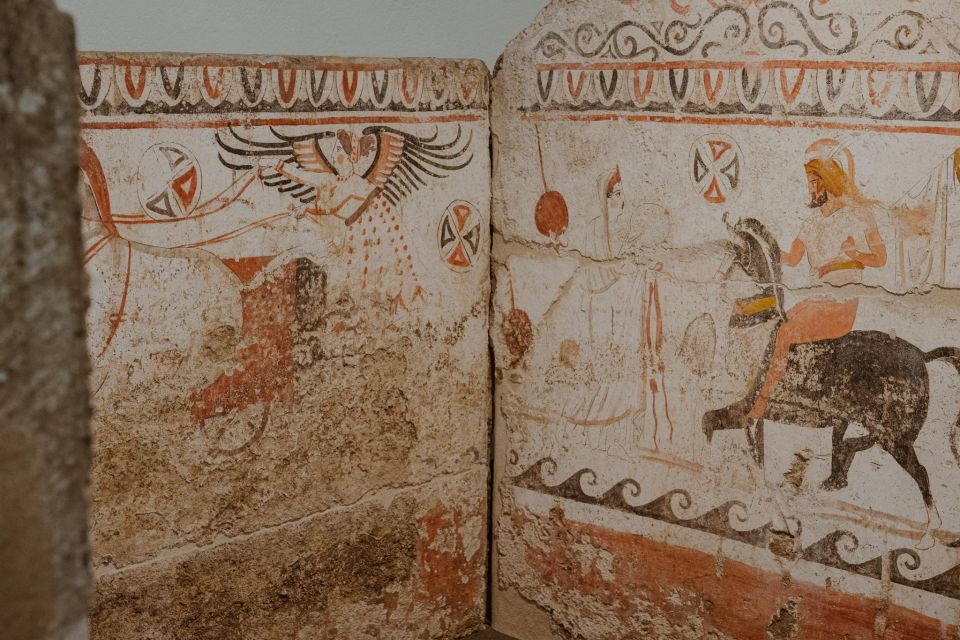
The museum highlight included on this tour is the Tomb of the Diver. This is a fresco that symbolizes the journey from life to death, and it’s treated here as a key Greek art example rather than a random famous piece. With a guide, you’re more likely to connect the visual story to the culture behind the imagery.
Why that matters: tomb art can feel cryptic if you don’t have a framework. A guide’s job is to give you the frame, then let you read the artwork with your own eyes. Without that, you might appreciate the painting but miss why it’s significant.
You’ll likely notice how the museum hour complements what you just saw outside. The tour doesn’t act like the park and the museum are separate experiences. It treats them as linked chapters.
Languages and guide attention: you actually get to talk
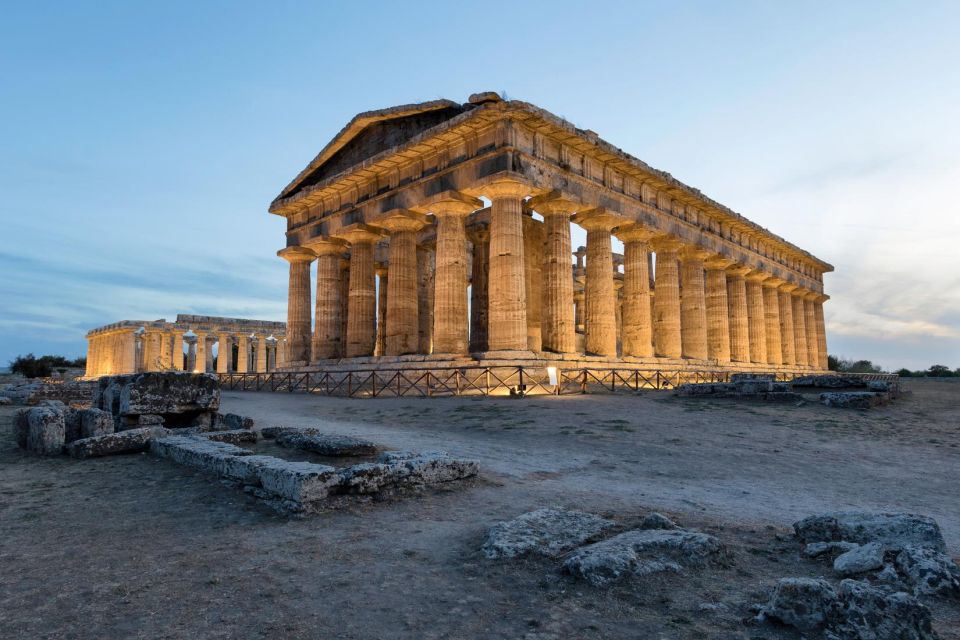
One of the underrated benefits here is the range of tour languages: English, Italian, French, German, and Spanish. If you’re traveling with anyone who isn’t comfortable in English, this is the kind of detail that can make or break a tour experience.
Also, because it’s private, the guide can calibrate. You’re not stuck with a one-size-fits-all rhythm. If you want more explanation, you have a better chance of getting it in the moment.
The feedback I saw strongly emphasizes guide skill, including a standout mention of Mario. That kind of named praise is a good sign: the guide isn’t just reciting facts. He’s doing the work of making the site understandable and worth your time.
Price and value: what you’re paying for at $260.56 per person
At $260.56 per person, this is not a budget stroll. But it isn’t priced like a generic “walk around with a headset” tour either.
Here’s what you’re paying for, based on the included components:
- Private format (your group size stays small, and the guide’s attention stays focused).
- Certified archaeologist guide for the full experience.
- Skip-the-line tickets, which matter for a short tour.
- A balanced split of outdoor park + museum, rather than one without context.
So the value equation comes down to this: if you care about learning what you’re seeing, and you want a guide who can connect the dots, the price starts to make sense. If you just want to wander temples at your own pace with a brochure, you might find a less expensive self-guided option fits better.
In other words: this tour is for people who prefer quality explanation per minute over lowest cost per attraction.
Who this tour suits best (and who might want to rethink it)
This works best if you:
- want a structured, guided visit rather than figuring out Paestum alone
- care about the meaning behind key works like the Tomb of the Diver
- prefer private attention, especially at a site where details matter
- like history with explanation that ties architecture to culture
It may not be the best fit if:
- you need wheelchair accessibility (the tour is listed as not suitable)
- you want a full day and lots of free time to roam independently
- you’re hoping for hotel pickup and drop-off (not included)
Practical tips for getting the most from your 3 hours
You’ll get the most from this tour if you show up ready to focus on the visuals. The park and museum are both places where your experience improves when you notice details the guide highlights.
A couple practical, no-drama ideas:
- Bring a camera you can quickly put away, so you don’t constantly stop during explanations.
- Wear clothing you’re comfortable standing in, because temple areas and indoor museum spaces often mean a mix of standing and walking.
- If you have a specific question—temple functions, Greek symbolism, or how tomb art relates to beliefs—write it down before you go. Private guides are best when you bring something to the conversation.
Should you book Paestum in Depth?
I’d book this tour if you want a guided Paestum visit that hits the big outdoor temples and then finishes with museum context, including the Tomb of the Diver. The private format and the certified archaeologist guide are the core reasons it feels worth it, and the skip-the-line access helps you actually use your limited time well.
Skip it if you’re trying to keep costs low or you need wheelchair access, since the tour is not suitable for that.
If you like learning as you walk, this is a strong choice for Paestum—Campania’s Greek-heritage heavyweight—without making your schedule messy.
FAQ
How long is the Paestum in Depth private tour?
It lasts 3 hours, with guided time in the archaeological park and then 1 hour in the museum.
Where do we meet the guide?
The guide meets you at the entrance of the Neptune temple at the Archaeological Park of Paestum, holding a sign with your name.
Is it a private tour or a group tour?
It’s a private group tour.
Which languages are available?
The live guide is available in English, Italian, French, German, and Spanish.
Are skip-the-line tickets included?
Yes. Skip-the-line tickets are included to help you access the park and sites more efficiently.
What’s included in the price?
Included items are the certified archaeologist guide, guidance and assistance for the full duration, skip-the-line tickets, and all taxes.
Is hotel pickup or drop-off included?
No. Hotel pickup and drop-off are not included.
Is the tour wheelchair accessible?
No. It is not suitable for wheelchair users.
Provider
Askos Tours