REVIEW · NATIONAL PARKS
Creative Experience with clay in the Cilento National Park
Book on Viator →Operated by Cilentolab Art & Ceramics. Laboratorio di ceramica e creativo per bambini, ragazzi ed adulti · Bookable on Viator
You’ll leave with clay on your hands and a calm mind. This adult-focused ceramics day in the Cilento National Park is built around hands-on making: you learn how to prepare and knead clay, shape your own piece, and finish it with decoration and glass coating—then the day slows down with a walk through Piano-Vetrale, a village known for its murals.
I really like how personal this feels. The experience is hosted by Ornella and Giulia, and the small group size (max 10) means you’re not stuck watching from the sidelines—you’re guided step by step. I also love the setting and the pace: you get a relaxed day that blends craft time with a countryside lunch that can turn into a picnic in either village spots or Ornella’s grandfather’s olive grove.
One heads-up: this isn’t ideal if you’re sensitive to clay dust, since you’ll be working directly with the material.
In This Review
- Quick highlights before you go
- Meeting in Orria: where the day starts
- Clay workshop time: from kneading to a finished form
- Columbine and slab: two techniques, two ways to think
- What drying and finishing teach you (and why you should care)
- Brunch and the Cilento countryside: lunch is part of the craft
- Piano-Vetrale murals: a calm walk with a sharp visual payoff
- Price and value: what $114.80 really covers
- Who should book this clay workshop in Cilento
- Booking factors to check before you commit
- Should you book? My straight answer
- FAQ
- What is the duration of the clay workshop?
- Where does the experience start and end?
- What time does the tour start?
- Is pickup available?
- Is the workshop offered in English?
- How many people are in the group?
- What is included in the price?
- What is not included?
- Is this experience suitable for children?
- What if I’m sensitive to clay dust?
Quick highlights before you go
- Hands-on ceramics with kneading, shaping, finishing, drying, and decoration
- Two techniques taught clearly: columbine and slab
- Glass coating included as part of your creative process
- Brunch/lunch together, with a picnic option if weather is good
- Murals walk in Piano-Vetrale with the hosts as your local guide
Meeting in Orria: where the day starts

The day begins in Orria, at Via Giuseppe Garibaldi, 13, 84060 Orria SA. You’re told to show up around 10:00 am, and if you arranged pickup, you’ll be met with a sign that has your name on it. When an activity has a meeting point that specific, it usually means less wandering and fewer “Where is this place?” moments. That matters on a day you want to feel easy.
The group is kept small—no more than 10 travelers—and that shapes the whole experience. In a small class, instructors can notice when you’re having trouble, not just when the group is quiet. It also helps if you want to ask questions mid-process, like how thick to keep a slab or what “finished” looks like for drying.
The hosts—Ornella and Giulia—set the tone fast. You don’t need art-school confidence. You’re there to learn the rules of clay and then bend them into something you made yourself.
Clay workshop time: from kneading to a finished form
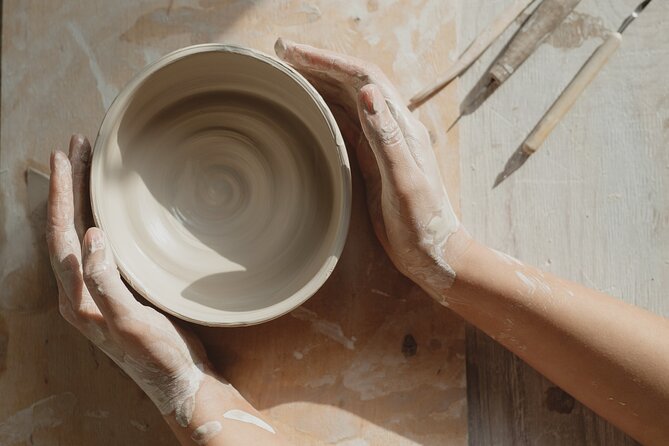
This is a creative experience with clay made for adults first, but it can be adapted for children, too. So if you’re traveling as a family, you’re likely to find the day flexible rather than rigid.
What you actually do matters here. You start with the basics that most people never think about: preparing the clay and then kneading it so it behaves the way you need. That step is more important than it sounds. Clay that hasn’t been properly worked can crack or fight you when you try to shape it.
Next comes the practical part: you’re shown two working techniques and how to move through each stage. You’ll see the handling and shaping steps, then how to finish your piece and manage the drying. Drying is the stage that can ruin your work if you rush it, so it’s good this day includes that coaching instead of leaving you guessing.
Decoration also has a place in the plan. You’re shown examples of decorative ideas, then you apply them to your own piece. After that, the process includes glass coating—which changes the feel of the final result compared to plain clay.
One detail you should plan for: the piece must be fired later. The day covers the making steps, but firing isn’t included in what you pay here. Shipping isn’t included either, so if you want your finished work sent to you, you should expect an extra cost at that stage.
Columbine and slab: two techniques, two ways to think
The workshop isn’t just one “make a pot” demo. You’ll learn two approaches, and the contrast helps you understand clay beyond one finished object.
Columbine technique
This method is presented as one of the main techniques in the day. Even if you’ve never worked with clay before, you’ll get a clear walkthrough of the steps and what the tool or handling is trying to achieve. The payoff is that you learn a repeatable process rather than copying one exact model.
Slab technique
The slab technique is the other core approach. Slabs are all about thickness, consistency, and patience. When it’s taught well, it makes you feel surprisingly capable. You’ll learn the handling and shaping part, then the finishing and drying steps that keep the slab from warping.
Why this is valuable for you: when an experience teaches two methods, you can choose what feels natural. Maybe you’ll prefer slab building because you like flat-to-shape forms. Or maybe you’ll click with columbine because you enjoy working in stages. Either way, you come away with a better sense of how clay “thinks,” not just a souvenir.
What drying and finishing teach you (and why you should care)
Clay days can feel like fun in the moment and then frustrating later if you don’t understand the process. Here, drying and finishing are part of what you’re shown, which helps you avoid the common mistakes people make when they only focus on shaping.
Drying is also why the day has a steady rhythm. You’re not expected to turn raw clay into a final fired piece during the same few hours. Instead, you learn what you can control now—form, surface, decoration—and what gets handled after, like firing.
Finishing is where your work stops looking like a craft project and starts looking like something you’d want to display. Even simple touches can look meaningful once the piece is smoothed, shaped, and prepared for coating.
And because glass coating is part of the plan, you get a better sense of how the surface will change after treatment. That turns your choices into something more intentional.
Brunch and the Cilento countryside: lunch is part of the craft
You share lunch together as a family-style break. The experience builds in brunch first, and if the weather is nice, it becomes a picnic in one of the picnic spots in Piano-Vetrale—or in Ornella’s grandfather’s olive grove. That’s a lovely difference-maker. Food outside, with a view and a slower pace, makes a craft day feel like a real outing instead of just a class with lunch tacked on.
The lunch itself is not generic. One review highlights pasta with homemade tomato sauce and fresh basil leaves, which sounds like the kind of meal that actually matches the area you’re in. When an itinerary includes local food like that, you should treat lunch as part of the experience, not fuel between tasks.
Practical note: since you’ll be working with clay earlier, plan to wear something you don’t mind getting messy. After lunch, you’ll still be walking, so it helps to have a way to stay comfortable.
Piano-Vetrale murals: a calm walk with a sharp visual payoff
After lunch, you go for a walk to Piano-Vetrale, a village known as the town of murals. The point isn’t just exercise. It’s seeing how art fits into daily life there—painted directly onto the environment, not locked away behind museum walls.
This is where the day shifts gears. The ceramics part is hands-on and focused. The mural walk is visual and slow. And because Ornella and Giulia guide you, it’s less of a self-guided “point and hope” stroll.
In a place like this, small details matter: a wall that makes you stop, a mural that changes your perception of a street, a view over the hills that makes the village feel connected to its landscape. You get a break from the physical mess of clay, but you still stay in the same creative mood.
Price and value: what $114.80 really covers
At $114.80 per person for about 7 hours, you’re paying for a structured day that includes:
- The creative ceramics instruction (clay prep through decoration and glass coating)
- Brunch/lunch together
- The walking component to Piano-Vetrale
Where value shows up is in the teaching and the pace. This isn’t a quick “sit and watch” activity. You learn multiple steps and two techniques, then you produce something you’ll have to finish through firing later.
The part you must budget for separately: firing is not included, and shipping isn’t included. That can change the total cost depending on how the studio handles your piece afterward. If you’re local, you may only deal with firing costs. If you need shipping, expect an extra line item.
Given the time (7 hours) and small group size (max 10), the price feels fair for a hands-on workshop plus lunch plus an experience in a village with murals. Just don’t treat it like a fully “ready to pick up” souvenir. Think of it as a making day, with the final firing handled afterward.
Who should book this clay workshop in Cilento
This is a great fit if you want a day that blends craft with real place. You’ll probably like it if:
- You want to learn a process (kneading, shaping, drying, finishing), not just make a simple item
- You enjoy instruction and want clear, step-by-step guidance
- You like quiet travel days: villages, food, and walking instead of a packed checklist
It may be less comfortable if:
- You’re sensitive to clay dust
- You’re expecting everything to be completed and fired during the same day with no follow-up costs
If you’re traveling with kids, the workshop is intended for adults but can be adapted for children. That means you might find it easier to keep everyone involved than with a strictly adult-only studio.
Booking factors to check before you commit
A few practical items can help you feel confident when you book:
- The class runs in English.
- It ends back at the meeting point in Orria.
- The group is small, max 10, which usually means a more personal experience.
- You’ll use a mobile ticket, and you’ll get confirmation at booking time.
- Service animals are allowed.
And yes, you should assume you’ll get a bit messy. Bring patience for the slow parts—drying, finishing, and waiting for the process to do what clay needs.
Should you book? My straight answer
I’d book this if you want a calm, hands-on day in Cilento where you learn real ceramics steps and also get a proper break with lunch and a walk through Piano-Vetrale murals. The combination is what makes it feel worth your time: you’re not choosing between craft or culture. You get both, with hosts who keep the day friendly and structured.
Skip it only if clay dust is a concern or if you really need a fully finished, fired piece handed to you the same day without any extra follow-up.
If you’re open to making something, then letting the studio finish the firing later, this is the kind of experience that sticks with you.
FAQ
What is the duration of the clay workshop?
It runs for about 7 hours.
Where does the experience start and end?
It starts at Via Giuseppe Garibaldi, 13, 84060 Orria SA, Italy and ends back at the meeting point.
What time does the tour start?
The start time is 10:00 am.
Is pickup available?
Pickup is offered. The host will have a sign with your name.
Is the workshop offered in English?
Yes, it is offered in English.
How many people are in the group?
There is a maximum of 10 travelers.
What is included in the price?
You get brunch/lunch together, walking to Piano Vetrale (town of murals), and the creative ceramics experience.
What is not included?
The piece you create must be fired, and shipping costs are not included.
Is this experience suitable for children?
The workshop is intended for adults but can be adapted for children.
What if I’m sensitive to clay dust?
It is not recommended for people who are sensitive to clay dust.