REVIEW · AUDIO TOURS
3-Days Audio Guide for Pompeii, Herculaneum, Vesuvius and Naples
Book on Viator →Bookable on Viator
Three days, one smart audio plan. This is an audio-guide bundle designed to help you move through Naples and the nearby ruins with clearer context and fewer back-and-forth questions. You get a mobile ticket and self-paced stops that cover major sights, plus extra attention on Naples landmarks like the Sansevero Chapel and its Veiled Christ.
I especially like two things: the offline option (download on your phone so you are not stuck hunting for signal), and the big Sansevero Chapel focus with the Veiled Christ explained in depth. The content is produced and supervised by Rosella Gallo, professor of Art History at the Academy of Fine Arts in Rome, so the tone stays interpretive instead of dry.
One consideration: not all site entries are included. The day’s churches and archaeological stops may require you to arrange admission separately, and the info notes GPS can be unreliable in archaeological areas—so you will want the maps provided.
In This Review
- Key highlights worth knowing
- Naples audio guide day: from baroque facades to the Veiled Christ
- Stop 1: Chiesa del Gesu Nuovo (15 minutes, entry included)
- Stop 2: Sant’ Anna dei Lombardi (20 minutes, entry not included)
- Stop 3: Museo Cappella Sansevero (20 minutes, entry not included)
- Stop 4: Complesso Monumentale di Santa Chiara (about 1 hour, entry not included)
- Why the Naples day works: pacing and context before the ruins
- Pompeii in the second act: walking the world’s most famous ruins
- Pompeii Archaeological Park (about 2 hours, entry not included)
- How to pace Pompeii with an audio plan
- Herculaneum (Ercolano) and Vesuvius: two ways to feel the eruption
- Parco Acheologico di Ercolano (about 2 hours, entry not included)
- Vesuvius National Park (about 1.5 hours, entry not included)
- Price and value: why this can feel like a bargain
- Logistics that make the difference: meeting point, timing, and navigation
- Who this is best for (and who should think twice)
- Should you book it?
- FAQ
- What is included in the 3-day audio guide?
- Can I use the audio guide offline?
- Where does the experience start?
- How long is the experience?
- Is the tour private?
- What are the opening hours?
- Are admission tickets included for every stop?
- Do I need to worry about GPS accuracy?
- How much does it cost?
- Who supervises the audio guide content?
- What is the cancellation policy?
Key highlights worth knowing

- Offline listening on your smartphone so you can keep going even with spotty connections
- Sansevero Chapel (Veiled Christ) gets a major, dedicated section in the Naples guide
- Pompeii and Herculaneum explained for independent walking with point-by-point guidance
- Vesuvius National Park with a built-in narrative arc to pair views with meaning
- GPS may be off in ruins, so use the maps from the ticket office as backup
- Value angle: the experience claims you save 50% versus audio guides sold at the ticket office
Naples audio guide day: from baroque facades to the Veiled Christ
Naples can feel like sensory overload at first. This plan helps you organize what you see by giving you a running thread—church art, cloisters, and sculpture—before you jump to the big archaeological days.
Stop 1: Chiesa del Gesu Nuovo (15 minutes, entry included)
This church is one of the most famous baroque stops in Naples, and the short time window actually helps. You get to appreciate the look and feel of the baroque style without turning it into a time sink. With audio guidance, you are not just staring at ornament—you understand what you are seeing and why it matters in the city’s visual language.
Practical tip: keep your first visit light and quick. Let the audio do the heavy lifting early, then use what you learned to spot details in the next places.
Stop 2: Sant’ Anna dei Lombardi (20 minutes, entry not included)
Sant’ Anna dei Lombardi is described as a Renaissance jewel in the heart of Naples. That phrase is the kind of shorthand you usually only appreciate once you are inside and listening. The audio helps you notice the shift in style—how Renaissance elements can feel calmer and more ordered than baroque theatrics.
Drawback to plan for: because entry is not included here, you will want to treat admission as a separate step. If you are traveling with tight timing, build in a little buffer for whatever line or payment step you need on the day.
Stop 3: Museo Cappella Sansevero (20 minutes, entry not included)
This is the big Naples anchor on the itinerary. The Museo Cappella Sansevero centers on the Veiled Christ, and the guide includes a large section devoted to it. That matters, because the Veiled Christ is the kind of artwork where your eyes want to explain it fast—only the story is what makes it stick.
I like that the plan does not stop at what you can visually read. The audio gives you a way to connect sculpture, chapel design, and the broader “why” behind the landmark. If you love art that rewards slow looking, you will appreciate having a structured, not-too-long listening time here.
Stop 4: Complesso Monumentale di Santa Chiara (about 1 hour, entry not included)
Santa Chiara’s cloister is described as the most beautiful cloister in the world. That is a bold claim, but the cloister format is exactly why an audio guide helps. A cloister is made for pausing—looking down arcades, noticing repetition, then turning your attention upward.
Give yourself the full hour. With audio in your ears, you can pace yourself instead of rushing to “hit” every corner. And because entry is not included, you can time this as your main paid stop of the day without feeling like you are losing your whole schedule.
Why the Naples day works: pacing and context before the ruins
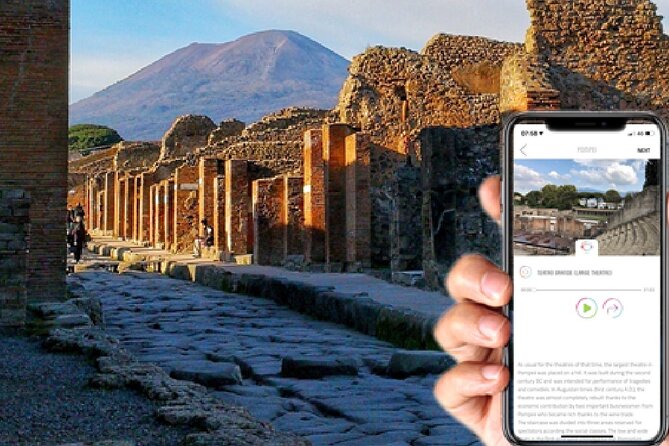
What I like about this first day is the order. You start with baroque, then Renaissance, then a sculpture-driven museum chapel, then a cloister. That sequencing helps you train your eyes.
Instead of arriving at Pompeii still figuring out what kind of details matter, you learn how Naples art communicates. You also build confidence: by the time you reach the archaeological sites, you already know how to follow the audio structure and how to let it guide your walking pace.
Pompeii in the second act: walking the world’s most famous ruins
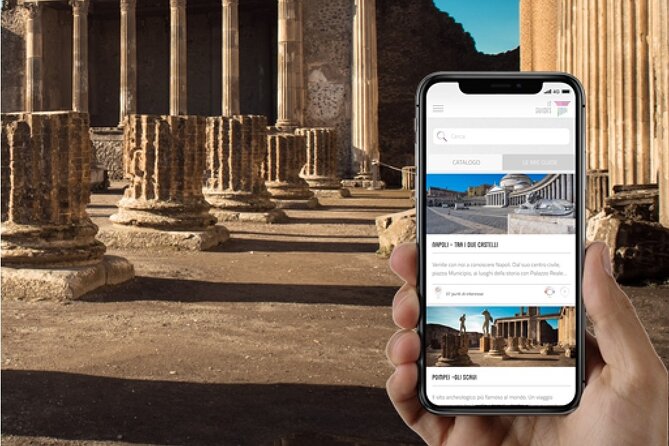
Pompeii can overwhelm people for two reasons: size and noise. When you are surrounded by other tour groups, it is easy to lose your place or miss what a section is telling you. An audio format changes the rhythm. You can move when you want, linger where you care, and keep your understanding from snapping mid-visit.
Pompeii Archaeological Park (about 2 hours, entry not included)
You get around two hours in Pompeii with the audio plan. For many visitors, that is the sweet spot: enough time to see major areas and get a coherent sense of daily life, without feeling like you are racing through history like you are collecting stamps.
Here’s the key practical detail: the info warns that GPS of your phone may not be accurate in archaeological sites. So you should not rely on a red dot alone. Use the maps provided at the ticket office, and treat GPS as a rough helper rather than your main compass.
I also like that the audio-style approach keeps you out of the “read the sign, move on” trap. Pompeii is full of fragments. When you have a narrative in your ear, those fragments stop feeling random and start feeling like a city.
How to pace Pompeii with an audio plan
I suggest you do this in a simple cycle:
- Walk with the audio first, so you learn what section you are in
- Stop for a photo only when the audio tells you to focus on something
- Let the last 15 minutes be unstructured, so you can revisit whatever hit you most
If you try to do everything equally, Pompeii will win. If you follow the audio’s priorities, you feel like you saw a coherent slice of the city.
Herculaneum (Ercolano) and Vesuvius: two ways to feel the eruption
Day 3 is built like a comparison. You start with Parco Acheologico di Ercolano, described as giving you a complete view of what life was like in a 2000-year-old Roman city. Then you shift to Vesuvius National Park for the iconic volcano and the view over the Gulf of Naples.
Parco Acheologico di Ercolano (about 2 hours, entry not included)
Ercolano is often easier to experience in a calmer way because it lends itself to thoughtful walking. The audio plan gives you a route mindset: you are not just looking at walls, you are learning how a Roman city felt when it was still alive—streets, building patterns, and the texture of everyday spaces.
This is where offline listening shines. You tend to lose signal in outdoor areas, and Ercolano is the kind of site where you want to keep the thread unbroken. Downloading the audio content before you go means you can keep your understanding steady.
As in Pompeii, remember that GPS may be unreliable in archaeological zones. Use the maps provided at the ticket office to avoid wandering into the wrong area.
Vesuvius National Park (about 1.5 hours, entry not included)
Vesuvius is not just a view stop—it is the emotional logic behind the ruins. The audio plan frames the volcano as one of the most famous and evocative volcanoes, with a breathtaking view over the Gulf of Naples.
When you pair Ercolano first, the volcano experience lands differently. You are not only looking at a mountain; you are thinking about what the city’s people would have faced. The plan’s pacing helps you go from daily life to the natural force that ended it.
Practical note: keep your expectations flexible. Even within about 1.5 hours, the “view time” can matter more than “walking time.” If you are up for it, let the last part of your audio session be just you and the panorama.
Price and value: why this can feel like a bargain
The price is listed at $11.45 per person. It is low enough that you should ask, what am I actually paying for?
You are paying for the audio content delivery and the convenience of a structured set of listening stops over three days, plus the claim that you save 50% compared to audio guides available at the ticket office. If you are the type who hates paying multiple times for separate audio devices, that value angle matters.
And because it is mobile and offline-capable, you are not paying for printed guides you will dump in your hotel trash. You are paying to have context in real time while you walk.
Also, the audio content is supervised by Rosella Gallo. That is not just a name on a screen. It suggests the stories are organized, with art history framing rather than random facts.
Logistics that make the difference: meeting point, timing, and navigation
You start at Piazza Monteoliveto, 1, 80134 Napoli, Italy. The activity ends back at the meeting point, so think of this as a planned route with audio guidance rather than a guided van that drops you off and collects you again.
The listed hours are Monday through Sunday, 10:00 AM to 5:00 PM, within the range from 06/16/2022 to 06/17/2026. That matters because you want to line up your first day and your paid entries within those windows.
The experience is described as private, meaning only your group participates. Even though this is self-guided, that private framing can still matter if you prefer to book without shared group dynamics.
Finally, be ready for the smartphone reality:
- Download the audio content ahead when possible
- Don’t fully trust GPS inside Pompeii and Ercolano
- Use the maps you receive at the ticket office
It is a small adjustment, but it keeps you from losing time to navigation confusion.
Who this is best for (and who should think twice)
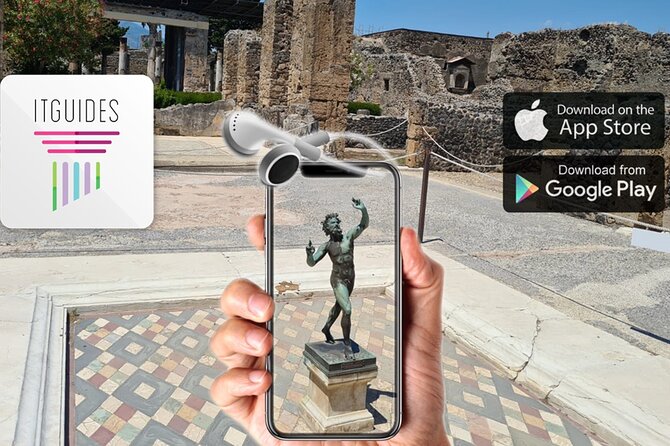
This audio guide package is best if you want independence with structure. You like exploring on your feet, but you also want the “why” behind what you see. It is also a smart fit if you hate paying separate audio rentals every time you enter a new site.
It is less ideal if you want someone physically leading you through Pompeii step by step. Audio helps you understand, but it does not replace a live guide who can flex on your questions in real time.
Should you book it?
Yes, I think you should book it if you plan to spend real time in Naples churches and then actually visit Pompeii and Ercolano. The value is strong for what you get: three days of audio coverage, offline support, and a Naples guide that gives serious attention to the Sansevero Chapel and the Veiled Christ.
Book it if you are the kind of traveler who loves pacing yourself. The plan makes it easier to walk without feeling lost or dependent on other people’s schedules.
Think twice only if you expect all entries to be included. The information clearly indicates admissions are included only for Chiesa del Gesu Nuovo, while the other stops list admission tickets as not included. If you are strict on time or budget, budget for those separate admissions and you’ll be happy.
In the end, this is a practical way to see Naples, Pompeii, Ercolano, and Vesuvius with less guesswork—and with better context than you can get from signs alone.
FAQ
What is included in the 3-day audio guide?
You get a mobile ticket and smartphone audio guide content covering Naples, Pompeii, Herculaneum (Ercolano), and Vesuvius, with points of interest included for each stop.
Can I use the audio guide offline?
Yes. The audio content can be downloaded on your smartphone so you can use it offline.
Where does the experience start?
The meeting point is Piazza Monteoliveto, 1, 80134 Napoli NA, Italy. The activity ends back at the meeting point.
How long is the experience?
The duration is listed as 3 days (approximately).
Is the tour private?
Yes. It is listed as private, so only your group will participate.
What are the opening hours?
The listed hours are Monday to Sunday, 10:00 AM to 5:00 PM, within the date range 06/16/2022 to 06/17/2026.
Are admission tickets included for every stop?
No. Admission is included for Chiesa del Gesu Nuovo. For Complesso Monumentale Sant’ Anna Dei Lombardi, Museo Cappella Sansevero, Complesso Monumentale di Santa Chiara, Pompeii Archaeological Park, Parco Acheologico di Ercolano, and Vesuvius National Park, admission tickets are listed as not included.
Do I need to worry about GPS accuracy?
Yes. The information notes that GPS on your phone may not be accurate in archaeological sites, and you should also use the maps you receive at the ticket office.
How much does it cost?
The price is listed as $11.45 per person.
Who supervises the audio guide content?
The audio guide contents are produced and supervised by Rosella Gallo, professor of Art History at the Academy of Fine Arts in Rome.
What is the cancellation policy?
You can cancel for a full refund up to 24 hours in advance of the experience’s start time. Cancellation within 24 hours of the start time is not refunded.